





Two Blazers, One Name
2026 Chevy Blazer Gas vs EV Compared
The gas Blazer starts at $34,300 and the Blazer EV starts at $44,700, and the two share only a name. George Nunnally Chevrolet sells both, so this page compares them evenly and points you to the one that fits how you drive around Northwest Arkansas.
One runs on a turbocharged engine you fill up on I-49; the other runs on a battery you charge at home. There is no winner here, only the right fit. Start with our Blazer research hub if you want the full picture.
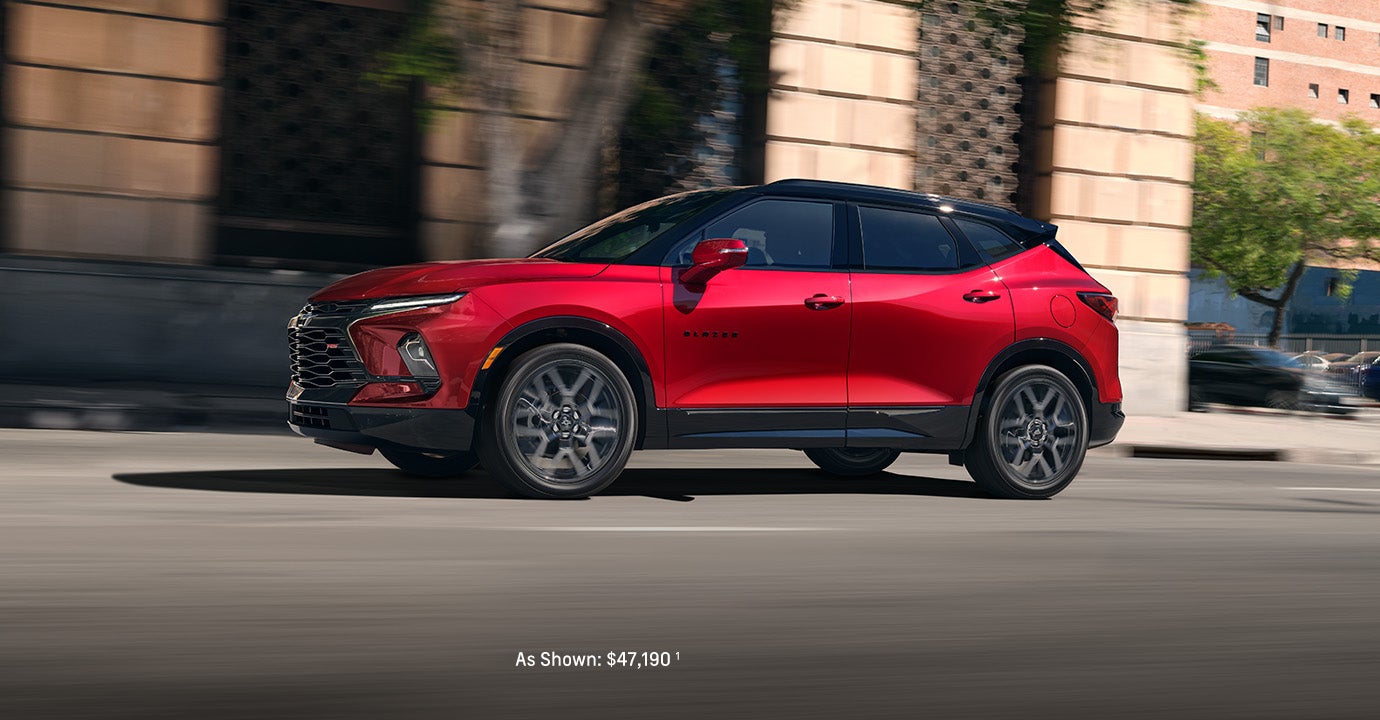
The 2026 Chevrolet Blazer and the 2026 Chevrolet Blazer EV wear the same badge, but they are two mechanically unrelated vehicles. The gas Blazer is a front-drive-based midsize crossover with a turbocharged engine and a nine-speed automatic. The Blazer EV is a battery-electric SUV on GM's Ultium platform with one or two electric motors and no engine at all. They do not share a platform, a powertrain, a trim lineup or dimensions. Because George Nunnally Chevrolet stocks both, the honest question is not which is better but which one fits your driving, so come drive both back to back before you decide.
Quick Take: Blazer Gas or Blazer EV?
Choose the gas Blazer for the lower entry price of $34,300, up to 4,500 lb of towing and the freedom to fill up anywhere with no charging setup. Choose the Blazer EV for the lowest running cost, instant electric torque, up to 312 miles of range and easy overnight charging if you can plug in at home. Neither is the default; the right one depends on whether you tow and where you can charge.
2026 Blazer Gas vs Blazer EV: Overview
The gas Blazer is the more familiar shape. It seats five, runs a standard 2.0L turbocharged four-cylinder, and offers front-wheel drive with available all-wheel drive on every trim. Its lineup is the 2LT, 3LT and RS, and only the RS can be optioned with the 308-hp 3.6L V6. For a household in Bella Vista or Centerton that already fuels up on the way to work and never plugs anything in, it asks nothing new of you.
The Blazer EV is the newer idea. It also seats five, but it draws from an 85 kWh battery through a single front motor or an available dual-motor setup, with a single-speed drive and no gears to shift. Its lineup is the LT, RS and SS. It rewards a Northwest Arkansas driver who can charge overnight and wants to skip the gas station entirely, and it delivers its power the instant you press the pedal.
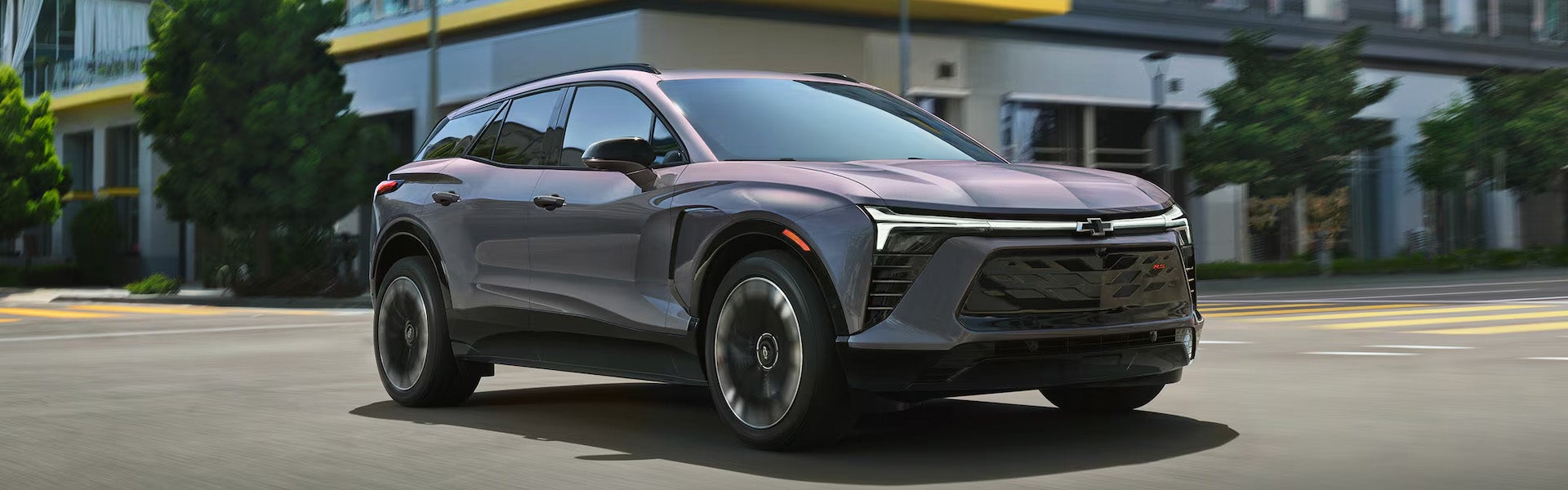
Powertrain and Performance Compared
This is where the two Blazers separate. The gas Blazer makes 228 hp from its 2.0L turbo, or 308 hp with the available 3.6L V6 on the RS, and it is EPA-rated up to 25 mpg combined in the 2.0L front-drive form (fueleconomy.gov). The Blazer EV makes 220 hp in the single-motor front-drive LT, 300 hp with the available dual-motor setup, and up to 557 hp (615 hp in Wide Open Watts mode) in the SS, with up to 312 miles of range on the front-drive LT. On towing the gas Blazer stands alone: the 3.6L V6, properly equipped with the Trailering Equipment Package, tows up to 4,500 lb, enough for a small boat headed to Beaver Lake, while the 2.0L turbo tows up to 3,250 lb with the package. The Blazer EV is not rated to tow for 2026, so a trailer keeps you in the gas model.
| 2026 Blazer (Gas) | 2026 Blazer EV | |
|---|---|---|
| Construction | Midsize crossover, C1XX platform | Electric SUV, Ultium platform |
| Power source | 2.0L turbo four-cylinder, available 3.6L V6 (RS), nine-speed automatic | Single or dual electric motor, 85 kWh battery, single-speed drive |
| Horsepower | 228 hp; 308 hp (available V6, RS) | 220 hp (LT FWD) up to 557 hp (SS) |
| Drivetrain | FWD standard, AWD available | FWD standard, dual-motor eAWD available (standard on SS) |
| Range / economy | Up to 25 mpg combined (2.0L FWD) | Up to 312 miles of range (LT FWD) |
| Max towing | Up to 4,500 lb (3.6L V6, properly equipped) | Not rated to tow |
| Wheelbase | 112.7 in | 121.8 in |
| Cargo (behind rear seats / max) | 30.5 / 64.2 cu ft | 25.5 / 59.1 cu ft |
| Seating | 5 | 5 |
The numbers make the trade plain. The gas Blazer rides on a 112.7-inch wheelbase and carries a bit more cargo, up to 64.2 cu ft, while the longer 121.8-inch Blazer EV puts its battery in the floor and holds up to 59.1 cu ft. For a fuller side-by-side of every figure, see the Blazer specs and dimensions page.
Pricing Compared
The gas Blazer costs less to get into. It opens at $34,300 for the 2LT and rises to about $43,600 for the RS, before a $1,995 destination charge. The Blazer EV starts at $44,700 for the LT, with the performance SS reaching $60,700, before a $1,795 destination charge. That is roughly nine thousand dollars between the two starting points, which is the gap the electric powertrain, the bigger battery and the newer platform have to earn back in lower running costs across your years of ownership in Northwest Arkansas.
| 2026 Blazer (Gas) | 2026 Blazer EV | |
|---|---|---|
| Starting MSRP | $34,300 (2LT) | $44,700 (LT) |
| Top listed trim | About $43,600 (RS) | $60,700 (SS) |
| Destination charge | $1,995 | $1,795 |
| Basic warranty | 3 years / 36,000 miles | 3 years / 36,000 miles |
| Battery warranty | Not applicable | 8 years / 100,000 miles |
Pricing is starting MSRP and excludes destination freight, tax, title, license, and dealer fees; the dealer sets the final price.
Where Each One Wins
The Gas Blazer
The gas Blazer wins on entry price and on towing. It costs thousands less to buy, and it is the only one of the two rated to pull a trailer, up to 4,500 lb with the 3.6L V6 properly equipped, so it is the pick if a boat runs behind you to Beaver Lake. It also asks for no charging setup at all: you fuel it in five minutes anywhere, which suits a Bella Vista driver with no place to plug in and a long day of errands. Its familiar turbo powertrain and available all-wheel drive cover most Northwest Arkansas driving with nothing new to learn.
The Blazer EV
The Blazer EV wins on running cost and on the driving feel. Charging an 85 kWh battery at home costs far less per mile than filling a tank, and the single motor delivers instant torque the moment you touch the pedal, so it feels quick pulling away from a light in Centerton. It carries up to 312 miles of range, adds about 80 miles in roughly 10 minutes on a 150 kW DC fast charger, and refills overnight at home at about 51 miles of range per hour on a 240-volt charger. For a commuter who plugs in at night and drives the Razorback Regional Greenway loop of towns by day, it can go months without a gas station.
Which 2026 Chevrolet Blazer Should You Buy?
Route the choice by how you actually drive, not by price alone. Buy the gas Blazer if you tow a trailer or boat, if you cannot charge where you park, or if you want the lowest price to get in and the simplicity of filling up on any corner. Buy the Blazer EV if you can charge at home, if you want the lowest cost per mile and instant torque, and if your driving stays within its range on a normal day. If you can plug in overnight and rarely tow, the EV usually saves money over time; if you tow, or charging is not an option where you live in Northwest Arkansas, the gas Blazer is the practical answer. Both are in stock, so drive both and let the difference decide.
See the Blazer EV range and charging guide, or compare the two overviews: gas Blazer and Blazer EV.
Shop the Blazer and Blazer EV at George Nunnally Chevrolet
George Nunnally Chevrolet stocks both the gas Blazer and the Blazer EV, so you can compare them in one visit, a short drive from the XNA corridor. Line up financing before you come, or estimate a payment on either one, and our team will help you match the powertrain to your driving across Northwest Arkansas.
See the 2026 Blazer and Blazer EV in stock or line up financing before you visit.
Blazer Gas vs EV FAQs
Should I buy the gas Blazer or the Blazer EV?
Buy the gas Blazer if you tow, cannot charge where you park, or want the lowest entry price and the simplicity of filling up anywhere. Buy the Blazer EV if you can charge at home, want the lowest running cost and instant torque, and your daily driving stays within its range.
Which is cheaper, the Blazer or the Blazer EV?
The gas Blazer is cheaper to buy. It starts at $34,300 before destination, while the Blazer EV starts at $44,700 before destination. The EV aims to earn that gap back through lower running costs over the years you own it.
Can the 2026 Blazer EV tow?
No. The 2026 Blazer EV is not rated to tow. If you need to pull a trailer or boat, the gas Blazer is the one to buy: with the 3.6L V6 properly equipped it tows up to 4,500 lb.
How far can the Blazer EV drive before it needs charging?
The 2026 Blazer EV goes up to 312 miles on a full charge in the front-drive LT. It adds about 80 miles in roughly 10 minutes on a 150 kW DC fast charger and refills overnight at home on a 240-volt charger.
Do the gas Blazer and Blazer EV share a platform?
No. They share only the Blazer name. The gas Blazer uses GM's C1XX crossover platform with a turbocharged engine, while the Blazer EV uses the Ultium electric platform with one or two motors, so their parts, dimensions and maintenance are different.
Explore the 2026 Chevrolet Blazer Research Hub
Your Next Step
Shop the in-stock 2026 Blazer and Blazer EV lineup at George Nunnally Chevrolet, or line up financing before you visit.
George Nunnally Chevrolet · 2700 SE Moberly Ln, Bentonville, AR 72712 · (479) 319-2494

May not represent actual vehicle. (Options, colors, trim and body style may vary)
The Manufacturer's Suggested Retail Price excludes tax, title, license, dealer fees and optional equipment. Dealer sets final price.