Blog / Bentonville Chevrolet Dealer

Blog

All Bentonville Chevrolet Dealer Springdale Chevy Dealer Rogers Chevrolet Fayetteville Chevy Dealer Rogers Chevrolet Dealership NWA Chevrolet Dealership Siloam Chevrolet Dealership Chevy SUVs Bentonville Chevrolet Service Rogers Used Car Dealership Silverado Trucks Springdale Chevrolet Service Bentonville Used Cars Springdale Used Car Dealer Chevy Trucks Model Comparisons NWA Chevy Dealer Work Trucks Electric SUVs Springdale Used Car Dealership George Nunnally Chevrolet Service Off-Road Truck Car and Auto Repair Service Rogers Chevrolet Service Silverado 2500 Chevy Colorado Fayetteville Used Car Dealer Mid-Sized Truck Model Lineup Analysis Springdale Chevy Service Rogers Auto Repair Mechanic Springdale Auto Repair Bentonville Oil Change Rogers Oil Change No Credit Bad Credit Financing Auto Repair Fayetteville Tire Rotation Fayetteville Springdale Brake Repair Chevrolet Silverado 3500HD Used SUV Dealership Fleet Vehicles Siloam Trade Value Fleet Vehicles Rogers Silverado 3500HD Dually Fleet Vehicles Bentonville Corp Business Vehicles Fleet Vehicles Springdale Fleet Vehicles Fayetteville Chevy Corvette Chevy Equinox Chevy Trailblazer Chevy Traverse Silverado 1500 Silverado EV 2027 Chevy Silverado 1500 Chevy Equinox EV Chevy Super Cruise Hands Free Driving Chevy Tahoe Chevy Trax
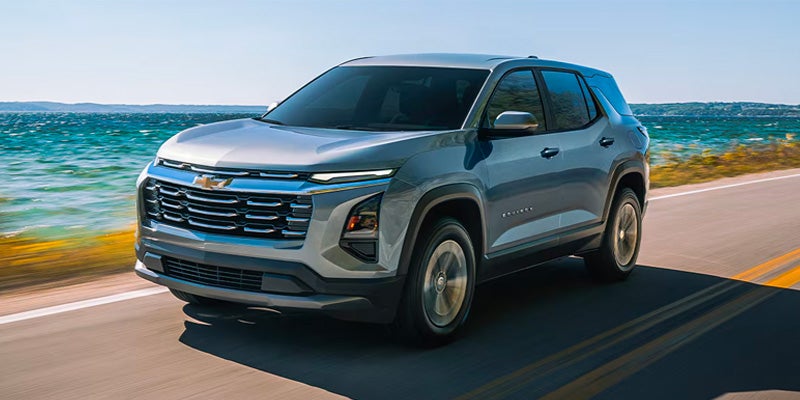
A 2026 Chevrolet Equinox drives along a road beside the water. The photo shows the front grille and driver-side doors.

How Do You Remote Start a Chevy Equinox With the Key Fob?

On a 2026 gas Chevy Equinox with remote start, press the key fob’s circular-arrow button twice to start the engine. One session lasts up to 15 minutes, enough to start cooling the cabin before loading up at Coler Mountain Bike Preserve in Bentonville. On cold mornings the Equinox can also turn on the rear defogger while the engine runs remotely. Key Numbers Chevrolet allows up to 30 minutes of total remote engine run time before a normal start is required. The manual lists up to 197 feet for remote key functions under favorable conditions. The myChevrolet app needs 2 working connections to send a remote start, one at the phone and one at the Equinox. A hood left unlatched blocks remote starting even if the fob can lock and unlock the doors. By George Nunnally Chevrolet How long does Equinox remote start run? The 15-minute timer makes remote start a short head start on the climate controls before you get in. Shorter sessions use only the minutes the engine actually ran. Two full sessions consume the entire allowance, and starting normally with the key in the vehicle restores the feature for the next time you park. Chevy Equinox start confirmation The turn signals flash when the vehicle accepts the double press. Its parking lamps then stay on during the remote run. That makes a glance at the lamps useful before leaving the trailhead shelter at Coler Mountain Bike Preserve. The 2026 key sequence is also useful to know when moving from an earlier Equinox whose remote used a different button routine. Remote engine time between normal starts One uninterrupted session Up to 15 min All sessions combined Up to 30 min A shortened run leaves some time for another start. The engine shuts off at the single-session or total limit, whichever comes first. How far away does the Equinox key fob work? The remote key can reach across part of an outdoor lot, but a row of trucks or a building can shorten its reach. The owner’s manual also says the usable distance may be shorter with the engine already on. At Arvest Ballpark in Springdale, a closer spot with an open view can be useful when ending a run. Chevy Equinox key fob battery Chevrolet specifies a CR2450 lithium cell for the 2026 fob. A fob that used to work across a driveway in Centerton and now responds only at the door can have a tired cell. The Chevrolet parts department can match the transmitter to the vehicle when its battery or a replacement key is needed. Will the Equinox turn on the heat or A/C during remote start? The climate controls can start cooling a hot cabin or switch to defrost in cold weather. Before a summer drive back from Beaver Lake, the air from the vents can begin to cool while you are still packing. In winter, the manual describes an equipped windshield wiper heating area that works below 45°F when the rear defogger is on. Chevy Equinox heated seats The 2026 Equinox LT includes heated front seats and a heated steering wheel. The 2026 Equinox trim guide helps identify which cabin features come with each version. For equipped seats, automatic heating or ventilation during a remote start has its own setting under Remote Lock, Unlock, and Start. The cold-weather setting warms the seat before a morning drive down I-49 toward Fayetteville. A ventilated seat draws air through the cushion and seatback when equipped and enabled for hot weather. Climate options on a remote start Cold conditions Defrost and seat heat Hot conditions A/C and seat ventilation The front seats need the corresponding equipment and remote-start setting. Seat ventilation moves air through the upholstery. Can I remote start my Equinox from my phone? The myChevrolet app can start an equipped Equinox beyond normal fob range when the app and vehicle have a connection and the service plan supports remote commands. That can help when the parking space is out of sight across the parking lot at Walmart AMP in Rogers. Chevrolet puts the start and cancel controls in the app and provides the result of remote requests in Command History. Chevy Equinox phone connection A phone command and the remote key use different connections. A fob may work in a parking area where the vehicle has trouble receiving an app request. Owners shopping for an SUV with both ways to start can use the 2026 Equinox research hub for model details and the 2026 Chevrolet Equinox inventory for specific builds. Why won’t my Equinox remote start? The vehicle must be off and in Park, with the hood fully closed and no remote key inside. The hazard flashers also block a remote start. If the parking lights never come on after a move from an open lot to a remote space across SE Walton Blvd, the signal may be out of range. If every attempt fails nearby, low oil pressure, overheating or an emissions-system fault can prevent the engine from starting remotely. Chevy Equinox remote start in a garage The gas Equinox produces exhaust whenever the engine runs. Use remote start outdoors, away from enclosed spaces where exhaust can collect. The fob may still send a working signal through a garage wall, so its range is no safeguard against starting in an enclosed garage. Chevy Equinox key and climate service George Nunnally Chevrolet at 2700 SE Moberly Ln in Bentonville, AR 72712 can look at a key that locks the vehicle but fails to start it remotely. Schedule Chevrolet service for a transmitter or starting-system issue. The 2026 Equinox owner FAQs cover more model details for a shopper trying an Equinox. Call (479) 319-2494 for vehicle and service questions. Frequently asked questions Do I have to hold down the 2026 Equinox remote-start button? The 2026 manual specifies two presses of the remote-start button. The remote-start symbol is the circular arrow marked x2. Why are the rear defog lights off during remote start? The rear window can be heating even when the defog indicator stays dark. The manual specifically notes that the indicator stays off during a remote run. Can a check-engine light keep my Equinox from starting remotely? The emissions fault behind a check-engine light can block the command. The manual also lists overheating and low oil pressure as conditions that stop remote starting. Can I turn my Equinox off with the key fob after a remote start? Yes. Press the remote-start button twice again. Turning on the hazard flashers can also end the run. What happens when I get in after a remote start? Bring the recognized remote key inside, press the brake, and use the start button for the normal drive-ready handoff before shifting out of Park.

A 2026 Chevrolet Colorado crew cab is shown from the front and side. The midsize Chevy pickup has four doors and a short bed behind the passenger cab.

Which Chevy Colorado Should I Buy to Tow on Beaver Lake?

A properly equipped 2026 Chevrolet Colorado crew cab can tow up to 7,700 pounds, enough for a 5,800-pound loaded boat and trailer headed from Bentonville to Beaver Lake. The Colorado Trail Boss pairs that available 7,700-pound rating with four-wheel drive and 32-inch all-terrain tires for trips down AR-12 to the boat ramps. The Colorado ZR2 has a 6,000-pound trailer limit, which leaves 200 pounds between that same 5,800-pound rig and the truck’s maximum. Key Numbers Chevy Colorado crew cab with the right trailering equipment: up to 7,700 pounds in either model year. Colorado Trail Boss: 2-inch factory lift and up to 7,700 pounds of towing with the right package. Colorado ZR2: 6,000 pounds, or 5,500 pounds with the Bison package. 2027 Colorado: 350 horsepower and 450 pound-feet from the revised TurboMax four-cylinder. The 2027 Colorado manual requires brakes on every trailer axle when the loaded trailer weighs more than 2,000 pounds. Which Chevy Colorado trim should I buy to tow a boat? An LT with the Trailering Package is the Colorado I’d start with for weekday I-49 driving and regular launches at Beaver Lake. It gives you 17-inch wheels with all-season tires, remote start and the StowFlex tailgate compartment for items like tie-down straps. For a 2026 four-wheel-drive (4WD) truck, Chevrolet specifies the Trailering Package and limited-slip differential for the 7,700-pound rating. Colorado LT with the Trailering Package The LT fits a paved route through Rogers to Prairie Creek Recreation Area, where the same truck that carries four passengers can pull the boat. Trail Boss adds a two-speed transfer case with low range and a transfer-case shield, making it the better fit when you also want lower gearing for slow-speed work and the extra clearance of a factory lift. Chevrolet lists 32-inch all-terrain tires on Z71 as well, with LED headlights, taillights and fog lights as part of that trim’s equipment. The 2026 Chevy Colorado trims include the cabin and lighting features that distinguish those trucks on the daily drive. How much can a Colorado ZR2 tow? A Colorado ZR2 can tow 6,000 pounds, 1,700 pounds below the best-equipped Trail Boss. The ZR2 has a 3-inch lift, 33-inch mud-terrain tires and Multimatic DSSV shocks. Those shocks and the wider stance are part of the ZR2 suspension package. Chevrolet also gives the 2027 ZR2 full skid plates and rocker protection for clearance and underbody protection away from pavement. Colorado ZR2 Bison trailer limit A ZR2 Bison has a 5,500-pound limit, so a rig weighing 5,800 pounds loaded is already 300 pounds past its trailer rating. That same load is 1,900 pounds below a 7,700-pound trailer ceiling before the truck’s separate weight checks. A cooler, fuel and batteries carried in the boat count toward its loaded weight on the trip down AR-12 to Rocky Branch Marina. The 2026 Chevrolet Colorado towing and payload figures give the truck-side limits alongside the towing headline. What engine comes in each Chevy Colorado trim? Every 2026 Colorado gets the 310-horsepower, 430-pound-foot 2.7-liter TurboMax four-cylinder. The 2027 WT, Custom, LT, Trail Boss, Z71 and ZR2 all move to a revised 2.7-liter version with 350 horsepower and 450 pound-feet. Chevrolet revised the turbocharger, fuel injection and pistons for 2027. An LT and Trail Boss of the same year therefore give you the same engine output for the I-49 merge, with the chassis and tires making the difference in trim choice. Colorado Custom for daily driving Custom starts with WT equipment and adds 18-inch gloss-black wheels with all-season tires. WT, Custom and LT are the street-tire starting points, with the trailer rating tied to actual trailering equipment. A 2027 base 2.7-liter configuration in the manual is rated for 3,500 pounds. Our new Chevrolet inventory lists individual trucks and equipment, including the Colorado crew cabs you can see on SE Moberly Ln. What hitch and brake controller does a Colorado need? The 2027 Colorado tow supplement requires a weight-distributing hitch above 6,000 pounds and trailer brakes on each axle above 2,000 pounds loaded. An electric-brake trailer plugs into a round seven-way connector with a dedicated brake circuit. A compatible integrated trailer brake controller lets you adjust brake gain from the cab. Boat trailers can also use hydraulic surge brakes, which apply as the trailer pushes against the coupler during deceleration. Colorado seven-pin trailer wiring The seven-way connector also carries separate circuits for running lights, turn and brake lights, reverse lights and battery feed. The receiver, ball mount and ball each need sufficient capacity for the loaded trailer. Our Chevrolet service appointment is an option if you need the truck’s hitch, connector or brake controller checked before a run to Beaver Lake. How big are the Chevy Colorado cab and bed? The Colorado pairs a five-seat crew cab with a short box, and the 2026 bed floor measures 61.7 inches long. Four full doors leave the rear seat available for people and the short bed available for a wet anchor, dock lines and the cooler on the ride home from Prairie Creek. Colorado short-bed dimensions The 2026 Colorado specifications put rear legroom at 34.7 inches. The 2026 Colorado maintenance schedule covers the same TurboMax truck you’ll drive between launches. Colorado tailgate storage The LT’s StowFlex compartment closes inside the tailgate, giving wet straps a spot away from the rear seat. When the trailer is attached, its tongue weight counts toward truck payload alongside people, cargo and hitch hardware. Frequently Asked Questions Does trailer tongue weight count against Colorado payload? Yes. The tongue weight is part of the load the truck carries. The 2027 tow supplement lists ceilings of 770 pounds for the Trailering Package configuration, 600 for ZR2 and 550 for ZR2 Bison. How much can a 2027 Colorado tow with no Trailering Package? The base 2.7-liter configuration in Chevrolet’s 2027 towing supplement is rated for 3,500 pounds, with a 350-pound tongue-weight limit. Can a Chevy Colorado LT tow 7,700 pounds? Yes. Chevrolet rates a properly equipped crew cab for up to 7,700 pounds. The 2026 Chevrolet chart specifies the Trailering Package, with a limited-slip differential also required for the rated four-wheel-drive setup. Do the 2026 and 2027 Colorado take regular gas? Yes. Chevrolet specifies a minimum of 87 octane for both TurboMax versions. Where can I see a Chevy Colorado in Bentonville? George Nunnally Chevrolet is at 2700 SE Moberly Ln in Bentonville, AR 72712. The store’s number is (479) 319-2494. Contact George Nunnally Chevrolet for current truck and package availability. By George Nunnally Chevrolet

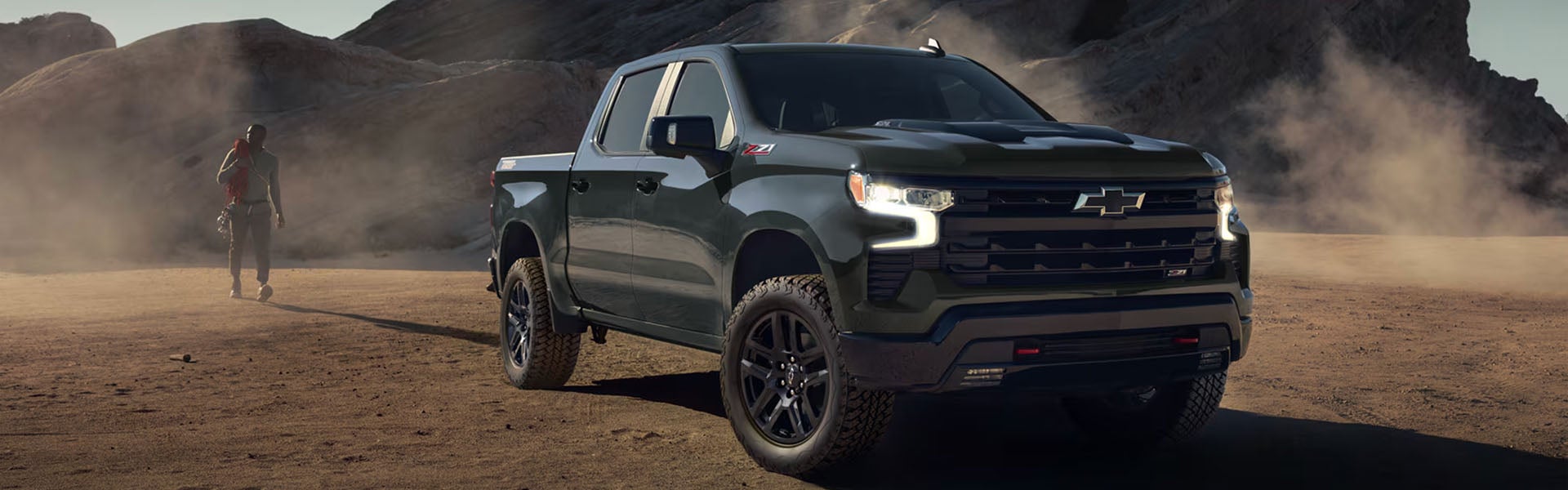
2026 Chevrolet Silverado 1500 exterior with the cab and bed visible.

Why Your Chevy Won’t Crank When the Battery Tests Good

A Chevy can pass a 12-volt battery test and still fail to crank if the starter cable, ground, starter or start command has a fault. A passing conductance test estimates the battery’s starting ability at the time of the test. If a Chevy gives one solid click after a stop on SE Walton Blvd in Bentonville, a voltage-drop test finds power lost through the starter feed or ground while the starter is under load. By George Nunnally Chevrolet Key Numbers A 12-volt battery test measures battery condition at the time it’s tested. A voltage-drop test checks 2 sides of the starter circuit under load: the positive feed and ground return. With no click, check both the 12-volt power path and the command that switches the starter on. A jump can temporarily help a low 12-volt battery or change the current path through a poor connection. What does a passing battery test actually tell me? A conductance test estimates the 12-volt battery’s ability to deliver starting current and can report its state of charge. Ask for the measured cold-cranking amps and the battery’s rated value from the same test. The tester needs the correct battery type and rating. Resting voltage can help estimate charge, while the tester’s cold-cranking amperage result estimates the battery’s ability to turn the starter. A recently charged battery can read high because it still has surface charge. If the truck sits in Bella Vista for 3 days and then fails to start, tell the shop whether the battery was tested after those 3 days or just after a drive to Bentonville. Chevy battery test report Save the printout with the cold-cranking amps, voltage, battery type and date. Bring the truck’s model, year and battery type if you’re comparing a prior printout with a new test. The Chevrolet service department lists battery checks as part of its vehicle inspection. What should I check if I hear one click and it won’t crank? A starter voltage drop test compares the battery post with the starter terminal on the positive side and the battery negative post with the starter housing on the ground side. One click can come from a solenoid receiving the start signal, even when resistance in a cable or at the engine ground limits the current the motor needs. Check that the battery clamps are secure and look for corrosion. Corrosion can be hidden where the 12-volt cable enters the clamp. Have a technician compare the two voltage-drop readings with the specifications for your Chevy before condemning the starter. Chevy battery ground connections On the 12-volt circuit, have the shop measure while the starter draws current. A voltmeter on an unloaded cable can miss resistance that appears at the moment you push Start. If the issue began after battery work in Rogers or Springdale, bring that invoice and mention which connection was disturbed. The dealership contact page can help you arrange a diagnosis for an intermittent fault. Why is there no click when I try to start my Chevy? A silent start attempt can happen when the starter command never reaches the solenoid, for instance if the vehicle does not recognize Park. Put the transmission in Park, follow the brake-pedal start instructions and look for a key warning or a gear indicator that disagrees with the shifter. If the dash says the key was not detected, try the backup transmitter pocket named in the owner’s manual. If the displays also go blank, tell the technician that. Losing the dash and having a fully lit dash during a silent attempt give the shop different places to begin. Chevy starting symptom recording A Chevy that clicks after a short stop near Bentonville Square can be tested on a warm restart even if it starts normally after sitting overnight. Include the dash, sound and whether the engine turns at all. A no-crank and an engine that spins normally but won’t run call for different tests. Why does my Chevy only start after a jump? A jump can add current to a discharged battery or bypass part of a weak ground connection, depending on the designated connection points. It does not prove the battery itself failed. Follow the owner’s manual for the approved jump points or use roadside assistance. If the Chevy starts, look for the charging-system warning. A truck that needs another jump the next morning in Centerton could have a battery that started the night low, a fault in the charging system, or an electrical draw while parked. Chevy overnight battery draw Tell the technician what stayed plugged in, how long the truck sat and whether this began after a camera, trailer accessory or other equipment was fitted. Electrical modules need time to go to sleep before a key-off draw test can distinguish normal activity from a continuing drain. Check service and parts offers for any test or battery terms that apply to your vehicle. What should I bring to my no-start appointment? Bring the battery printout, the date of the last jump and a record of whether you heard one click, repeated clicks or silence. At George Nunnally Chevrolet in Bentonville, add the start sound and the time since the last drive to the service appointment. A cold start in Bella Vista and a restart 10 minutes after a drive from Springdale give the technician two conditions to reproduce. Ask the technician to show the measured result before authorizing parts. Chevy service paperwork Use the Bentonville hours and directions to plan drop-off. Ask what the diagnosis includes, then get any requested battery, cable or starter repair itemized after it’s tested. Chevy scheduled maintenance For a Chevy that also needs regular service, the Equinox maintenance guide has model-specific intervals. Give an intermittent starting complaint its own line on the work order. Chevy No-Crank FAQs Can my dash light up with a bad starter cable? Yes. Dash electronics draw less current than the starter. A cable can power the dash and still lose too much voltage under cranking load. Does one click mean I need a starter? One click tells you the circuit made a noise, often at the solenoid. Test the cable feed and ground during a start attempt and compare the two readings with the vehicle’s specified voltage-drop limits. Does a new battery rule out the starting circuit? No. Check terminal fit and the ground path as well as the replacement battery’s state of charge. Is crank-but-no-start the same symptom? If you hear the engine turning at normal speed, report that it cranks but won’t fire. That sends the shop toward tests for why the engine won’t run. What if my Chevy starts normally when I reach the shop? Give the technician the recording and the conditions. An overnight visit may help if the no-crank appears only after the truck has sat.

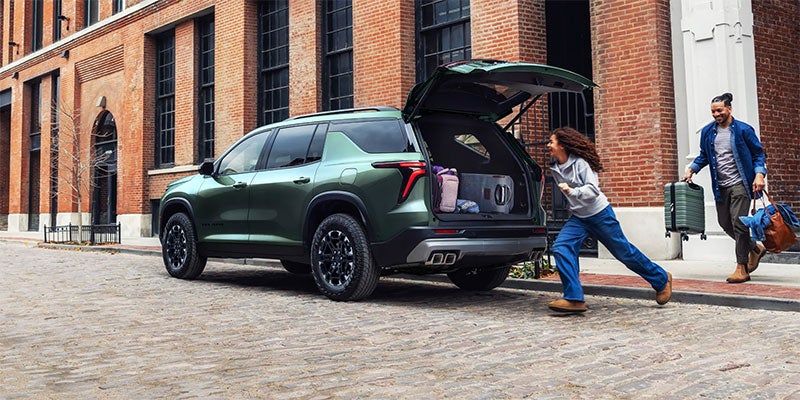
Green 2027 Chevrolet Traverse with its liftgate open as people load bags.

Which 2027 Chevy Traverse Is an 8-Seater?

The 2027 Chevy Traverse seats eight in the LT with the available second-row bench, so two adults and six kids can ride together from Bentonville to Beaver Lake. The seven-seat LT, Z71, RS and High Country use second-row captain’s chairs. On a Traverse with Smart Slide, the passenger-side second-row seat tilts and slides forward to open a path to row three. By George Nunnally Chevrolet Key Numbers The 8-seat Traverse LT has a second-row bench. The Z71, RS and High Country each seat 7. Behind all three rows there are 22.9 cubic feet for bags. With the third row folded, capacity behind the second row rises to 56.6 cubic feet. The Traverse LT has a standard 17.7-inch touchscreen. How many seats does each 2027 Traverse trim have? The eight-passenger Traverse is an LT with three places in row two and three in row three. Two adults up front, three riders in the middle and three in back put every seating position to work. That layout is useful for a Bentonville household that regularly takes two extra teammates down I-49 to Springdale. A seven-passenger LT has two individual middle-row seats, so those same three middle-row riders would have to spread across rows two and three. Traverse LT room for a third middle-row rider The bench earns its space when the smallest passenger group that usually travels together already fills both rear rows. The 2027 Chevrolet Traverse specifications show the size of the three-row SUV. The seating option determines where the eighth belt goes, so two LTs with the same engine and exterior can have different room for people even though both have a third row. How do passengers get into the third row? Chevrolet includes Smart Slide Seats on the Traverse LT. The sliding middle-row seat gives a rear passenger a route through a side door. Captain’s chairs also leave an aisle through the middle of row two, a layout that works when two riders stay buckled in their own seats and a third walks to the back before they sit down. Traverse third-row access with child restraints A forward-facing child seat, a rear-facing seat and a booster use different attachment and belt arrangements. The permitted seating position and the room the middle seat needs to move come from the Traverse owner’s manual and the restraint’s instructions. Two captain’s chairs leave a center aisle for daily third-row access on a school run through Rogers. How much cargo fits with all three rows up? All three rows in use leave 22.9 cubic feet behind the last seat. A full Traverse on the way to the Prairie Creek area at Beaver Lake still has a luggage compartment, but hard coolers and folding chairs have to fit within that compartment’s actual shape. The back of the third row runs across the width of the cabin, so a long item that needs the extra floor length can take away a passenger position if part of the seat must drop. Traverse cargo behind the second row Folding the third row gives a party that fits in the first two rows 56.6 cubic feet to work with. That opens 33.7 more cubic feet than the three-row arrangement. For a Rogers-to-Fayetteville trip with four passengers and their duffels, there is room to keep both rows in front of the bags and to open more floor length behind the middle seats. Traverse maximum cargo with the rear seats folded The 98-cubic-foot maximum uses the area behind the front seats with both rear rows folded. Two riders headed to the Razorback Regional Greenway can use that full cargo floor for bulky gear with both rear rows folded. Chevy’s available power-folding third row changes how the seat is lowered. The LT’s AutoSense Power Liftgate changes access at the back without changing any of those cargo volumes. Which 2027 Traverse trims offer all-wheel drive? All-wheel drive (AWD) is available on the 2027 Traverse. The bench is an LT seating option. The eight-passenger configuration starts with the LT layout, with the Chevrolet new vehicle inventory showing the equipment on individual vehicles. The Z71 has the twin-clutch AWD hardware and its own terrain settings, with seven seats for a group heading out from Centerton on AR-102. Traverse LT drivetrain The 2.5-liter turbo engine and eight-speed automatic come with the LT. Chevrolet rates the Traverse at up to 328 horsepower. The bench changes the seating count while retaining the LT drivetrain and the same three-row body, a useful detail for shoppers who need passenger space and still plan on regular highway miles between Springdale, Rogers and Bentonville. What seating features come on the Traverse LT? The Traverse LT pairs its Smart Slide Seats with a 17.7-inch touchscreen and AutoSense Power Liftgate. The bench option adds a middle-row belt without requiring the RS’s One-Touch Fold feature. With the Traverse parked, a family can try an eight-passenger layout in Bentonville at the George Nunnally Chevrolet showroom on SE Moberly Lane. Traverse seat layout at the dealership George Nunnally Chevrolet is in Bentonville, AR 72712. The George Nunnally Chevrolet contact page lists (479) 319-2494 for shoppers looking for a Traverse with the middle row they need. An LT buyer can include an existing vehicle through the trade-in appraisal and use the Chevrolet finance center for a payment based on that particular vehicle. 2027 Chevrolet Traverse seating FAQs Does every 2027 Traverse LT come with eight seats? Seven seats are the standard LT layout. Eight requires the available second-row bench. A vehicle advertised as an LT may therefore have two second-row captain’s chairs. Both types use three rows, so the existence of a third row by itself will never identify an eight-seat LT. How many people fit in a Traverse Z71? The Z71 seats seven with second-row captain’s chairs. Its twin-clutch AWD, terrain setting and hill descent control serve a different part of the trip from the seating option. A household traveling from Bentonville to Beaver Lake with eight people needs to start with the LT bench arrangement. Do Traverse RS and High Country come with the eight-seat bench? Chevrolet lists seven seats for both. The RS offers One-Touch Fold for its middle row, which changes the way rear-row riders enter. Passenger count on the 2027 Traverse remains a trim and equipment question, so the RS’s extra seat controls do not add a seating position. Can a family of five fold the third row in a Traverse? A bench-seat LT holds five across its first two rows, leaving the whole third row available to fold. A captain’s-chair configuration has four places in the first two rows. A fifth rider will still need part of the third row on that drive to Fayetteville. How big is the Traverse behind the third row? Chevrolet provides 22.9 cubic feet with the back row in place. The same Traverse gives 56.6 cubic feet behind the middle row when the third row is folded. The change matters for a full group heading down I-49 because the larger figure counts space occupied by third-row passengers in the eight-seat setup.

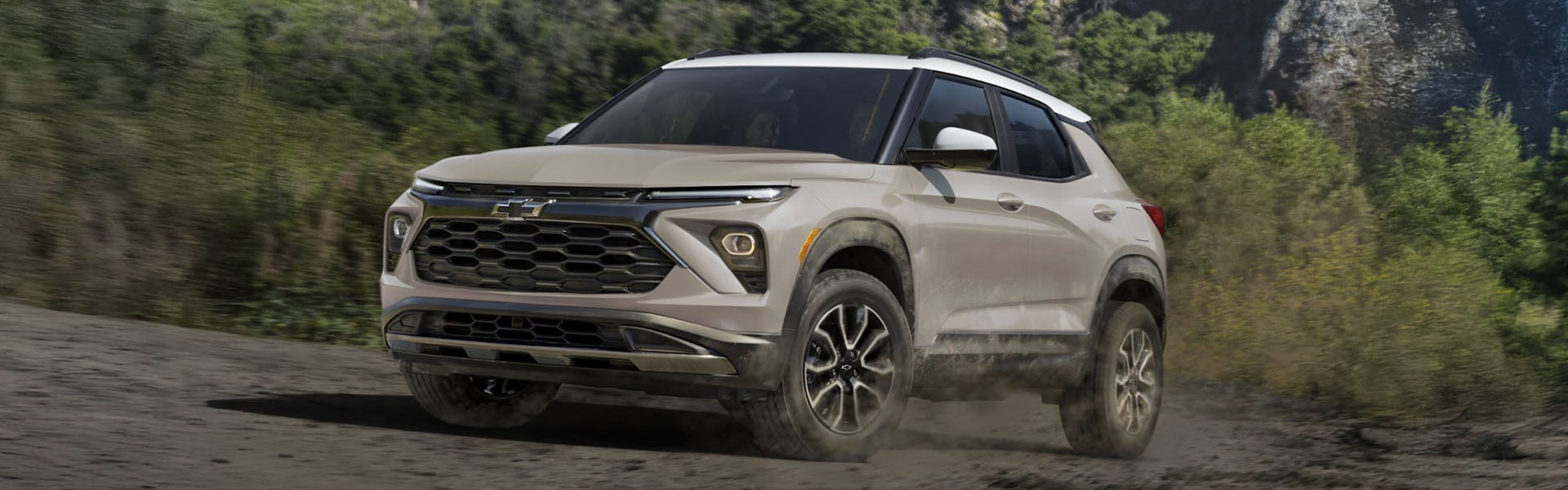
Exterior view of a 2026 Chevrolet Trailblazer. The Chevrolet Trailblazer is shown from outside with its compact SUV body in full view.

2026 Trailblazer Service for Low-Mileage Drivers

The 2026 Chevrolet Trailblazer maintenance schedule calls for an oil and filter change at least once a year, even at 4,000 miles. Chevrolet sets the first routine tire rotation at 7,500 miles, so a lightly driven Trailblazer may get its first oil change before its first scheduled rotation. The cabin air filter is due at 22,500 miles or 24 months, whichever comes first. By George Nunnally Chevrolet Key Numbers Oil and filter service is due at least once a year. The oil-life alert gives you up to 600 miles to get the oil and filter changed. Routine tire rotations start at 7,500 miles. The cabin filter is due at 22,500 miles or 24 months. Brake fluid is due every five years, and coolant is due at 150,000 miles or six years. When should I change the oil if I drive only 4,000 miles a year? A Trailblazer that covers 4,000 miles in its first year reaches Chevrolet’s time limit for oil and filter service at 4,000 miles. At that rate, the second annual oil change falls around 8,000 miles if the dash has stayed quiet. The 7,500-mile service visit still matters for the tires and brakes, and the 2026 Chevy Trailblazer maintenance schedule lists the services that fall in between oil changes. Trailblazer oil life on short trips Chevrolet calculates the oil service alert using engine run time, temperature and distance. A string of short trips on US-71B through Rogers can rack up engine time while adding fewer miles than a steady run on I-49. If Change Engine Oil Soon appears before the anniversary, Chevrolet calls for an oil and filter change as soon as possible, within 600 miles. For a driver covering 100 miles a week, 600 miles is about six weeks. An upcoming 600-mile trip uses that entire window. When is the first Trailblazer tire rotation due? Chevrolet schedules the first routine rotation at 7,500 miles. At 4,000 miles a year, that comes at roughly 22½ months. A first oil change at 12 months and a first scheduled rotation a little before year two are both normal at that pace. A long summer of drives from Centerton to Beaver Lake can move the rotation forward simply by putting more miles on the tires. Trailblazer tire wear between rotations Chevrolet also calls for an earlier rotation when the tires show uneven wear. A technician checks tire pressure and wheel or tire damage at that visit. If the uneven wear keeps coming back, Chevrolet calls for an alignment check. The regular 7,500-mile inspection also includes front and rear brake wear, so a drive down I-49 from Lowell can end with two useful measurements at the same stop: remaining tread and remaining brake lining. Which Trailblazer filter is due after two years? The cabin filter reaches its time limit at 24 months. A Centerton driver putting on 4,000 miles a year will be at about 8,000 miles when it comes due. At 15,000 miles a year, the same 22,500-mile limit arrives after about 18 months. Chevrolet also calls out weak vent airflow, persistent fogging and odors as reasons the cabin filter may need attention earlier, especially with heavy traffic or dusty driving. Trailblazer cabin filter at the second annual visit At 8,000 miles in two years, the cabin air filter and the second annual oil service can fall at the same appointment. The cabin filter has a separate part and installation charge on a paid visit. Chevrolet’s first included maintenance benefit covers the oil service and scheduled rotation for an eligible new Trailblazer during the first year. Air filters are outside that benefit. Trailblazer engine air filter messages On Trailblazers with an engine air filter life display, Replace at Next Oil Change puts the engine filter on that oil service. Replace Soon calls for earlier replacement. A cabin filter coming due by age in Springdale is its own service item. When are Trailblazer brake fluid and coolant due? Brake fluid is due every five years, and engine coolant is due at 150,000 miles or six years. At 4,000 miles a year, those dates arrive around 20,000 and 24,000 miles. Chevrolet bases brake pad and rotor service on wear found during the inspection, so a five-year brake-fluid visit can come while the original pads still have usable lining. Trailblazer fluid dates at low miles The six-year coolant service can arrive long before spark plugs at 60,000 miles. At 4,000 miles a year, those two mileage readings can be about nine years apart. Chevrolet’s 150,000-mile schedule also includes rear axle fluid on all-wheel-drive (AWD) models. The six-year time limit applies to the coolant. What can I get done at one Trailblazer service visit? An oil service and multipoint inspection give the technicians on SE Moberly Lane a chance to measure brake wear, inspect the tires and look at the cooling and other fluid levels. The Chevrolet Certified Service department handles the rotation and either filter when those jobs fall at the same visit. An eligible first maintenance visit includes the oil and filter, scheduled four-tire rotation and inspection at a participating dealer. Trailblazer service costs in Bentonville For a paid visit, the oil and oil filter are one job. A cabin filter, a brake-fluid exchange and coolant service each add their own parts or fluid and labor. Chevrolet service and parts specials list current offers, and George Nunnally Chevrolet takes Chevrolet service appointments at 2700 SE Moberly Lane in Bentonville. Trailblazer service FAQs Does a Trailblazer with only 2,000 miles need an oil change after a year? Yes. Chevrolet’s annual limit applies to the oil and filter, even if a Trailblazer mainly makes short runs between Bentonville and Rogers and has covered just 2,000 miles. Is oil life the same as the oil level? The annual service interval applies to the oil and filter. Chevrolet lists a separate check for the oil level at the 7,500-mile visit, along with a look for leaks and a review of the oil life. Can I change my Trailblazer cabin filter before 22,500 miles? Yes. Chevrolet’s 24-month limit applies even below 22,500 miles. It also lists reduced airflow, odors and increased window fogging among the conditions that can call for an earlier replacement. When does Chevrolet include the first Trailblazer service? Chevrolet includes one maintenance visit in the first 12 months after delivery for eligible new owners and lessees. Participating dealers perform the covered oil and filter change, scheduled rotation and multipoint inspection. When should I replace the spark plugs in a 2026 Trailblazer? Chevrolet schedules spark plug replacement at 60,000 miles. The same visit calls for inspection of the spark plug wires or boots. A 4,000-mile-per-year Trailblazer reaches that mileage after about 15 years.

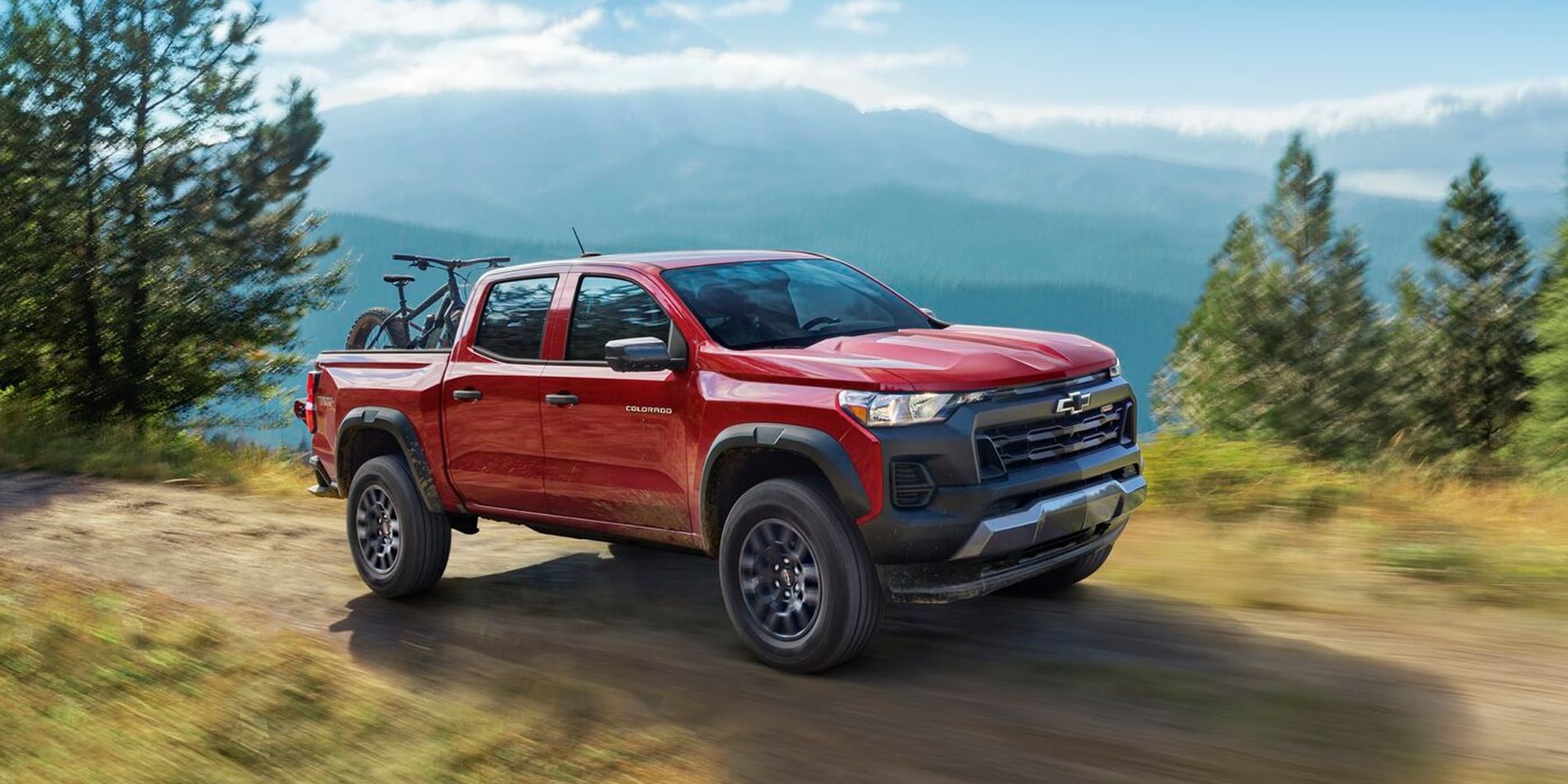
Red 2027 Chevrolet Colorado on a mountain road

A 2027 Colorado for Mountain Biking in Northwest Arkansas

The 2027 Chevrolet Colorado carries bikes and muddy trail gear in a 61.70-inch bed while keeping five seats available for the drive to Coler Mountain Bike Preserve or Slaughter Pen Trails. The LT adds a covered StowFlex compartment inside the tailgate, so a small pump, tools and gloves can ride away from the bikes. Key Numbers The short bed measures 61.70 inches with the tailgate closed and 45.50 inches between the wheel wells. Chevrolet gives the Crew Cab 34.70 inches of rear legroom and five seats. The $36,900 LT comes with the StowFlex storage compartment and an EZ Lift and Lower tailgate. Chevrolet offers a 120-volt bed outlet and a spray-in bedliner. What fits in the Colorado’s short bed? The short bed holds 41.9 cubic feet and is 58.80 inches wide at its widest part. A gear box that sits on the floor has 45.50 inches between the wheel wells. That leaves a separate place for boots, a cooler and a muddy bag, even with the back seat full. The Colorado bed and cab dimensions show the closed-tailgate measurement and the clear space behind the front seats. A full bike can take up much of the bed floor with both wheels on. A compatible tailgate pad carries bikes across the tailgate and leaves room toward the cab for a gear box. A compatible hitch rack leaves the entire bed available for bags and coolers. A Colorado equipped with the Trailering Package has a receiver for a compatible rack. The rack and bikes count against payload even when the bed is empty. What does StowFlex add on a ride day? On LT the storage compartment comes inside the EZ Lift and Lower tailgate. The compartment is watertight and drainable, so wet gloves or a small repair kit can ride there without taking up floor space. The same tailgate has a built-in measuring tool and can sit in a middle position that Chevrolet rates to support up to 500 pounds. That rating is for the tailgate in that position. The short bed offers up to 17 cargo tie-down points. A spray-in bedliner is available if wet tires and grit are going to be in the box most weekends. The available 120-volt outlet sits in the bed, where it can supply compatible gear while the cab stays closed. In the 2027 Colorado trim lineup, LT is the first version with StowFlex standard. A Colorado for Coler or Slaughter Pen Coler Mountain Bike Preserve has a 20-mile multi-use trail system, a paved greenway and a campground. Slaughter Pen Trails has more than 23 miles of mountain bike trails. The Razorback Regional Greenway connects the Bentonville trail network to Rogers, Springdale and Fayetteville, giving riding groups several starting points for the same weekend. A driver coming up I-49 from Lowell can carry a full Crew Cab to the trailhead and keep bikes out of the passenger area. The Colorado Crew Cab puts navigation on the 11.3-inch center display and leaves driving information on a separate 11-inch screen. The bed floor stays the same length whether the truck has the LT’s 17-inch wheels or the Trail Boss’s 32-inch all-terrain tires. LT or Trail Boss for a bike and camping weekend? Trip Colorado setup What it gives you Paved drives from Springdale to the trailhead LT Standard StowFlex, remote start and the five-seat Crew Cab. Gravel approaches and camping gear Trail Boss Standard 4WD, two-inch lift, low range and 32-inch all-terrain tires. A camper and bikes on the same trip Trail Boss with factory trailering equipment Integrated trailer brake controller and a separate bed for gear. The Trail Boss starts at $41,600 and includes the Advanced Trailering Package. With the right hitch equipment, a camper can weigh up to 7,700 pounds behind the 2.7L Trail Boss 4WD Crew Cab. The Colorado trailer and tongue ratings show the 770-pound tongue limit on that setup and how the camper and cargo share the truck’s available payload. The Trail Boss off-road hardware includes a shield under the transfer case and more ground clearance than Z71 on the same nominal tire size. Those are useful differences for a truck that sees a rutted gravel driveway or a campsite approach between weekends on pavement. Mountain bike trip FAQs Can the Colorado fit five people with bikes in the bed? Yes. The Colorado Crew Cab seats five, and the short bed gives the bikes and dirty gear a separate space. Rear passengers have 34.70 inches of legroom. The Colorado bed and cabin FAQs include the bed’s width between the wheel wells. Which Colorado has a tailgate compartment for trail tools? The LT includes StowFlex as standard. It puts a drainable compartment inside the tailgate for smaller items, and the bed remains 61.70 inches long with the gate closed. The Colorado guide in Spanish lists the LT’s price and standard equipment. What maintenance is due if the Colorado regularly tows a camper? Chevrolet’s severe schedule calls for the automatic transmission fluid and filter at 45,000 miles. On a four-wheel-drive truck under severe service, the transfer case fluid is due at 50,000 miles. The Colorado maintenance schedule also lists the oil grade and regular rotation interval. Can I carry the bikes on a hitch rack and use the bed for bags? A compatible receiver-mounted rack leaves the bed open for bags and coolers. The receiver is part of the Trailering Package on equipped trucks. A rack carrying heavy bikes adds weight behind the truck, and the receiver, rack and truck loading limits all apply. Does the WT have the same size bed as the LT? Yes. The WT and LT have the same 61.70-inch short box with a five-seat Crew Cab. WT includes the full-output 2.7L TurboMax, while LT adds covered StowFlex storage in the tailgate. The 2027 Colorado buyer’s guide lists all six versions. See a Colorado Crew Cab at Nunnally Chevrolet George Nunnally Chevrolet has Colorado inventory at 2700 SE Moberly Ln off SE Walton Blvd. An LT test drive gives a rider a look at the StowFlex compartment and the depth of the short bed. A Trail Boss adds the factory lift and trailer brake controller for the same five-seat cab. Starting prices exclude freight, taxes, fees and options. Rack fit, loading limits and vehicle equipment vary by setup.

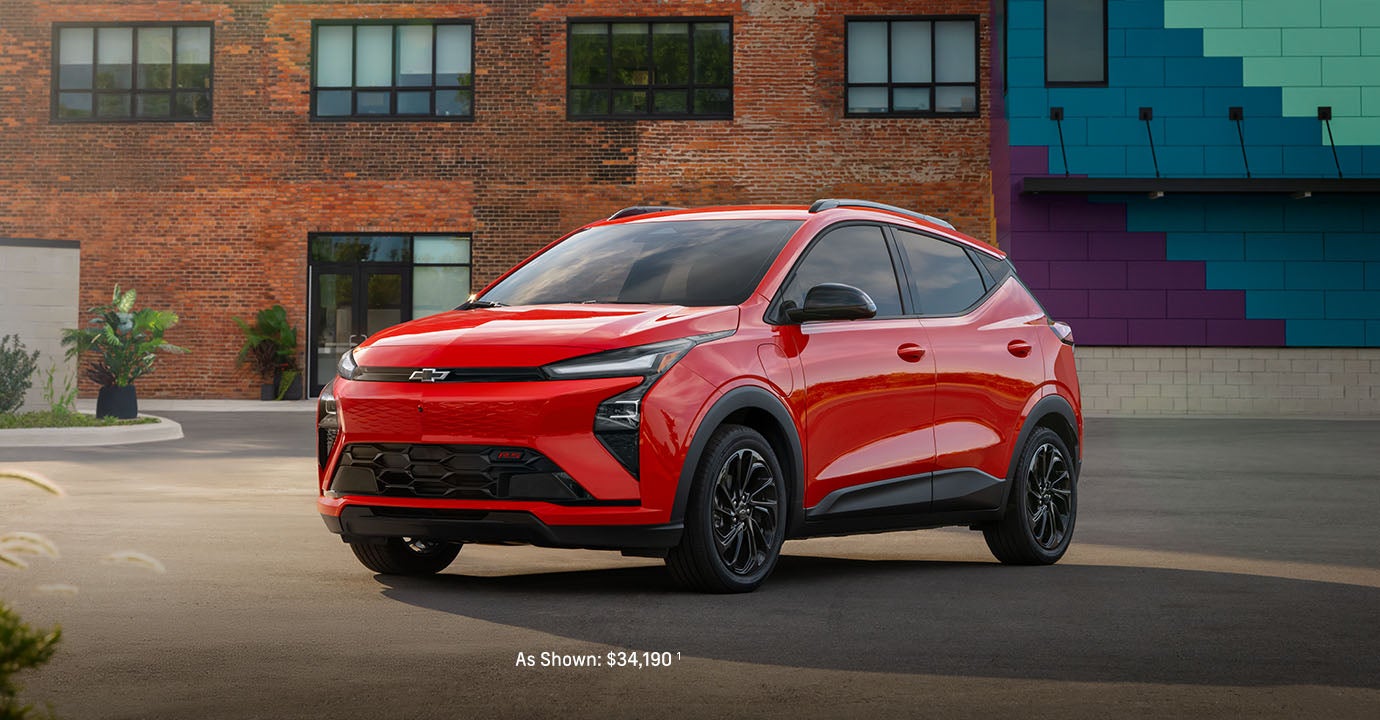
2027 Chevrolet Bolt exterior

2027 Chevy Bolt Charging for Apartment Drivers

Yes, you can drive a 2027 Chevrolet Bolt without charging at your apartment if you have a dependable plug at work or a public charger you can visit regularly. One weekly charge from 10% to 80% can cover a 150-mile workweek with about 33 miles of that charge left, based on the Bolt’s EPA-estimated 262-mile range. Chevrolet estimates about 25 minutes to charge from 10% to 80% at a suitable public fast charger. By George Nunnally Chevrolet Key Numbers On a full battery, the EPA range rating is 262 miles. A regular 120-volt outlet adds about 4 miles of range per charging hour in GM's estimate. The supplied cord can recover 27 rated miles in an hour on 240-volt power. GM’s 25-minute fast-charge estimate replenishes about 183 rated miles in the 10%-to-80% window. The Bolt has a built-in North American Charging Standard (NACS) port for AC and DC charging. How often would I have to plug in a 2027 Bolt? For a 30-mile round trip from Rogers or Lowell along I-49, five workdays use 150 miles. Add 30 miles of errands and the week comes to 180, close to the full amount added at the weekly fast-charge stop. A Bolt starting at 80% has about 210 rated miles in the battery, so that plan leaves roughly 30 rated miles before empty. A second short stop or a workplace top-up leaves room for a longer Saturday trip. Three 30-mile commutes use 90 miles. In a week with two days at home, that leaves about 93 miles from the public session for errands or a weekend trip. The 2027 Bolt range and charging page has Chevrolet’s figures for the full battery and charge speeds. How fast can a public charger fill a Bolt? A suitable DC fast charger can add about 183 rated miles during a stop from 10% to 80%. A grocery trip in Rogers or a ride on the Razorback Regional Greenway in Springdale can fit that stop if a station is nearby. Battery temperature and station availability can change how long you need to park. The Bolt’s built-in NACS connection takes both AC and DC charging. A station app usually shows the plug, price and whether the charger is occupied. Some stations have a different plug or restrict which cars can start a session. The 2027 Bolt uses its native NACS port at compatible public stations. Can I charge a Bolt from an apartment outlet? Plugging into a standard 120-volt receptacle overnight can recover about 32 miles in eight hours. That can cover a short round trip from Centerton to Bentonville if the building approves an outlet near your assigned space. A shared outlet in a visitor spot gives you less certainty about when you can use it. A four-hour stop with the cord on 240-volt power can recover about 108 miles. The 2027 Bolt also accepts up to 11.5 kilowatts from a faster Level 2 station. In a shared garage, assigned hours or a time limit can determine how much of that rate you can use overnight. What could a public charging session cost? At 35 cents per kilowatt-hour, a station would charge $14 for 40 kilowatt-hours before fees. A station charging 50 cents would bill $20 for the same energy. The six-dollar gap on that sample session is a useful number when pricing regular stops near Fayetteville or Lowell. A four-hour workplace session can cover part or all of the example commute, depending on the power the garage provides. For the purchase cost, the finance department can quote a payment and the new Chevrolet inventory shows the cars on the lot. What should I check at my regular Bolt charging stop? A workplace station that supplies the Bolt’s full 11.5 kilowatts can add about 160 miles in a four-hour parking window. GM estimates roughly 40 miles an hour at that rate, enough to cover the example 150-mile workweek in one shift. A shared station with a shorter session limit can be more useful as a top-up between fast charges. 2027 Bolt apartment charging FAQs Does the Bolt come with a charging cord? Yes. The Bolt comes with a cord that uses interchangeable plugs for suitable 120-volt and 240-volt outlets. Would one session still work if I drive an extra 50 miles? Fifty more miles takes the example week to 200 miles, around 17 more than the amount added in the 10%-to-80% session. That week needs another top-up to keep the same 10% reserve. Can I plug in while I work in Springdale? A workplace station can cover regular work miles if employees can use it during their shift. A lower-powered plug can still add miles while the Bolt sits, even when a faster public station is needed before a weekend trip. Does the Bolt charge at full speed all the way to 100%? Charging slows as the battery fills. The advertised time ends at 80%, so a public stop that pushes toward 100% can take longer than the earlier part of the session. What if my apartment adds shared charging later? With a working Level 2 plug at your space, much of the weekly charging can happen overnight. A shared apartment charger may set access hours, a time limit and a rate for each session. Contact George Nunnally Chevrolet in Bentonville about the Bolt and its included charging cord. The showroom hours are posted for drivers coming from Rogers or Centerton.

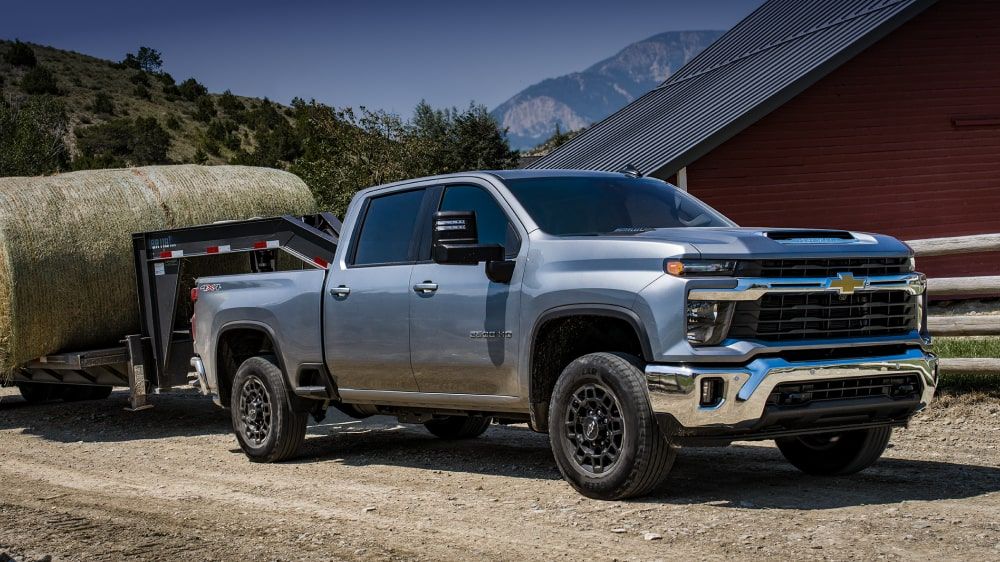
2027 Chevrolet Silverado 2500HD LT towing a hay trailer

2027 Silverado 2500HD LT Work Trucks Springdale

<div style="max-width:none;margin:0;padding:0 28px;font-family:system-ui,-apple-system,'Segoe UI',Roboto,sans-serif;color:#23262e;font-size:17px;line-height:1.7;"> <div style="background:#15161c;color:#ffffff;border-radius:10px;padding:30px 28px;margin:0 0 22px;"> <p style="color:#CD9834;font-size:13px;letter-spacing:.12em;text-transform:uppercase;font-weight:700;margin:0 0 10px;">George Nunnally Chevrolet • Springdale & NWA</p> <p style="color:#efe6d6;font-size:18px;margin:0;">The 2027 Silverado 2500HD LT combines a 13.4-inch touchscreen with 4WD and three cab choices for work around Springdale.</p> </div> <div style="display:flex;flex-wrap:wrap;gap:12px;margin:0 0 26px;"> <a href="/searchnew.aspx?ModelAndTrim=Silverado%202500%20HD" style="display:inline-block;background:#CD9834;color:#ffffff !important;text-decoration:none !important;padding:13px 22px;border-radius:7px;font-weight:600;">View 2027 Silverado 2500HD Inventory</a> <a href="/car-loan-financing" style="display:inline-block;background:transparent;color:#23262e !important;text-decoration:none !important;padding:13px 22px;border-radius:7px;font-weight:600;border:2px solid #CD9834;">Get Pre-Approved</a> <a href="/trade-in-form.html" style="display:inline-block;background:transparent;color:#23262e !important;text-decoration:none !important;padding:13px 22px;border-radius:7px;font-weight:600;border:2px solid #CD9834;">Value Your Trade</a> </div> <img src="https://www.bentonvillechevrolet.com/static/dealer-27988/2027-chevrolet-silverado-2500-hd-lt-front-three-quarter-towing-hay-trailer.jpg" alt="2027 Silverado 2500HD LT towing a hay trailer" style="display:block;width:100%;height:auto;border-radius:8px;margin:18px 0;"> <section data-aeo="quick-answer" style="background:#f4f1eb;padding:24px;border-radius:12px;"><h2>LT Work-Truck Facts</h2><ul><li>LT’s GM-announced base MSRP is $53,900 before destination and options.</li><li>An LT Double Cab Long Bed measures 256.54 inches overall.</li><li>Standard equipment includes a 13.4-inch touchscreen and 18-inch high-gloss black aluminum wheels.</li><li>The Long Bed has a 98.27-inch floor and 83.5 cubic feet of cargo volume.</li></ul></section> <p>A 2027 Silverado 2500HD LT can carry a work crew in a Crew Cab, put a Long Bed behind a Double Cab or use a Regular Cab Long Bed for equipment duty. The 4WD order-guide layouts and a standard 13.4-inch touchscreen put work-body choice and phone connectivity together for Springdale businesses.</p> <p>George Nunnally Chevrolet serves Springdale and NWA with Silverado inventory, financing, trade-in appraisals and service. The <a href="/2027-silverado-2500hd-for-sale-nwa-ar">2027 Silverado 2500HD</a> has an enhanced 6.6L gasoline V8 and available 8.3L Duramax, with different trailer ratings for each cab, drivetrain and hitch arrangement.</p> <h2>Work Bodies for US-412 Jobs</h2> <p>The Double Cab Standard Bed measures 240.51 inches overall, and the Double Cab Long Bed measures 256.54 inches. Double Cab rear legroom is 35.24 inches, giving the second row room for additional passengers while keeping the body shorter than the corresponding Crew Cab.</p> <p>Crew Cab provides 43.40 inches of rear legroom. Its Standard Bed body measures 250.04 inches long, and the Long Bed body measures 266.06 inches. These <a href="/2027-silverado-2500hd-specs-nwa-ar">cab and bed dimensions</a> define the space available for the crew, cargo and the full truck.</p> <table style="border-collapse:collapse !important;width:100%;margin:0 0 16px;font-size:15px;"><thead><tr><th style="background:#15161c;color:#fff;text-align:left;padding:11px 13px;border:1px solid #15161c;">LT work layout</th><th style="background:#15161c;color:#fff;text-align:left;padding:11px 13px;border:1px solid #15161c;">Useful equipment or dimension</th><th style="background:#15161c;color:#fff;text-align:left;padding:11px 13px;border:1px solid #15161c;">Work application</th></tr></thead><tbody><tr><td style="padding:10px 13px;border:1px solid #e6e4df;">Regular Cab Long Bed 4WD</td><td style="padding:10px 13px;border:1px solid #e6e4df;">Three seats; 98.27-inch box floor</td><td style="padding:10px 13px;border:1px solid #e6e4df;">Tools and long cargo with a single row of seating</td></tr><tr><td style="padding:10px 13px;border:1px solid #e6e4df;">Double Cab Long Bed 4WD</td><td style="padding:10px 13px;border:1px solid #e6e4df;">35.24-inch rear legroom; 83.5 cubic feet of box volume</td><td style="padding:10px 13px;border:1px solid #e6e4df;">Additional passengers and long-box work</td></tr><tr><td style="padding:10px 13px;border:1px solid #e6e4df;">Crew Cab Standard Bed 4WD</td><td style="padding:10px 13px;border:1px solid #e6e4df;">43.40-inch rear legroom; 69.5 cubic feet of box volume</td><td style="padding:10px 13px;border:1px solid #e6e4df;">Regular use of the rear passenger row</td></tr></tbody></table> <p>For a crew traveling along US-412 through Springdale and Tontitown, the Crew Cab’s rear-seat dimension is a practical part of the truck’s daily use. A Double Cab Long Bed retains the 98.27-inch box floor with a different rear-cabin dimension. Both layouts remain LT 4WD choices in the 2027 guide.</p> <h2>Gasoline and Duramax Power for the Workload</h2> <p>The gas V8 produces 412 horsepower and 472 lb-ft of torque. The available Duramax delivers 555 horsepower and 1,230 lb-ft, along with an exhaust brake and dual-stage charge cooling. An Allison 10-speed automatic is paired with either engine.</p> <p>A properly equipped Crew Cab Standard Bed 4WD gas truck has a conventional ball-hitch rating of 16,000 lbs. An eligible properly equipped Crew Cab 4WD Duramax with Max Trailering reaches 20,000 lbs with a conventional hitch. <a href="/2027-silverado-2500hd-towing-nwa-ar">Hitch-specific ratings</a> also distinguish fifth-wheel and gooseneck setups.</p> <p>Passengers, carried tools, bed accessories and the trailer’s vertical hitch load all contribute to the truck’s actual load. A trailer rating does not provide a second allowance for those items; the truck’s loading label, hitch limits and truck equipment control the working combination.</p> <figure style="margin:28px 0;"><img src="https://www.bentonvillechevrolet.com/static/dealer-27988/2027-chevrolet-silverado-2500-hd-towing-utility-vehicle-dusty-trail.jpg" alt="2027 Silverado 2500HD towing a utility vehicle on a dusty trail" loading="lazy" style="width:100%;height:auto;border-radius:12px;"><figcaption>Trailer ratings depend on the engine, cab, drivetrain and hitch equipment.</figcaption></figure> <h2>LT Equipment for I-49 Travel and Jobsite Stops</h2> <p>LT includes the 13.4-inch Chevrolet Infotainment 3 Premium display with wireless Apple CarPlay and Android Auto compatibility. The available Convenience Package adds dual-zone automatic climate control, a 10-way power driver seat, LED fog lamps, bed LED lighting and an adjustable steering column.</p> <p>The <a href="/2027-silverado-2500hd-trims-nwa-ar">available LT Trail Boss Package</a> adds black exterior details, BFGoodrich off-road tires and a Chevytec spray-on bedliner. Available Z71 equipment includes Rancho shocks, Hill Descent Control and transfer-case and oil-pan skid plates.</p> <p>The 2027 order guide makes Adaptive Cruise Control standard across the range, including LT. Available HD Surround Vision and Bed View Camera add views around the truck and into the cargo box. Those camera options support low-speed maneuvering without changing the truck’s physical clearance or loading limits.</p> <h2>LT Pricing and Ownership</h2> <p>GM-announced LT base MSRP is $53,900, excluding the $2,795 destination freight charge, options, taxes and fees. The Duramax option premium is $11,400. These figures come from the GM-supplied October 2026 price sheet reported by GM-Trucks and The Fast Lane Truck; Nunnally sets the final selling price.</p> <p>Chevrolet recommends oil and filter replacement at least annually and tire rotation every 7,500 miles. Nunnally’s <a href="/2027-silverado-2500hd-service-nwa-ar">Silverado service</a> includes those oil changes and <a href="/service">tire rotations</a>, with fluids and filters matched to the installed engine.</p> <figure style="margin:28px 0;"><img src="https://www.bentonvillechevrolet.com/static/dealer-27988/2027-chevrolet-silverado-2500-hd-front-three-quarter-rocky-trail.jpg" alt="2027 Silverado 2500HD on a rocky trail" loading="lazy" style="width:100%;height:auto;border-radius:12px;"><figcaption>Available off-road packages add specific suspension, tire and underbody equipment.</figcaption></figure> <h2>LT Builds for Springdale Businesses</h2> <p>A gas Double Cab Long Bed LT 4WD brings the 83.5-cubic-foot box and a second passenger row to work duty. A Crew Cab Standard Bed LT 4WD adds the larger rear passenger space. An eligible Duramax Crew Cab with Max Trailering provides the package-specific conventional rating for heavier trailer applications.</p> <p>Nunnally’s <a href="/searchnew.aspx?ModelAndTrim=Silverado%202500%20HD:LT">LT inventory filter</a> shows listed trucks, including available model years. The <a href="/2027-silverado-2500hd-buyers-guide-nwa-ar">2027 buyers guide</a> covers the new engines, while the <a href="/silverado-2500hd-2027-en-espanol-nwa-ar">Spanish Silverado page</a> explains the versions, engine output and towing equipment in Spanish.</p> <p>George Nunnally Chevrolet is at 2700 SE Moberly Ln, Bentonville, AR 72712, serving Rogers, Fayetteville, Siloam Springs, Lowell and Centerton. Buyers can browse <a href="/searchnew.aspx">new Chevrolet inventory</a>, start a <a href="/car-loan-financing">financing request</a> or submit a <a href="/trade-in-form.html">trade-in appraisal request</a>.</p> <h2>LT Work-Truck Questions</h2> <h3>Can an LT work truck have a Double Cab and Long Bed?</h3><p>Yes. The 2027 guide lists LT on 4WD Double Cab Long Bed models. That body has 35.24 inches of rear legroom and a 98.27-inch cargo-box floor, with 83.5 cubic feet of bed volume. Gasoline and Duramax engine options support different hitch-specific towing ratings for the completed truck.</p> <h3>What does the LT Convenience Package add for daily work use?</h3><p>The available LT Convenience Package includes dual-zone automatic climate control, a 10-way power driver seat, manual tilt-and-telescoping steering column, LED fog lamps and bed LED lighting. The 13.4-inch infotainment screen is already standard on LT. Package and cab requirements determine the exact equipment combination available to order.</p> <h3>What is the conventional rating for a gas Crew Cab Standard Bed LT build?</h3><p>A properly equipped 2027 Silverado 2500HD Crew Cab Standard Bed 4WD with the 6.6L gas V8 has a 16,000-lb conventional ball-hitch rating. That engine makes 412 horsepower and 472 lb-ft. The truck’s loading label, hitch equipment and actual passenger and cargo weight govern the usable towing setup.</p> <h3>Where can I find more local Silverado purchase answers?</h3><p>Nunnally’s <a href="/2027-silverado-2500hd-faqs-nwa-ar">2027 Silverado 2500HD FAQs</a> include financing, trade-in, cab equipment and local buying details. The dealership serves Springdale and NWA at (479) 319-2494. Chevrolet’s 2027 order guide identifies six trims, with LT offering a 13.4-inch touchscreen and several 4WD cab arrangements.</p> <p style="background:#15161c;color:#fff;padding:24px;border-radius:12px;"><a href="/testdrive.aspx" style="color:#fff;">Request an LT test drive</a> · <a href="/contactus.aspx" style="color:#fff;">Contact Nunnally</a> · <a href="tel:+14793192494" style="color:#fff;">(479) 319-2494</a></p> <script type="application/ld+json"> {"@context":"https://schema.org","@graph":[{"@type":"AutoDealer","@id":"https://www.bentonvillechevrolet.com/#dealer","name":"George Nunnally Chevrolet","url":"https://www.bentonvillechevrolet.com","telephone":"479-319-2494","priceRange":"$$$","address":{"@type":"PostalAddress","streetAddress":"2700 SE Moberly Ln","addressLocality":"Bentonville","addressRegion":"AR","postalCode":"72712","addressCountry":"US"},"areaServed":"Bentonville, Rogers, Springdale, Fayetteville, Bella Vista, Centerton, Lowell, Siloam Springs"},{"@type":"WebSite","@id":"https://www.bentonvillechevrolet.com/#website","url":"https://www.bentonvillechevrolet.com/","name":"George Nunnally Chevrolet","publisher":{"@id":"https://www.bentonvillechevrolet.com/#dealer"}},{"@type":"WebPage","@id":"https://www.bentonvillechevrolet.com/blog/2027-silverado-2500hd-lt-work-trucks-springdale-nwa#webpage","url":"https://www.bentonvillechevrolet.com/blog/2027-silverado-2500hd-lt-work-trucks-springdale-nwa","name":"2027 Silverado 2500HD LT Work Trucks Springdale","isPartOf":{"@id":"https://www.bentonvillechevrolet.com/#website"},"breadcrumb":{"@id":"https://www.bentonvillechevrolet.com/blog/2027-silverado-2500hd-lt-work-trucks-springdale-nwa#breadcrumb"},"primaryImageOfPage":"https://www.bentonvillechevrolet.com/static/dealer-27988/2027-chevrolet-silverado-2500-hd-towing-utility-vehicle-dusty-trail.jpg","datePublished":"2026-11-10","dateModified":"2026-11-10","inLanguage":"en-US","about":{"@id":"https://www.bentonvillechevrolet.com/blog/2027-silverado-2500hd-lt-work-trucks-springdale-nwa#vehicle"},"mainEntity":{"@id":"https://www.bentonvillechevrolet.com/blog/2027-silverado-2500hd-lt-work-trucks-springdale-nwa#faq"}},{"@type":"BreadcrumbList","@id":"https://www.bentonvillechevrolet.com/blog/2027-silverado-2500hd-lt-work-trucks-springdale-nwa#breadcrumb","itemListElement":[{"@type":"ListItem","position":1,"name":"Home","item":"https://www.bentonvillechevrolet.com/"},{"@type":"ListItem","position":2,"name":"Blog","item":"https://www.bentonvillechevrolet.com/blog"},{"@type":"ListItem","position":3,"name":"2027 Silverado 2500HD LT Work Trucks Springdale","item":"https://www.bentonvillechevrolet.com/blog/2027-silverado-2500hd-lt-work-trucks-springdale-nwa"}]},{"@type":"BlogPosting","@id":"https://www.bentonvillechevrolet.com/blog/2027-silverado-2500hd-lt-work-trucks-springdale-nwa#article","headline":"2027 Silverado 2500HD LT Work Trucks Springdale","image":"https://www.bentonvillechevrolet.com/static/dealer-27988/2027-chevrolet-silverado-2500-hd-towing-utility-vehicle-dusty-trail.jpg","datePublished":"2026-11-10","dateModified":"2026-11-10","author":{"@id":"https://www.bentonvillechevrolet.com/#dealer"},"publisher":{"@id":"https://www.bentonvillechevrolet.com/#dealer"},"mainEntityOfPage":{"@id":"https://www.bentonvillechevrolet.com/blog/2027-silverado-2500hd-lt-work-trucks-springdale-nwa#webpage"},"about":{"@id":"https://www.bentonvillechevrolet.com/blog/2027-silverado-2500hd-lt-work-trucks-springdale-nwa#vehicle"},"articleSection":"Buyer's Guide","inLanguage":"en-US"},{"@type":"Car","@id":"https://www.bentonvillechevrolet.com/blog/2027-silverado-2500hd-lt-work-trucks-springdale-nwa#vehicle","name":"2027 Chevrolet Silverado 2500HD","brand":{"@type":"Brand","name":"Chevrolet"},"manufacturer":{"@type":"Organization","name":"Chevrolet"},"model":"2027 Chevrolet Silverado 2500HD","vehicleModelDate":"2027","bodyType":"heavy-duty pickup truck","vehicleEngine":{"@type":"EngineSpecification","engineType":"6.6L V8 gasoline","enginePower":{"@type":"QuantitativeValue","value":"412","unitText":"hp"}},"vehicleTransmission":"Allison 10-speed automatic","vehicleSeatingCapacity":"6","cargoVolume":{"@type":"QuantitativeValue","value":"83.5","unitText":"cu ft"},"additionalProperty":[{"@type":"PropertyValue","name":"Torque","value":"472 lb-ft"}],"offers":{"@type":"AggregateOffer","priceCurrency":"USD","lowPrice":"47200","highPrice":"75400","seller":{"@id":"https://www.bentonvillechevrolet.com/#dealer"}}},{"@type":"FAQPage","@id":"https://www.bentonvillechevrolet.com/blog/2027-silverado-2500hd-lt-work-trucks-springdale-nwa#faq","mainEntity":[{"@type":"Question","name":"Can an LT work truck have a Double Cab and Long Bed?","acceptedAnswer":{"@type":"Answer","text":"Yes. The 2027 guide lists LT on 4WD Double Cab Long Bed models. That body has 35.24 inches of rear legroom and a 98.27-inch cargo-box floor, with 83.5 cubic feet of bed volume. Gasoline and Duramax engine options support different hitch-specific towing ratings for the completed truck."}},{"@type":"Question","name":"What does the LT Convenience Package add for daily work use?","acceptedAnswer":{"@type":"Answer","text":"The available LT Convenience Package includes dual-zone automatic climate control, a 10-way power driver seat, manual tilt-and-telescoping steering column, LED fog lamps and bed LED lighting. The 13.4-inch infotainment screen is already standard on LT. Package and cab requirements determine the exact equipment combination available to order."}},{"@type":"Question","name":"What is the conventional rating for a gas Crew Cab Standard Bed LT build?","acceptedAnswer":{"@type":"Answer","text":"A properly equipped 2027 Silverado 2500HD Crew Cab Standard Bed 4WD with the 6.6L gas V8 has a 16,000-lb conventional ball-hitch rating. That engine makes 412 horsepower and 472 lb-ft. The truck’s loading label, hitch equipment and actual passenger and cargo weight govern the usable towing setup."}},{"@type":"Question","name":"Where can I find more local Silverado purchase answers?","acceptedAnswer":{"@type":"Answer","text":"Nunnally’s 2027 Silverado 2500HD FAQs include financing, trade-in, cab equipment and local buying details. The dealership serves Springdale and NWA at (479) 319-2494. Chevrolet’s 2027 order guide identifies six trims, with LT offering a 13.4-inch touchscreen and several 4WD cab arrangements."}}]}]} </script> <p style="font-size:14px;letter-spacing:.08em;text-transform:uppercase;color:#5d4a2e;font-weight:700;margin:26px 0 10px;">Explore the 2027 Silverado 2500HD</p> <div style="display:grid;grid-template-columns:repeat(auto-fit,minmax(240px,1fr));gap:12px;margin:0 0 26px;"> <div style="background:#241B09;border-left:6px solid #15161c;border-radius:0 10px 10px 0;"><a href="/2027-silverado-2500hd-buyers-guide-nwa-ar" style="display:block !important;height:100% !important;box-sizing:border-box !important;padding:16px 18px;color:#ffffff !important;text-decoration:none !important;"><span style="display:block;font-weight:700;color:#ffffff !important;">Start Here: 2027 Silverado 2500HD Guide</span><span style="display:block;font-size:14px;color:#ffffff;">Start Here</span></a></div> <div style="background:#2C210B;border-left:6px solid #15161c;border-radius:0 10px 10px 0;"><a href="/2027-silverado-2500hd-for-sale-nwa-ar" style="display:block !important;height:100% !important;box-sizing:border-box !important;padding:16px 18px;color:#ffffff !important;text-decoration:none !important;"><span style="display:block;font-weight:700;color:#ffffff !important;">2027 Silverado 2500HD Overview</span><span style="display:block;font-size:14px;color:#ffffff;">Engines, trims and pricing</span></a></div> <div style="background:#34260D;border-left:6px solid #15161c;border-radius:0 10px 10px 0;"><a href="/2027-silverado-2500hd-trims-nwa-ar" style="display:block !important;height:100% !important;box-sizing:border-box !important;padding:16px 18px;color:#ffffff !important;text-decoration:none !important;"><span style="display:block;font-weight:700;color:#ffffff !important;">Trims Compared</span><span style="display:block;font-size:14px;color:#ffffff;">The whole lineup, side by side</span></a></div> <div style="background:#3B2C0F;border-left:6px solid #15161c;border-radius:0 10px 10px 0;"><a href="/2027-silverado-2500hd-specs-nwa-ar" style="display:block !important;height:100% !important;box-sizing:border-box !important;padding:16px 18px;color:#ffffff !important;text-decoration:none !important;"><span style="display:block;font-weight:700;color:#ffffff !important;">Specs and Dimensions</span><span style="display:block;font-size:14px;color:#ffffff;">Dimensions, weights and capacities</span></a></div> <div style="background:#433111;border-left:6px solid #15161c;border-radius:0 10px 10px 0;"><a href="/2027-silverado-2500hd-towing-nwa-ar" style="display:block !important;height:100% !important;box-sizing:border-box !important;padding:16px 18px;color:#ffffff !important;text-decoration:none !important;"><span style="display:block;font-weight:700;color:#ffffff !important;">Towing and Payload</span><span style="display:block;font-size:14px;color:#ffffff;">Ratings, hitch and trailering gear</span></a></div> <div style="background:#4A3713;border-left:6px solid #15161c;border-radius:0 10px 10px 0;"><a href="/2027-silverado-2500hd-service-nwa-ar" style="display:block !important;height:100% !important;box-sizing:border-box !important;padding:16px 18px;color:#ffffff !important;text-decoration:none !important;"><span style="display:block;font-weight:700;color:#ffffff !important;">Maintenance and Reliability</span><span style="display:block;font-size:14px;color:#ffffff;">Service intervals and warranty</span></a></div> <div style="background:#523D14;border-left:6px solid #15161c;border-radius:0 10px 10px 0;"><a href="/2027-silverado-2500hd-faqs-nwa-ar" style="display:block !important;height:100% !important;box-sizing:border-box !important;padding:16px 18px;color:#ffffff !important;text-decoration:none !important;"><span style="display:block;font-weight:700;color:#ffffff !important;">Silverado 2500HD FAQs</span><span style="display:block;font-size:14px;color:#ffffff;">2027 Silverado 2500HD facts and figures</span></a></div> <div style="background:#5A4216;border-left:6px solid #15161c;border-radius:0 10px 10px 0;"><a href="/silverado-2500hd-2027-en-espanol-nwa-ar" style="display:block !important;height:100% !important;box-sizing:border-box !important;padding:16px 18px;color:#ffffff !important;text-decoration:none !important;"><span style="display:block;font-weight:700;color:#ffffff !important;">Silverado 2500HD 2027 en Español</span><span style="display:block;font-size:14px;color:#ffffff;">2027 Silverado 2500HD facts and figures</span></a></div> </div> <div style="background:#15161c;color:#ffffff;border-radius:10px;padding:30px 28px;margin:32px 0 0;"> <p style="color:#CD9834;font-size:13px;letter-spacing:.12em;text-transform:uppercase;font-weight:700;margin:0 0 10px;">Next Step</p> <h2 style="color:#ffffff;font-size:26px;line-height:1.3;margin:0 0 10px;">See the 2027 Silverado 2500HD in person</h2> <p style="color:#efe6d6;margin:0 0 18px;">Tell us how you will use it and we will point you at the right configuration on the lot.</p> <div style="display:flex;flex-wrap:wrap;gap:12px;"> <a href="/searchnew.aspx?ModelAndTrim=Silverado%202500%20HD" style="display:inline-block;background:#CD9834;color:#ffffff !important;text-decoration:none !important;padding:13px 22px;border-radius:7px;font-weight:600;">Browse 2027 Silverado 2500HD Inventory</a> <a href="/car-loan-financing" style="display:inline-block;background:transparent;color:#ffffff !important;text-decoration:none !important;padding:13px 22px;border-radius:7px;font-weight:600;border:2px solid #ffffff;">Get Pre-Approved</a> <a href="/trade-in-form.html" style="display:inline-block;background:transparent;color:#ffffff !important;text-decoration:none !important;padding:13px 22px;border-radius:7px;font-weight:600;border:2px solid #ffffff;">Value Your Trade</a> </div> </div> <!-- paste make_schema.py output here, INSIDE the wrapper --> </div>

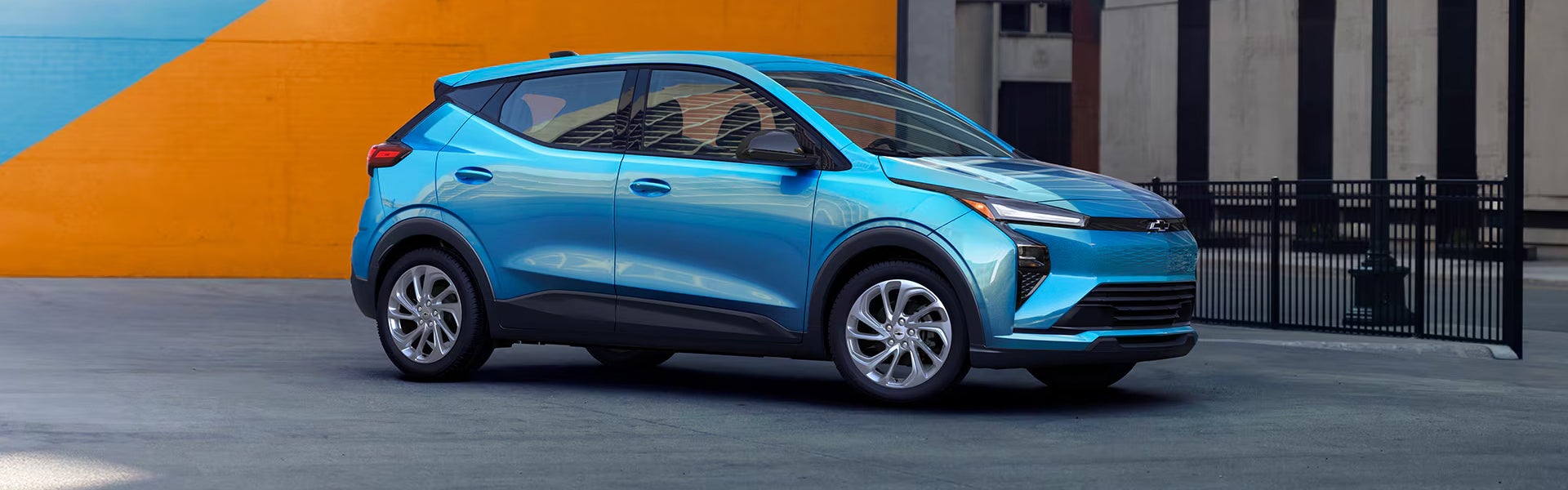
2027 Chevrolet bolt EV For Sale NWA Arkansas dealership

2027 Chevy Bolt: Northwest Arkansas Buyer's Guide

2027 Chevy Bolt For Sale in Northwest Arkansas | Nunnally EV Buying Guide By the George Nunnally Chevrolet team · Published October 4, 2026 THE SHORT VERSION The 2027 Chevrolet Bolt is a front-wheel-drive electric hatchback starting at $28,995 (including destination), with a launch LT at $29,990. It is EPA-rated at up to 262 miles of range on a 65 kWh LFP battery, and returns 120 MPGe combined. It is the first Chevrolet EV with a standard NACS port, so it plugs straight into Tesla Superchargers. A 150 kW DC fast charger takes it from 10 to 80 percent in about 26 minutes. Two trims: the LT and the sport-styled RS (around $32,995). You can see current inventory and set up a test drive at George Nunnally Chevrolet in Bentonville. See the 2027 Bolt lineup in stock. If you are shopping for a 2027 Chevrolet Bolt in Northwest Arkansas, here is the direct answer: it starts at $28,995 with destination, goes up to 262 miles on a charge, and it is in the buying stage now at George Nunnally Chevrolet. The Bolt is back for 2027 as an affordable EV built for exactly the kind of driving people do here, short commutes up and down the interstate with the occasional longer run to the airport or the lake. This guide walks through what it costs, how far it really goes, which trim to pick, and what it is like to own one around here. For the full technical detail on any section, we link straight to the research pages our team put together. In this guide What does a 2027 Bolt cost here? How far does it go, and how do you charge it? LT or RS: which Bolt should you buy? Is it cheap to own? Bolt or Equinox EV? Common questions What does a 2027 Bolt cost here? The 2027 Bolt LT starts at $28,995 including the $1,395 destination charge, and the launch build came in at $29,990. The sport-styled RS runs about $32,995. That makes it one of the least expensive new EVs you can buy, and pricing is the same whether you are driving in from Rogers or down the road. For the full breakdown of what separates the two trims, our Bolt trims comparison lays it out side by side, and you can check what is on the ground right now on the 2027 Bolt overview page. If you want to work out a monthly number before you visit, the payment calculator and pre-approval form get you most of the way there from home. How far does it go, and how do you charge it? The Bolt is EPA-rated at up to 262 miles on a full charge, drawing from a 65 kWh lithium-iron-phosphate battery. For a local commuter, that is comfortably more than a week of typical driving between charges. Winter here tends to arrive as ice and glaze rather than deep snow, and cold weather trims any EV's range, so the standard heat-pump climate system that helps protect range in the cold is a useful piece of equipment locally. Charging is where the 2027 car pulls ahead of the old Bolt. It is the first Chevrolet EV with a standard NACS port, which means it plugs directly into Tesla Superchargers along the I-49 corridor and up toward XNA without an adapter. On a 150 kW DC fast charger it goes from 10 to 80 percent in roughly 26 minutes, and the 11.5 kW onboard charger handles overnight top-ups at home. Our range and charging guide maps this against real local trips. LT or RS: which Bolt should you buy? Both trims share the same 210-horsepower front motor, the same 262-mile range, the same 65 kWh battery, and 17-inch wheels, so no one is buying range or capability by moving up. The LT is the value pick and carries the 11.3-inch touchscreen with Google built-in that runs Maps and Assistant natively. The RS is new for 2027 and adds sport styling with gloss-black roof rails and wheels and a unique grille badge for buyers who want the car to look the part. If you want every spec in one place, the specs and dimensions page has it, and the technology and safety rundown covers the screen, the driver aids, and available Super Cruise hands-free driving. Is it cheap to own? An EV skips the oil changes, and the EPA pegs the Bolt's annual energy cost at about $650, which is where a lot of the monthly math works out in your favor. Chevrolet backs the high-voltage battery for 8 years or 100,000 miles, on top of the standard 3-year/36,000-mile basic and 5-year/60,000-mile powertrain coverage. Service around here means tire rotations, cabin filters, and brake fluid rather than a combustion maintenance schedule. Our maintenance and ownership guide spells out what an electric Bolt actually needs, and when it is time, our service team handles it. Bolt or Equinox EV? The honest answer for most first-time EV shoppers is the Bolt: it is thousands less, it charges the same way, and 262 miles covers local life. If you need more room, more range, or available all-wheel drive and the budget stretches, the larger Chevrolet Equinox EV is the step up, and it stays in the same family and the same service department. We put the two head to head in the Bolt vs Equinox EV comparison. Ready to drive one? See what is in stock and pick a time that works for you. See Bolt Inventory Schedule a Test Drive Which Bolt fits which buyer? If you are a commuter or a first-time EV buyer who charges at home, the LT is all the car you need and the easiest monthly payment. If you want the look to match the tech and you are cross-shopping style, the RS earns its premium. If you regularly haul a family plus cargo or want all-wheel drive, step up to the Equinox EV instead. Everything you need to decide sits in one place on the 2027 Bolt research hub. Local note: most of our Bolt shoppers are trading a gas commuter for something cheaper to run on the daily grind between Bentonville and the office parks around Pinnacle Hills. If that is you, a quick trade-in estimate plus a home charging plan is usually the whole conversation, and we can knock both out in one visit. Common questions How much is a 2027 Chevy Bolt near Bentonville? The 2027 Bolt LT starts at $28,995 including destination, with a launch build at $29,990, and the RS runs about $32,995. Local pricing is the same across the area. How many miles does the 2027 Bolt go on a charge? It is EPA-rated at up to 262 miles of range from its 65 kWh LFP battery, and returns 120 MPGe combined. Can the 2027 Bolt use Tesla Superchargers? Yes. It is the first Chevrolet EV with a standard NACS port, so it connects to Tesla Superchargers directly, and a 150 kW DC fast charger takes it from 10 to 80 percent in about 26 minutes. What is the difference between the Bolt LT and RS? Both share the 210-horsepower motor, 262-mile range, and 17-inch wheels. The RS adds sport styling with gloss-black roof rails and wheels and a unique grille badge at about $32,995. How long is the 2027 Bolt battery warranty? Chevrolet covers the high-voltage battery for 8 years or 100,000 miles, alongside a 3-year/36,000-mile basic and 5-year/60,000-mile powertrain warranty. You can browse answers to more on the Bolt FAQ page. When you are ready, the fastest path is to see every 2027 Bolt in stock, line up financing, and reach out to set a test drive. George Nunnally Chevrolet is at 2700 SE Moberly Ln in Bentonville, one I-49 exit from most of the region, so the drive and the paperwork happen in a single visit. George Nunnally Chevrolet · 2700 SE Moberly Ln, Bentonville, AR 72712 · (479) 319-2494 EPA-estimated range and MPGe figures will vary with driving, temperature, and charging habits. Pricing is starting MSRP and excludes tax, title, license, and dealer fees; the dealer sets the final price.

Differences Between the Chevrolet 5.3L V8 and 5.3L V8 Ecotech Engines

Understanding the Chevrolet 5.3L V8 Engine vs the 5.3L EcoTec3 V8 Overall, the 5.3L EcoTec3 V8 makes more horsepower and torque than the older Vortec 5.3L, uses less fuel, idles more smoothly and runs cleaner. The Chevrolet 5.3L V8 engine family has long been a cornerstone of Chevrolet’s reputation for dependable power and versatility, serving a diverse range of vehicles from trucks to SUVs. Whether you’re navigating the rural landscapes around Bentonville or hauling equipment in nearby Pea Ridge, understanding what makes this engine line so widely respected can help you appreciate its role in Chevrolet’s lineup. The 5.3L V8 is recognized for blending robust performance with practical efficiency, making it a favored choice for drivers who need a balance of power and reliability for daily use, work, or family adventures. This engine family has evolved over decades, adapting to new automotive technologies and improving emissions and fuel economy without sacrificing the strength and durability Chevrolet drivers expect. The 5.3L displacement has been used in various iterations, including the Vortec V8 and the more modern EcoTec3 V8. Each version brings distinct features that cater to different driving needs, maintenance preferences, and performance expectations. In this section, we’ll explore the origins, design philosophy, and applications of the Chevrolet 5.3L V8 engine family to provide a foundation for understanding its continued popularity. The 5.3L in 2027: Gone From the Silverado 1500, Still in the Tahoe and Suburban The 2027 Silverado 1500 does not offer the 5.3L. Chevrolet revealed the redesigned truck on June 16, 2026 with four engines: an enhanced 2.7L TurboMax, a new 5.7L V8, a new 6.6L V8 and the 3.0L Duramax turbo-diesel. The 5.7L replaces the 5.3L and the 6.6L replaces the 6.2L. The 5.7L (engine code L76) makes 402 horsepower and 428 lb-ft of torque and is the standard engine on the High Country. Chevrolet rates a properly equipped 5.7L truck at up to 13,700 pounds of towing, compared with 11,400 pounds for the best-equipped 2026 Silverado with the 5.3L. Chevrolet expects the 2027 Silverado 1500 to go on sale at the end of 2026. Our 2027 Silverado V8 guide, the 2027 Silverado 1500 specs page and the 2027 Silverado 1500 overview cover the new engines. If you want a 5.3L Silverado, the 2026 model year is the one that has it, and you can shop our new Silverado 1500 inventory now. The 5.3L is not going away everywhere. The 2027 Tahoe keeps the 5.3L EcoTec3 V8 as its base engine at 355 horsepower and 383 lb-ft with a 10-speed automatic, and the 2027 Suburban keeps the same three engines: the 5.3L, the 6.2L and the Duramax diesel. Chevrolet lists the 2027 Tahoe LS from $61,200 and the 2027 Suburban LS from $64,200, both excluding destination (chevrolet.com, September 20, 2026). A Tahoe with the 5.3L and the Max Trailering Package tows up to 8,400 pounds. The 2027 Tahoe overview and 2027 Tahoe specs page have the details, and our Suburban page covers the Suburban. Origins and Evolution of the 5.3L V8 The 5.3L V8 engine first appeared as part of Chevrolet’s Vortec engine series, designed to provide solid performance in light- and full-size trucks and SUVs. Initially introduced in the late 1990s and early 2000s, the Vortec 5.3L V8 was praised for its durability and ability to handle heavy workloads. It featured traditional pushrod architecture with overhead valves, a configuration that balanced simplicity with strong low-end torque—ideal for towing, hauling, and rugged use in rural and suburban settings like those around Tontitown and Prairie Grove. Over time, the push for cleaner emissions and better fuel economy led Chevrolet to the EcoTec3 5.3L V8, which arrived in 2014. It adds direct fuel injection and continuously variable valve timing, and it builds on the cylinder deactivation GM first put on the Vortec 5.3L in 2005 and brought to its full-size pickups and SUVs in 2007, which was called Displacement on Demand and later Active Fuel Management. The EcoTec3 5.3L used Active Fuel Management through 2018, and the 2019 and newer version uses Dynamic Fuel Management. These changes are a significant step from the earlier Vortec models, aimed at drivers who want efficient performance without giving up capability. Key Features of the Vortec 5.3L V8 The Vortec 5.3L V8 was built with a focus on robustness and ease of maintenance, making it a favorite among drivers who prioritize long-term reliability. It has an iron cylinder block, which contributes to its durability in demanding conditions. The engine’s overhead valve design with a cam-in-block placement ensures a straightforward mechanical setup that is easier to service and repair, an advantage for owners in more remote areas like Berryville where access to advanced service facilities may be limited. With a compression ratio of roughly 9.5:1 to 9.9:1, the Vortec engine delivers solid torque output at lower RPMs, essential for towing heavy loads or navigating uneven terrains common in the Ozarks. It relies on traditional fuel injection systems and lacks some of the fuel-saving technologies found in newer engines, which means it generally consumes more fuel than the EcoTec3 but offers dependable, straightforward performance that has made it popular for decades. Advancements in the EcoTec3 5.3L V8 The EcoTec3 5.3L V8 represents Chevrolet’s response to modern demands for greater efficiency and cleaner emissions without losing the ruggedness that truck and SUV drivers rely on. Introduced in the mid-2010s, this engine integrates three core technologies—direct injection, Active Fuel Management (AFM), and continuously variable valve timing (VVT)—to enhance power delivery and fuel economy. Direct fuel injection improves combustion efficiency by spraying fuel directly into the combustion chamber, allowing for better fuel atomization and more precise control over the air-fuel mixture. This technology helps reduce fuel consumption and emissions, especially during light-load driving conditions typical of daily commuting or family outings in places like Rogers or Farmington. Active Fuel Management allows the engine to deactivate four of its eight cylinders when full power isn’t needed, such as during highway cruising or light acceleration. This cylinder deactivation can significantly increase fuel economy without noticeable changes in performance. Meanwhile, variable valve timing optimizes valve operation depending on engine speed and load, further improving efficiency and responsiveness. On the 2019 and newer 5.3L, Dynamic Fuel Management takes the same idea further, as covered below. The EcoTec3 engine also uses an aluminum block and heads, reducing overall engine weight and improving heat dissipation, which contributes to better thermal efficiency and performance longevity. The result is an engine that weighs less than the iron-block Vortec 5.3L that came before it. Table of Contents The 5.3L in 2027: Gone From the Silverado 1500, Still in the Tahoe and Suburban Technical Differences Between the Chevy 5.3L Vortec V8 and the EcoTec3 V8 Performance Comparison: Horsepower and Torque of the 5.3L EcoTec3 V8 Fuel Economy Insights for the 5.3L EcoTec3 V8 in Real-World Driving Fuel Requirements and Efficiency: Does the 5.3L EcoTec3 Need Premium Gas? Reliability and Maintenance of the 5.3L EcoTec3 V8: Is It a Good Engine? Recommended Maintenance Schedule for the Chevrolet 5.3L EcoTec3 V8 Choosing the Right 5.3L Engine for Your Needs: Practical Advice for Bentonville Drivers Technical Differences Between the Chevy 5.3L Vortec V8 and the EcoTec3 V8 When comparing the Chevrolet 5.3L Vortec V8 and the 5.3L EcoTec3 V8, it’s important to recognize that while both engines share the same displacement and a V8 configuration, they represent different generations of Chevrolet’s engineering philosophy. The transition from the Vortec to the EcoTec3 brought substantial technical enhancements that improved efficiency, performance, and emissions compliance. These changes make the EcoTec3 V8 a more modern, refined powerplant suited to today’s demands, especially for drivers in areas like Bentonville, AR, who balance work, family, and outdoor lifestyles. Below, we’ll break down the key technical distinctions, highlighting what makes each engine unique and how these differences impact real-world driving and maintenance. Engine Architecture and Design The 5.3L Vortec V8, introduced in the late 1990s and serving as a staple engine in Chevrolet trucks for over a decade, is based on a traditional pushrod design with overhead valves (OHV). This design features a single camshaft located within the engine block that operates the valves via lifters, pushrods, and rocker arms. The Vortec engines are known for their simplicity and durability, which contributed to their popularity among drivers in semi-rural communities who needed a reliable, serviceable engine for heavy-duty tasks. In contrast, the 5.3L EcoTec3 V8, which debuted in 2014, marks a significant evolution with the integration of modern technologies aimed at enhancing fuel economy and emissions performance without sacrificing power. The EcoTec3 retains the OHV architecture but incorporates key advancements such as direct fuel injection (DFI), variable valve timing (VVT), and cylinder deactivation (Active Fuel Management or AFM). These elements optimize combustion efficiency and reduce fuel consumption during light-load conditions, making the EcoTec3 a more environmentally conscious yet capable engine. The move to direct injection is a major departure from the Vortec’s traditional fuel delivery system. In the Vortec, fuel is injected into the intake manifold before entering the combustion chamber, whereas the EcoTec3 sprays fuel directly into the combustion chamber at high pressure. This improves the precision of fuel delivery, leading to better combustion control, increased power output, and reduced emissions. Cylinder Deactivation and Fuel Management One of the hallmark features of the EcoTec3 engine is its cylinder deactivation system: Active Fuel Management on the 2014–2018 5.3L and Dynamic Fuel Management on the 2019 and newer 5.3L. This technology allows the engine to deactivate four of its eight cylinders under light-load or cruising conditions, effectively operating as a V4 to conserve fuel in AFM form. The engine control module seamlessly switches between eight-cylinder and four-cylinder modes based on throttle input, load, and speed, enabling significant fuel savings during highway driving or light-duty work. The Vortec 5.3L comes in two eras. The first (1999–2006) had no cylinder deactivation and ran on all eight cylinders all the time. Beginning in 2007, most of the Gen IV Vortec 5.3Ls in the Silverado, Tahoe, Suburban, Sierra and Yukon, including the LY5, LMG and LC9, shut off four cylinders under light load, first under the name Displacement on Demand and later Active Fuel Management. So a 2007–2013 5.3L already has cylinder deactivation, and the EcoTec3 did not introduce it. What the EcoTec3 changed is the engine around it: direct injection, continuously variable valve timing, and from 2019 Dynamic Fuel Management. For Bentonville drivers who commute or tow moderate loads, that combination is where the fuel savings come from. Since 2019 the 5.3L has used Dynamic Fuel Management, which can shut off cylinders in more combinations than the all-or-nothing V4 mode of AFM and switches based on how much power the driver is asking for. Chevrolet names Dynamic Fuel Management on the current 5.3L in the Tahoe. Both systems are run by engine software that reads load, speed and throttle in real time, which the fixed-calibration systems on older engines could not do. Valvetrain and Variable Valve Timing The 5.3L Vortec V8’s valvetrain is straightforward, with a fixed camshaft profile that operates valves with no variation in timing. This setup delivers reliable valve actuation but lacks the flexibility to optimize valve timing for different engine speeds and loads. The EcoTec3, however, incorporates variable valve timing technology on the camshaft. This means the engine can shift the camshaft’s timing on the fly to improve breathing efficiency. VVT enhances torque delivery at lower RPMs and increases power at higher RPMs, providing a broader, more responsive powerband. This feature is particularly beneficial for drivers in Bentonville’s hilly or mixed driving environments, where flexible torque and power delivery improve drivability and towing confidence. By adjusting valve timing on the fly, the EcoTec3 achieves better combustion efficiency and reduced emissions, meeting stricter environmental regulations that the older Vortec engines do not. Fuel Injection Systems Fuel delivery is another area where the two engines differ significantly. The Vortec 5.3L utilizes a multi-port fuel injection system, where fuel is delivered into the intake ports above the valves. This system was state-of-the-art in the late 1990s and early 2000s but is less precise compared to modern direct injection. EcoTec3 engines employ a sophisticated direct injection system that sprays fuel directly into the combustion chamber at very high pressure. This allows for more precise fuel atomization and timing, which improves combustion efficiency, reduces knock, and lowers emissions. Additionally, direct injection supports the EcoTec3’s higher compression ratios (typically around 11.0:1) compared to the Vortec’s lower ratios (roughly 9.5:1 to 9.9:1), contributing to higher power output and fuel economy. Emissions Control and Environmental Impact The EcoTec3 V8 was designed with modern emissions standards in mind, incorporating technologies that help reduce pollutants and greenhouse gas emissions. Besides direct injection and VVT, it features an advanced catalytic converter system and tighter engine management controls. The Vortec 5.3L, while durable and reliable, was built to an earlier emissions standard than the EcoTec3. That rarely matters in day-to-day driving in Northwest Arkansas, but it is part of why GM moved to the newer design and one reason the EcoTec3 runs cleaner. Performance Comparison: Horsepower and Torque of the 5.3L EcoTec3 V8 When evaluating the Chevrolet 5.3L EcoTec3 V8 engine, understanding its performance metrics—specifically horsepower and torque—is essential for drivers seeking a dependable and capable powertrain. This engine has become a cornerstone in several Chevrolet models, including the Silverado 1500, for its balanced blend of power, efficiency, and versatility. In this section, we’ll explore the horsepower and torque characteristics of the 5.3L EcoTec3 V8, how it compares to its predecessors and alternatives, and what this means for drivers in Bentonville and surrounding areas like Prairie Grove and Tontitown who demand both reliability and performance for work and family needs. Horsepower and Torque Ratings of the 5.3L EcoTec3 V8 The 5.3L EcoTec3 V8 generates a robust 355 horsepower and 383 lb-ft of torque in its standard configuration. These figures represent a notable advancement over earlier 5.3L V8 iterations, such as the Vortec series, which typically produced around 320 horsepower and 335 lb-ft of torque depending on the model year. The improved output means the EcoTec3 is well-equipped to deliver confident acceleration, powerful towing capability, and solid overall drivability across a range of driving scenarios. This engine’s strength lies not only in its peak horsepower but also in its broad torque curve, which provides strong low-end and mid-range torque. This is particularly valuable for drivers hauling trailers or carrying heavy loads, common tasks for many Chevrolet truck owners in rural or semi-rural settings around Bentonville or Pea Ridge. The accessible torque available at lower RPMs allows for smooth power delivery without the need for high engine revving, which reduces wear and contributes to a more comfortable driving experience when navigating the varied terrain of northwest Arkansas. Active Fuel Management and Its Impact on Performance A key feature of the 5.3L EcoTec3 V8 is Chevrolet’s cylinder deactivation: Active Fuel Management (AFM) through 2018 and Dynamic Fuel Management (DFM) from 2019. It enhances fuel efficiency by deactivating four of the eight cylinders during light-load conditions such as steady highway cruising or slow city driving. While AFM helps reduce fuel consumption and emissions, it also maintains the engine’s capacity to deliver full power instantly when more performance is needed — for example, when overtaking on highways near Rogers or climbing the hilly roads around Bella Vista. The cylinder deactivation occurs seamlessly, so the driver experiences no interruption in power delivery. However, some drivers may notice a slight change in engine sound or responsiveness during cylinder switching, which is a normal characteristic of this technology. Importantly, despite this efficiency feature, the EcoTec3 maintains its full 355 horsepower and 383 lb-ft torque when all cylinders are active, ensuring that performance is never compromised when the situation demands it. Comparison to Previous 5.3L Engines The transition from the Vortec 5.3L V8 to the EcoTec3 represents a significant leap in engineering and performance. Earlier Vortec engines, found in models produced before 2014, generally produced less horsepower and torque, with notable variations depending on the vehicle and year. For example, the Vortec 5.3L in Silverado models typically delivered between 315 to 320 horsepower and torque figures in the mid-330s lb-ft range. This gap reflects advancements in fuel injection, combustion efficiency, and engine management systems incorporated in the EcoTec3. Moreover, the EcoTec3 benefits from technologies such as direct fuel injection, continuously variable valve timing, and the aforementioned AFM system. These improvements contribute to not only higher power output but also better fuel economy and lower emissions, which are critical considerations for environmentally conscious drivers in Bentonville and Rogers who use their trucks for both work and family activities. Real-World Performance and Towing Capability For drivers in areas like Tontitown and Prairie Grove, where daily driving involves a mix of highway and rural roads, the 5.3L EcoTec3 V8’s powertrain offers a versatile balance of strength and efficiency. The engine’s 383 lb-ft of torque supports real towing. A properly equipped 2026 Silverado 1500 with the 5.3L tows up to 11,400 pounds (Double Cab, standard bed, 2WD, Max Trailering Package), and a Tahoe with the 5.3L and the Max Trailering Package tows up to 8,400 pounds. That is enough for campers, boats and work trailers, common needs in Northwest Arkansas communities. Beyond towing, the engine’s horsepower facilitates smooth acceleration and responsive throttle behavior for everyday driving. Whether merging onto I-49 near Bella Vista or navigating suburban streets in Bentonville, the 5.3L EcoTec3 provides sufficient power to handle traffic conditions with confidence. It also delivers a refined driving experience with less engine noise and vibration compared to older V8 engines, contributing to driver comfort during longer commutes or weekend family outings. How the EcoTec3 Compares to Other Engine Options Within the 2026 Silverado 1500 lineup, the 5.3L EcoTec3 V8 sits between the 2.7L TurboMax turbo four-cylinder (310 horsepower, 430 lb-ft) and the 6.2L EcoTec3 V8 (420 horsepower, 460 lb-ft). The 2.7L is a strong choice for lighter loads and tops out at 9,500 pounds of towing, properly equipped. The 5.3L gives you V8 power and a higher tow rating, and it is standard on the LTZ and High Country. The 6.2L adds 65 more horsepower and is available on select 2026 Silverado 4x4 trims. The 3.0L Duramax turbo-diesel (305 horsepower, 495 lb-ft) is the pick if you put many highway miles on a trailer. Fuel Economy Insights for the 5.3L EcoTec3 V8 in Real-World Driving Understanding fuel economy performance is a top concern for many drivers in Bentonville and nearby areas like Prairie Grove and Berryville, especially given fluctuating fuel prices and the mix of city and rural driving typical of northwest Arkansas. The Chevrolet 5.3L EcoTec3 V8 engine, renowned for balancing power and efficiency, offers compelling real-world fuel economy that suits a variety of driving needs—from daily commuting to light towing and weekend adventures. At its core, the 5.3L EcoTec3 V8 integrates advanced technologies designed to optimize fuel consumption without sacrificing the robust performance Chevrolet trucks are known for. Active Fuel Management (AFM), direct fuel injection, and continuously variable valve timing are key features that contribute to its efficiency. AFM improves economy by selectively deactivating half of the engine’s cylinders during light-load conditions such as highway cruising or steady city driving. This dynamic switching between eight and four cylinders helps reduce fuel use while maintaining smooth operation. Real-world fuel economy numbers for the 5.3L EcoTec3 V8 vary depending on vehicle configuration, driving habits, and terrain typical of local areas such as Tontitown or Pea Ridge. The EPA rates a 2026 Silverado 1500 with the 5.3L V8 and two-wheel drive at 16 mpg in the city, 20 mpg on the highway and 17 mpg combined, and a 2026 Tahoe with the 5.3L and rear-wheel drive at 15 city, 20 highway and 17 combined (fueleconomy.gov). Those figures come with the ability to tow up to 11,400 pounds in the Silverado when it is properly equipped. Real-world results can differ based on payload, weather, and driving style. For instance, drivers frequently navigating hilly or mixed terrain near Berryville may experience slightly lower mpg compared to those commuting mostly on flatter suburban roads in Bentonville or Rogers. Similarly, heavy towing or hauling reduces fuel economy, as the engine works harder to move the additional weight. Conversely, conservative acceleration, steady speeds, and minimizing idling can help drivers maximize fuel efficiency with the 5.3L EcoTec3. In practical terms, this engine performs exceptionally well for most families and tradespeople in the northwest Arkansas region who need a balance of power and fuel savings. Its fuel efficiency is particularly advantageous for those making daily trips between communities like Springdale and Bella Vista, where traffic conditions and stop-and-go driving are common. The engine’s AFM system activates seamlessly to reduce consumption during steady highway stretches, a frequent scenario for drivers commuting to jobsites or recreational areas around Pea Ridge. The 5.3L EcoTec3 V8’s fuel economy also benefits from the synergy with Chevrolet’s 10-speed automatic transmission, which optimizes gear ratios to keep engine speeds low during cruising. This transmission pairing enhances responsiveness while supporting better mileage, especially on long drives common for Bentonville residents traveling to destinations like Fayetteville or Springdale. Moreover, this engine’s design includes direct injection, which precisely controls fuel delivery to each cylinder, improving combustion efficiency and reducing waste. This technology is a significant step forward compared to older V8 designs, contributing to the engine’s ability to meet modern emissions standards without compromising power output. While the 5.3L EcoTec3 V8 is naturally aspirated and not turbocharged, its fuel economy remains competitive due to these engineering advancements. It offers a practical alternative for drivers who value traditional V8 sound and feel but want to avoid the higher fuel costs often associated with larger or turbocharged engines. Owners in Bentonville and surrounding communities often report fuel economy that aligns closely with EPA estimates when following recommended maintenance practices, such as regular oil changes, tire pressure checks, and air filter replacements. Neglecting these can negatively impact fuel efficiency, so maintaining your vehicle’s health is essential to getting the most out of the 5.3L EcoTec3 in terms of fuel savings. Given the mix of suburban streets and rural roads common around 2700 Se Moberly Ln, Bentonville, AR 72712, this engine’s fuel economy suits a broad range of drivers. Whether you’re hauling tools and equipment for work near Prairie Grove or taking family trips to schedule service appointments to keep your vehicle running efficiently, the 5.3L EcoTec3 V8 is designed to meet your needs. Fuel Requirements and Efficiency: Does the 5.3L EcoTec3 Need Premium Gas? When considering the Chevrolet 5.3L EcoTec3 V8 engine, one of the most common questions from drivers in Bentonville and nearby areas like Pea Ridge and Prairie Grove revolves around its fuel requirements—specifically, whether this engine demands premium gasoline or if regular unleaded fuel suffices. Understanding the fuel needs of this engine is essential for ensuring optimal performance, maintaining engine health, and managing fuel costs effectively. The 5.3L EcoTec3 V8 is designed with modern combustion technology to provide a balance of power and efficiency without the need for premium fuel in most cases. General Motors engineers optimized this engine to run efficiently on regular unleaded gasoline with an octane rating of 87 or higher. This means drivers can confidently use standard fuel, which is more readily available and less expensive than premium options, without sacrificing performance or risking engine damage. That said, the EcoTec3 engine employs features like direct fuel injection, Active Fuel Management (AFM), and variable valve timing, which enhance combustion precision and fuel economy. These technologies allow the engine to adjust its operation dynamically based on driving conditions, maintaining efficiency whether cruising on highways around Rogers, AR, or navigating rural roads near Tontitown. Because of this adaptability, the engine can optimize power delivery and reduce fuel consumption without requiring higher-octane fuel. Chevrolet’s guidance is regular unleaded, and that includes towing heavy trailers over steep grades near Bella Vista or hauling frequent loads in demanding conditions. Premium gasoline is not required, so there is no need to pay more per gallon for a truck used hard. The EPA combined rating is 17 mpg for both the 2026 Silverado 1500 (2WD) and the 2026 Tahoe (RWD) with the 5.3L, so the mileage is the same whether you fill up on regular in Bentonville or Berryville. Because the engine runs on regular, the fuel cost stays predictable. Additionally, using regular fuel aligns with Chevrolet’s engineering intent for the EcoTec3 engine, supporting long-term reliability and engine cleanliness. The engine’s design includes robust knock sensors and engine control units that fine-tune ignition timing to prevent damaging pre-ignition or knocking, even on lower-octane fuel. This means that regular fuel is not only sufficient but recommended for most drivers seeking dependable daily use without extra fuel expenses. For owners concerned about fuel quality or performance, it's advisable to stick with reputable fuel stations that provide clean, well-maintained pumps, especially in rural areas around Prairie Grove or Pea Ridge, where fuel quality can vary. Using fuel additives or higher-octane fuel without necessity does not significantly extend engine life or improve performance and can lead to unnecessary spending. In summary, the Chevrolet 5.3L EcoTec3 V8 engine is engineered to deliver strong power and efficient fuel use on regular unleaded gasoline. Premium fuel is not required for typical daily driving or moderate towing tasks common in Bentonville and surrounding communities. For those who engage in heavy towing or high-performance driving, premium gasoline may offer slight advantages but is not essential. Drivers are encouraged to prioritize consistent maintenance and quality fuel sources, and to consult their vehicle’s owner manual for manufacturer-specific guidance to protect their investment and maximize efficiency. For expert care, visit our Service and Parts Department or Schedule Service Appointment to keep your EcoTec3 engine running smoothly. Reliability and Maintenance of the 5.3L EcoTec3 V8: Is It a Good Engine? Is the 5.3L EcoTec3 a good engine? For most drivers, yes. It has powered the Silverado, Tahoe, Suburban, Sierra and Yukon since 2014, and a new Chevrolet with it carries GM’s 5-year, 60,000-mile powertrain limited warranty. It combines modern technology with dependable performance, and understanding its reliability profile and typical maintenance needs helps owners keep it that way. The one item worth knowing about is the lifters in the cylinder-deactivation system, covered below. Proven Durability with Modern Refinements The EcoTec3 V8 builds on Chevrolet’s long-standing 5.3L V8 legacy, introducing advanced features like direct fuel injection, Active Fuel Management (AFM), and continuously variable valve timing. These enhancements contribute to improved performance and efficiency while maintaining the sturdy construction that Chevrolet engines are known for. For drivers in rural areas like Prairie Grove or outdoor enthusiasts near Pea Ridge, these improvements translate into an engine that can handle both daily commuting and rugged workloads reliably. Many owners report that, with proper maintenance, the 5.3L EcoTec3 can exceed 200,000 miles without major issues. This durability is supported by a strong block and head design and an efficient cooling system that prevent overheating during demanding tasks such as towing or hauling. Active Fuel Management: Benefits and Considerations One of the most significant features of the EcoTec3 V8 is its Active Fuel Management system, which deactivates cylinders during light-load conditions to save fuel. While AFM contributes to better gas mileage and reduced emissions, it also introduces some complexity to the engine’s operation that owners should be aware of. The item to watch on engines with cylinder deactivation is lifter noise, or “lifter tick.” This occurs when the lifters responsible for valve operation experience wear or irregular oil flow, causing a tapping sound during engine operation. It doesn’t usually mean immediate engine failure, but it can lead to more wear if left unaddressed. Regular oil changes with the manufacturer’s recommended grade and quality of oil help minimize lifter problems, especially for drivers in stop-and-go traffic in suburban areas like Tontitown or Bella Vista. If you hear a tapping sound, schedule a service visit and we will look at it, including whether your warranty covers it. Oil and Lubrication System Maintenance Maintaining clean, high-quality engine oil is vital for the 5.3L EcoTec3’s longevity. The direct injection system and AFM components depend heavily on proper lubrication. Contaminants in oil or extended intervals between oil changes can accelerate wear on lifters, camshafts, and other critical parts. Chevrolet recommends dexos-approved synthetic motor oil, 0W-20 on 2019 and newer trucks, which provides superior protection against heat, oxidation, and sludge buildup. For drivers in Bentonville and nearby Rogers, where seasonal temperature swings can be pronounced, adhering to these oil guidelines helps ensure smooth engine performance and reduces the risk of premature component failure. For expert maintenance, consider scheduling a Service Appointment. Fuel System and Injection Concerns Direct fuel injection technology offers efficiency gains but requires clean fuel and careful maintenance to avoid common issues. Over time, carbon buildup on intake valves is a potential concern, especially for vehicles that mostly operate in low-speed or urban driving conditions where fuel combustion isn’t as complete. Owners may notice reduced engine responsiveness or rough idling if carbon deposits accumulate. Professional fuel system cleaning or walnut blasting of intake valves during routine service can help maintain optimal combustion and prevent performance degradation. This is particularly relevant for drivers who spend time commuting between Bella Vista, Bentonville, or Pea Ridge, where varied driving conditions can impact fuel system cleanliness. Cooling System and Thermal Management The EcoTec3 V8 features an advanced cooling system designed to manage heat efficiently during both light and heavy engine loads. However, as with any engine, cooling system maintenance is critical to prevent overheating, which can cause gasket failures or warped components. Routine inspection of coolant levels, hoses, and radiator condition is important, especially for owners who use their trucks for towing or heavy-duty chores in warmer months or the hilly terrain around Prairie Grove. Chevrolet’s recommended coolant type and scheduled flush intervals help maintain system integrity and prevent corrosion or clogging. Timing Chain and Valve Train Durability Unlike older engines that used timing belts, the EcoTec3 V8 uses a timing chain designed for extended service life. This reduces the likelihood of sudden timing failures, a common concern with belt-driven systems. However, timing chain tensioners and guides can wear over time, potentially leading to chain slack and noise. Signs of timing chain wear include rattling noises at startup or under acceleration. Early detection during scheduled maintenance visits can prevent more costly repairs. Drivers near Bentonville who rely on their trucks for both work and family needs should be attentive to any unusual engine sounds and arrange prompt service to keep their EcoTec3 V8 running smoothly. Valve Cover and Gasket Leaks Over time, valve cover gaskets on the 5.3L EcoTec3 V8 may develop leaks, which can cause oil seepage around the engine. While this isn’t an immediate threat to engine function, leaking oil can attract dirt and debris, potentially impacting electrical connections and components in the engine bay. Routine inspections during oil changes or scheduled maintenance can identify leaks early. Repairing valve cover gasket leaks promptly helps maintain engine cleanliness and prevents unnecessary wear on surrounding parts. Recommended Maintenance Schedule for the Chevrolet 5.3L EcoTec3 V8 Owning a Chevrolet equipped with the 5.3L EcoTec3 V8 engine means benefiting from a powertrain designed for durability, performance, and efficiency. To ensure your engine operates at peak condition—whether you’re navigating the rolling hills near Berryville, AR, or hauling equipment around Prairie Grove—it’s essential to follow a carefully planned maintenance schedule. Regular maintenance not only preserves engine reliability but also maximizes fuel economy and extends the overall lifespan of your vehicle. Understanding Routine Oil Changes and Fluid Checks One of the most vital maintenance tasks for the 5.3L EcoTec3 V8 is timely oil and oil filter changes. Chevrolet recommends dexos-approved full-synthetic oil, and the grade in your owner’s manual is the one to use: 0W-20 on 2019 and newer trucks. The GM Engine Oil Life System sets the interval, capped at 7,500 miles, and the oil is changed at least once a year. Frequent short trips in colder weather in Tontitown, AR, or heavy towing near Pea Ridge use the oil up faster, and the monitor accounts for that. Regular oil changes help maintain lubrication, reduce internal wear and prevent sludge buildup, which is critical for the cylinder-deactivation system to operate smoothly. Alongside oil, checking other vital fluids is equally important. Transmission fluid, coolant, and brake fluid should be inspected periodically, with replacements aligned with manufacturer guidance. Proper fluid maintenance ensures the engine runs cool, shifts smoothly, and maintains braking effectiveness, especially when towing or driving in rugged terrain around Bentonville. Air Filter and Cabin Filter Replacements To keep the 5.3L EcoTec3 V8 breathing clean air and maintaining its efficient combustion, have the engine air filter inspected at every service and replaced when it is dirty or when your owner’s manual calls for it. Dusty or gravel-road driving near Rogers or Bella Vista may need replacement sooner. A clogged air filter can reduce engine performance and fuel economy by restricting airflow. Cabin air filters should be replaced on the schedule in your owner’s manual, and sooner if airflow drops or the cabin smells musty. This is especially important for families who prioritize clean air during daily commutes or weekend trips around Farmington, AR. Spark Plugs and Ignition System Maintenance The 5.3L EcoTec3 V8 uses iridium-tipped spark plugs known for longevity and reliable ignition. Spark plugs are replaced at roughly 100,000 miles, and your owner’s manual gives the exact interval for your engine. Regular inspection of ignition coils and related components during routine service visits can help prevent misfires and maintain smooth engine operation. Well-maintained ignition components contribute to consistent power delivery and optimal fuel efficiency, particularly during stop-and-go traffic in suburban areas like Little Flock. Fuel System and Emission Controls Maintaining the fuel system is critical for engines that feature direct injection and cylinder deactivation. Carbon can build up on the intake valves over time. There is no fixed cleaning mileage, so rough idle or hesitation is the cue to have a technician take a look. Owners should also pay attention to the operation of emission control components such as the catalytic converter and oxygen sensors. These parts help the engine meet environmental standards and maintain optimal combustion efficiency. Prompt replacement upon fault detection prevents performance drops and costly repairs. Cooling System and Belts Inspection The cooling system is a key area to monitor, especially for drivers towing trailers or operating in the warmer climates of Northwest Arkansas. Coolant level and condition should be checked regularly, with flushes at the interval in your owner’s manual. Radiator, hose and thermostat inspections during service appointments help avoid overheating issues. Serpentine belts and accessory drive components should be inspected for wear at service visits. Timely replacement prevents unexpected failures that could lead to breakdowns on your way to destinations like downtown Bentonville or beyond. Cylinder Deactivation System Checks The cylinder-deactivation system in the 5.3L EcoTec3 V8 depends on clean oil at the right level, so keep up with oil changes and check the oil level between them. The EcoTec3 uses hydraulic lifters, so there is no valve lash adjustment to schedule. Have any tapping or ticking noise checked so the system keeps deactivating cylinders smoothly, preserving fuel savings and engine longevity. If any unusual engine noises or vibrations arise, scheduling a diagnostic evaluation promptly can prevent a small problem from becoming an expensive one. Choosing the Right 5.3L Engine for Your Needs: Practical Advice for Bentonville Drivers Selecting the appropriate 5.3L V8 engine for your vehicle is a crucial decision, especially for drivers in Bentonville and the surrounding areas who rely on their trucks for everything from daily commuting to weekend outdoor activities. Both the traditional 5.3L Vortec and the modern 5.3L EcoTec3 engines offer strong performance and reliability, but understanding their differences and how they align with your specific driving requirements can ensure you get the best fit for your lifestyle and work demands. For Bentonville residents who frequently navigate suburban roads and rural terrain, the 5.3L EcoTec3 V8 is typically the more versatile and efficient choice. This engine combines updated technology such as direct fuel injection, variable valve timing, and Active Fuel Management, which allows the engine to deactivate cylinders during light-load conditions to save fuel. These features are particularly beneficial for those who commute longer distances or require a balance between power and fuel economy. The EcoTec3’s 355 horsepower and 383 lb-ft of torque provide ample capability for towing recreational gear or hauling materials for home projects around the town and nearby areas like Pea Ridge or Prairie Grove. However, if your driving involves more straightforward tasks, such as regular local trips or light hauling in quieter neighborhoods like Tontitown, the earlier 5.3L Vortec V8 might still meet your needs efficiently. Known for its durability and simpler mechanical design, the Vortec engine is easier to service and maintain, which can be advantageous for those who prioritize long-term reliability and lower maintenance costs. It delivers solid horsepower and torque but lacks some of the EcoTec3’s fuel-saving innovations, making it a practical choice if fuel efficiency is less of a concern. When it comes to towing, both engines perform well, but the EcoTec3’s advanced technologies provide smoother power delivery and better thermal management, which translates to more confidence when pulling trailers or boats to nearby lakes or outdoor recreation spots. If you routinely tow loads near or above 7,000 pounds or plan to use your truck for heavy work around construction sites or farms in the Bentonville region, the EcoTec3’s Max Trailering Package compatibility is an important factor to consider, offering enhanced cooling systems and trailer stability features. Fuel considerations also play a role in your selection. The 5.3L EcoTec3 runs efficiently on regular unleaded gasoline, which is widely available in Bentonville and surrounding communities, helping you keep operating costs manageable. Although the Vortec engine also uses regular fuel, the EcoTec3’s modern combustion technology generally results in better overall fuel economy, especially during mixed urban and highway driving scenarios common in Northwest Arkansas. Maintenance and service accessibility are equally important. Scheduling routine upkeep at a trusted local dealership ensures your engine stays in peak condition. At George Nunnally Chevrolet, our certified technicians specialize in the full range of Chevrolet engines, including the 5.3L EcoTec3 and Vortec variants. With our service offerings located conveniently at 2700 Se Moberly Ln, Bentonville, AR 72712, and a transparent maintenance schedule, we help you keep your vehicle ready for anything Bentonville roads and outdoor adventures throw your way. You can also Schedule Service Appointment with us easily online. Finally, consider your personal preferences and driving habits. If you’re focused on current technology, improved fuel efficiency and maximizing towing capability, the EcoTec3 V8 is the better fit. If you are shopping for a Silverado 1500 with the 5.3L, the 2026 model year is the one that has it, because the 2027 Silverado 1500 moves to a 5.7L V8; the Tahoe and Suburban keep the 5.3L for 2027. Browse our new Silverado 1500 inventory or new Tahoe inventory, call George Nunnally Chevrolet at (479) 319-2494, or contact us and we will match the engine to how you drive.


Difference Between Corvette 1LT, 2LT, and 3LT Trims NWA AR

Difference Between Corvette 1LT, 2LT, and 3LT Trims NWA AR Originally published March 17, 2026 · Updated September 20, 2026 A Corvette Stingray. The 1LT, 2LT and 3LT levels share the same body and the same engine. The Short Version 1LT, 2LT and 3LT are the three equipment levels of the Corvette Stingray. The Grand Sport and Grand Sport X use the same three names. Every level of a car has the same engine, so you are choosing equipment, not power. The Z06 and ZR1 use LZ levels instead. 1LT: removable roof panel on the coupe, Bose 10-speaker audio, 8-way power GT1 seats in Mulan leather and a wireless phone charger. 2LT adds 14-speaker Bose Performance Series audio, heated and ventilated seats, a head-up display, a Performance Data Recorder and blind-zone alerts. 3LT adds Napa leather GT2 seats, a custom leather-wrapped cabin and 14 interior color options. 2027 Stingray coupe starting prices are $71,000 for the 1LT, $78,100 for the 2LT and $82,750 for the 3LT, before the $2,495 destination charge. The 2026 Stingray 1LT coupe started at $70,000. The trim ladder is the same for 2026 and 2027. The engine is not: the 2026 Stingray has a 6.2L V8 making 490 horsepower, and the 2027 Stingray has the new 6.7L LS6 V8 making 535 horsepower and 520 lb-ft of torque. The choice between the Corvette 1LT, 2LT and 3LT decides the seats you sit in, the stereo you hear, the safety alerts on the I-49 run between Rogers and Fayetteville and how the cabin looks every time you open the door. This guide covers all three levels for both the 2026 and the 2027 Corvette, with the 2027 numbers first because that is the car most shoppers are asking about now. Our 2027 Corvette overview and 2026 Corvette overview cover each model year in full. Corvette 1LT vs 2LT vs 3LT at a glance 1LT 2LT 3LT 2027 coupe starting price* $71,000 $78,100 $82,750 Step up from the level before — +$7,100 +$4,650 Seats 8-way power GT1, Mulan leather GT1 heated and ventilated, power lumbar and wing adjust; GT2 available GT2 in Napa leather, standard Audio Bose 10-speaker Bose Performance Series 14-speaker Bose Performance Series 14-speaker Head-up display Not standard Standard Standard Performance Data Recorder Not standard Standard Standard Rear Cross Traffic and Side Blind Zone Alert Not standard Standard Standard Interior finish Standard cabin Standard cabin 14 interior color options, custom leather-wrapped instrument panel and doors, sueded microfiber upper trim Removable roof panel (coupe) Yes Yes Yes *Chevrolet starting prices for the coupe, before the $2,495 destination charge and before options. The convertible is a separate, higher price at each level. Prices change, so ask us for the current figure on the exact car. Every 1LT, 2LT and 3LT Stingray also shares the 8-speed dual-clutch transmission, the three-screen cockpit with a 12.7-inch center display, a 14-inch driver display and a 6.6-inch auxiliary display, and the option to add the Z51 Performance Package. Our 2027 Corvette trims page lists every level of every 2027 Corvette, and the 2026 Corvette models compared page does the same for 2026. Corvette 1LT: the whole Stingray at the lowest price The 1LT is not a stripped car. It is the full mid-engine Stingray with the same engine, transmission and chassis as the 3LT, and it comes with a removable roof panel on the coupe, a Bose premium 10-speaker system, 8-way power GT1 seats wrapped in Mulan leather, a wireless phone charger, an HD rear vision camera and a rear camera mirror. The Competition Sport seat is available on the 1LT for buyers who want more side bolstering, and the Z51 package is available too. The 1LT fits the driver who wants the driving experience first and plans to add options selectively, and it is where most Stingray orders begin. Browse the 2027 Stingray for sale page or the 2026 Stingray for sale page to see what is available. Corvette 2LT: daily-driver comfort and the data recorder The 2LT keeps everything on the 1LT and adds the equipment you notice on an ordinary Tuesday. The seats are heated and ventilated, with power lumbar and wing adjustment, which matters in an Ozark summer and on a cold morning in Springdale. The audio steps up to the 14-speaker Bose Performance Series system. A head-up display projects speed and driving information onto the windshield, and Rear Cross Traffic Alert and Side Blind Zone Alert watch the spaces you cannot see when you back out of a lot in Bella Vista or change lanes on I-49. The 2LT also adds the Performance Data Recorder, which records video and lap data from the driver seat and shows it on the car’s screens with coaching tips. For 2026, Chevrolet also lists a heated steering wheel and an HD Curb View Camera at the 2LT. The GT2 seat with carbon-fiber trim is available as an option on the 2LT. The 2LT is where the Stingray becomes an everyday car for many buyers, with the same engine and a $7,100 step from the 1LT. If the car will see commuter miles between Rogers and Fayetteville, or a weekend run to Pea Ridge National Military Park, this is the level built for it. Our 2026 Corvette technology and interior page covers the screens, the audio and the driver-assistance features in detail. Corvette 3LT: the finished interior The 3LT is the cabin level. It includes everything on the 2LT and adds GT2 seats in Napa leather with carbon-fiber trim as standard, a custom leather-wrapped instrument panel and doors, sueded microfiber upper trim and 14 interior color options, so the inside can match the outside and the driver you are. The step from the 2LT is $4,650, the smallest jump on the ladder. The 3LT fits the buyer who spends real time in the car, whether that is a day trip to Devil’s Den State Park or a Saturday parked at Crystal Bridges, and wants the cabin to feel as special as the drive. The engine, the transmission and the performance are the same as on the 1LT. 2026 vs 2027 Corvette Stingray: what changed The three equipment levels are the same for 2026 and 2027, and the 1LT coupe starts $1,000 higher for 2027. The change that matters is under the rear deck. 2026 Stingray 2027 Stingray Engine 6.2L LT2 naturally aspirated V8 6.7L LS6 naturally aspirated V8 Horsepower 490 (495 with the performance exhaust) 535 Torque 465 lb-ft (470 with the performance exhaust) 520 lb-ft 0-60 mph 2.9 seconds with the Z51 package 2.8 seconds, available EPA city / highway / combined 16 / 25 / 19 mpg 15 / 25 / 18 mpg Fuel Premium Premium Transmission 8-speed dual-clutch 8-speed dual-clutch 1LT coupe starting price* $70,000 $71,000 *Before destination and options. Fuel economy from fueleconomy.gov. The 0-60 time is Chevrolet’s figure for the configuration named. The LS6 is a new 6.7L V8 with 409 cubic inches and 520 lb-ft of torque, and the same LS6 is the engine in the new 2027 Grand Sport. Our 2027 Corvette specs page has the full 2027 numbers, and the 2026 Corvette specs and dimensions page has the 2026 figures. Which Corvettes use 1LT, 2LT and 3LT? The LT names belong to the Stingray and the Grand Sport family. The Z06 and ZR1 use LZ names for their levels. The 2LT and 3LT steps are the same size on the Stingray and the Grand Sport: $7,100 and $4,650. Model Levels 2027 coupe start* Stingray 1LT, 2LT, 3LT $71,000 / $78,100 / $82,750 Grand Sport (new for 2027, LS6 V8, 535 hp) 1LT, 2LT, 3LT $86,000 / $93,100 / $97,750 Grand Sport X (hybrid, available fall 2026) 1LT, 2LT, 3LT Ask us for pricing Z06 1LZ, 2LZ, 3LZ $121,500 / $130,400 / $135,050 ZR1 1LZ, 3LZ $197,700 for the 1LZ, $208,700 for the 3LZ *Before the $2,495 destination charge. The 2026 E-Ray, which was replaced by the Grand Sport for 2027, also used LZ levels. Shopping the whole family? See the 2027 Grand Sport overview, the 2027 Z06 and the 2027 ZR1, or the 2026 Z06 and ZR1. Our Stingray vs Z06 comparison explains how the cars differ, and the 2027 Grand Sport guide covers the newest model. Owning a Corvette: fuel, service and warranty The Stingray runs on premium gasoline. Service does not change with the trim: the GM Engine Oil Life System sets each oil change, and the oil is changed at least once a year. A new Corvette carries a 3-year, 36,000-mile basic warranty and a 5-year, 60,000-mile powertrain warranty, and our service department is at 2700 SE Moberly Ln in Bentonville. See the 2026 Corvette maintenance guide or the 2027 Corvette service page for the schedule, or schedule a service visit online. Finance, trade and pick your Corvette The payment calculator turns a starting price into a monthly figure, pre-approval shows what you qualify for before you visit, and the trade-in form puts a value on your current vehicle. We can quote the exact 1LT, 2LT or 3LT you want, coupe or convertible, in 2026 or 2027, and our new Corvette inventory shows what is here now. The 2026 Corvette page and the 2027 Corvette page list every model. Questions still open? The 2026 Corvette FAQ and the 2027 Corvette FAQ answer the common ones. For a longer read on the buying process, see our Corvette buying guide. Common questions about Corvette 1LT, 2LT and 3LT trims What is the difference between the Corvette 1LT, 2LT and 3LT? They are equipment levels on the same car. The 1LT has 8-way power GT1 seats in Mulan leather, Bose 10-speaker audio and a wireless phone charger. The 2LT adds heated and ventilated seats, 14-speaker Bose Performance Series audio, a head-up display, the Performance Data Recorder and blind-zone alerts. The 3LT adds Napa leather GT2 seats, a custom leather-wrapped instrument panel and doors, sueded microfiber trim and 14 interior color options. How much does the 2027 Corvette Stingray cost by trim? The 2027 Stingray coupe starts at $71,000 for the 1LT, $78,100 for the 2LT and $82,750 for the 3LT, before the $2,495 destination charge and before options. The 2026 Stingray 1LT coupe started at $70,000, before destination. Do the 1LT, 2LT and 3LT have different engines? No. Every level of the Stingray has the same engine and the same 8-speed dual-clutch transmission. The 2027 Stingray has the 6.7L LS6 V8 with 535 horsepower and 520 lb-ft of torque, and the 2026 Stingray has the 6.2L V8 with 490 horsepower. What changed on the Corvette Stingray from 2026 to 2027? The engine. The 2026 Stingray has a 6.2L V8 making 490 horsepower, or 495 with the performance exhaust. The 2027 Stingray has the new 6.7L LS6 V8 making 535 horsepower. The three equipment levels stay the same, and the 1LT coupe starts $1,000 higher, at $71,000 before destination. Which Corvettes come in 1LT, 2LT and 3LT? The Stingray, the Grand Sport and the Grand Sport X. The Z06 uses 1LZ, 2LZ and 3LZ, and the ZR1 uses 1LZ and 3LZ. What does the Z51 Performance Package add, and is it available on every level? It is available on the 1LT, 2LT and 3LT. It adds Z51 Brembo brakes and suspension, a performance rear axle ratio, an electronic limited-slip differential, a front splitter and rear spoiler, summer performance tires and heavy-duty cooling. Does the trim level change how a Corvette is serviced? No. The GM Engine Oil Life System sets the oil change interval for every level, and the oil is changed at least once a year. The warranty is the same too: 3 years or 36,000 miles basic and 5 years or 60,000 miles powertrain. How do I finance or trade in for a Corvette in Northwest Arkansas? Use the payment calculator, get pre-approved online and submit the trade-in form on our website, then bring the numbers to George Nunnally Chevrolet or call (479) 319-2494 and we will quote the exact Corvette you want. Tell us which level and which year you are considering and we will put the exact Corvette in front of you. Visit George Nunnally Chevrolet at 2700 SE Moberly Ln in Bentonville, call (479) 319-2494 or contact us.

2500 and 3500 Dually Trims, Towing and Engine Comparison

2500 and 3500 Dually Trims, Towing and Engine Comparison Originally published February 17, 2026 · Updated September 20, 2026 2026 Silverado 3500 HD dually shown. The dually is a 3500 HD configuration. The Short Version There is no Silverado 2500 dually. The dually, with four tires on the rear axle, is a Silverado 3500 HD configuration. The 2500HD has two rear tires, and the two trucks share the same engines. With the Duramax, the 2500HD tows up to 22,050 pounds on a gooseneck or fifth-wheel in a Crew Cab long bed and 20,000 pounds on a conventional hitch. A 3500 HD Crew Cab long bed dually tows up to 31,400 pounds on a gooseneck or fifth-wheel, and the Regular Cab long bed dually with the Max Trailering Package reaches 36,000 pounds on a gooseneck and 32,000 on a fifth-wheel. The 2026 2500HD starts at $45,900 in six trims. The 2026 3500 HD starts at $46,800 in four trims. Both trucks offer the 6.6L gas V8 with 401 horsepower and the Duramax diesel with 470 horsepower and 975 lb-ft. The 2027 HD trucks carry over with new engine codes and no released ratings. If you searched for a 2500 dually, this is the answer: Chevrolet builds the dually on the Silverado 3500 HD, and the 2500HD is a single-rear-wheel truck. The two are close in price and share their engines, so the choice comes down to what you tow. This page lines them up on trims, towing and engines, using 2026 ratings because GM has not released 2027 ratings. Our 2026 Silverado 2500HD page and 3500HD page show each truck, and the 2500HD vs 3500HD comparison covers single-rear-wheel trucks side by side. Silverado 2500HD vs 3500 HD dually at a glance Silverado 2500HD Silverado 3500 HD dually Rear wheels Two Four (dual rear wheels) 2026 starting price* $45,900 $46,800 Trims Work Truck, Custom, LT, LTZ, ZR2, High Country Work Truck, LT, LTZ, High Country Gas engine 6.6L V8, 401 hp, 464 lb-ft 6.6L V8, 401 hp, 464 lb-ft Diesel engine 6.6L Duramax, 470 hp, 975 lb-ft 6.6L Duramax, 470 hp, 975 lb-ft Transmission 10-speed automatic (Allison on the Duramax) 10-speed automatic (Allison on the Duramax) Conventional towing, Duramax with Max Trailering Package 20,000 lb (Crew Cab) 20,000 lb (dually) Gooseneck or fifth-wheel, Duramax, Crew Cab long bed 22,050 lb 31,400 lb (2WD), 31,000 lb (4x4) Gooseneck, Duramax with Max Trailering Package, best case 22,050 lb 36,000 lb (Regular Cab long bed dually 2WD) Fifth-wheel, Duramax with Max Trailering Package, best case 22,050 lb 32,000 lb (Regular Cab long bed dually 2WD) Gas 6.6L V8, conventional 16,000 lb 18,700 lb (Regular Cab long bed 2WD dually) Gas 6.6L V8, gooseneck 18,700 lb (Regular Cab long bed 2WD) 18,760 lb (Regular Cab long bed 2WD dually) Gross combined weight rating, Duramax with Max Trailering Package 30,000 lb 43,900 lb Payload 3,926 lb in the Work Truck Regular Cab long bed RWD Up to 7,234 lb depending on configuration *Chevrolet starting prices before destination. Towing and weight figures are the best case for each engine, cab and hitch and require the Max Trailering Package where noted. Diesel figures are Duramax with the Max Trailering Package. The 36,000-pound rating is a gooseneck rating. The engines and the conventional rating are the same, which is why the dually is not a different engine, it is a different rear axle and a higher rating on the hitches that put weight over the axle. Our 2027 Silverado 3500 HD dually guide covers the hitch types in detail. The 2500HD specs page and the 2500HD towing and payload page list that truck’s figures. Trims: 2500HD and 3500 HD dually 2026 Silverado 2500HD Starting price* What it brings Work Truck $45,900 6.6L gas V8, Durabed, available Max Trailering Package Custom $49,200 20-inch machined aluminum wheels with Grazen Metallic accents, cloth seats LT $52,600 13.4-inch touchscreen with Google built-in, integrated trailer brake controller, EZ Lift tailgate LTZ $63,300 Perforated leather, In-Vehicle Trailering App, animated LED projector headlamps, power-folding trailering mirrors ZR2 $73,200 HD Surround Vision, Autotrac two-speed transfer case, 1.5-inch factory lift, Multimatic DSSV dampers, rear electronic locking differential High Country $73,600 Top of the lineup; Super Cruise is available *Chevrolet starting prices before destination. On the 2500HD the LT and above are 4WD only. The 2500HD trim levels page, the 2500HD for sale page and the 2500HD LTZ long bed page cover the six 2500HD trims. The 3500 HD comes in four trims: Work Truck, LT, LTZ and High Country, and the 3500 HD Work Truck starts at $46,800. The ZR2 is a 2500HD trim and is not offered on the 3500 HD. The 3500 HD Work Truck has a 7-inch touchscreen, and the LT and above have a 13.4-inch touchscreen with a 12.3-inch driver display. The Work Truck and LT come in Regular, Double or Crew Cab, and the LTZ and High Country come in Crew Cab. Trail Boss is available on the LT and LTZ. Our 3500HD LTZ review walks through the LTZ, and the 3500 DRW page shows the dually trucks. The 1500 vs 2500HD comparison and the 1500 vs 2500 vs 3500 guide cover the rest of the lineup. Towing and payload: which Silverado HD fits your load Both HD trucks tow up to 20,000 pounds on a conventional hitch when equipped with the Duramax and Max Trailering Package, which covers most bumper-pull trailers. The difference shows up on a gooseneck or fifth-wheel. The 2500HD is rated to 22,050 pounds in a Crew Cab long bed, a Crew Cab long bed 3500 HD dually reaches 31,400 pounds, and the Regular Cab long bed dually with the Max Trailering Package reaches 36,000 pounds on a gooseneck and 32,000 pounds on a fifth-wheel. Payload also rises, from 3,926 pounds in the 2500HD Work Truck Regular Cab long bed with rear-wheel drive to up to 7,234 pounds on the 3500 HD, and the gross combined weight rating rises from 30,000 to 43,900 pounds. Payload changes with cab, bed and options, so ask us for the number on the exact truck. Choose the 2500HD when your trailer fits inside its ratings, and the 3500 HD dually when it does not. The 2500HD towing and payload page has that truck’s ratings and the 3500 chassis cab page covers work-body builds. Gas or Duramax in a Silverado HD Both trucks offer the same two engines. The 6.6L gas V8 makes 401 horsepower and 464 lb-ft and tops out at 16,000 pounds conventional on the 2500HD and 18,700 pounds conventional on a 3500 HD dually; on a gooseneck the two are within 60 pounds of each other, 18,700 for the 2500HD and 18,760 for the dually. The Duramax makes 470 horsepower and 975 lb-ft with the Allison 10-speed and carries the top ratings on both trucks. The Duramax powertrain warranty is 5 years or 100,000 miles, and the diesel uses diesel exhaust fluid, which you keep topped up. For 2027 the gas engine is coded L8S and the Duramax L6P, replacing the L8T and L5P, and GM has not released horsepower, torque or towing. Our 2027 Duramax guide and the 2027 2500HD guide cover what is and is not released. Choosing between the 2500HD and the 3500 HD dually 2500HD: the fit for gooseneck and fifth-wheel trailers up to 22,050 pounds, camper and horse-trailer work, and drivers who want the widest choice of trims, including the ZR2 and the Custom. It is also the narrower truck for tight lots and farm gates around Siloam Springs and Lowell. 3500 HD dually: the fit for the heaviest gooseneck and fifth-wheel loads, up to 36,000 pounds on a gooseneck, equipment haulers and large livestock trailers, and buyers who want the payload of up to 7,234 pounds. Not sure where your trailer falls? Bring its loaded weight and hitch type and we will match it to a truck. The payment calculator and pre-approval show you the numbers first, and the trade-in form values your current truck. There are 2500HD pages for Bentonville, Springdale and Fayetteville and a Spanish 2500HD page. Browse new Silverado 2500HD and new Silverado 3500HD inventory, or see the Bentonville, Springdale and Fayetteville pages. Service and warranty Both trucks carry Chevrolet’s 3-year, 36,000-mile basic warranty, a 5-year, 60,000-mile powertrain warranty and 6-year, 100,000-mile rust-through coverage, and the Duramax is covered for 5 years or 100,000 miles. The GM Engine Oil Life System sets each oil change, and you can schedule a service visit online. The 2500HD maintenance schedule and 2500HD FAQ cover the routine service and the questions we hear most. Common questions about the Silverado 2500HD and 3500 HD dually Is there a Silverado 2500 dually? No. The dually, with four tires on the rear axle, is a Silverado 3500 HD configuration. The Silverado 2500HD has two rear tires. What is the difference between the Silverado 2500HD and the 3500 HD dually? They share the 6.6L gas V8 and the Duramax diesel. The 3500 HD dually adds the second pair of rear tires and higher ratings on the hitches that carry weight over the axle: with the Duramax, up to 31,400 pounds on a gooseneck or fifth-wheel in a Crew Cab long bed and up to 36,000 pounds on a gooseneck in a Regular Cab long bed with the Max Trailering Package, against 22,050 pounds for the 2500HD. Payload reaches 7,234 pounds on the 3500 HD. How much can a Silverado 2500HD tow? With the Duramax, the 2026 2500HD tows up to 20,000 pounds on a conventional hitch with the Max Trailering Package and up to 22,050 pounds on a gooseneck or fifth-wheel in a Crew Cab long bed. The gas engine tows up to 16,000 pounds on a conventional hitch. How much can a Silverado 3500 HD dually tow? With the Duramax, the 2026 3500 HD Crew Cab long bed dually tows up to 31,400 pounds on a gooseneck or fifth-wheel, and the Regular Cab long bed dually with the Max Trailering Package tows up to 36,000 pounds on a gooseneck and 32,000 pounds on a fifth-wheel. Conventional towing is 20,000 pounds. The gas engine tops out at 18,760 pounds on a gooseneck in the dually. What trims does the Silverado 3500 HD dually come in? Work Truck, LT, LTZ and High Country. The ZR2 is offered on the 2500HD only. What engines do the 2500HD and 3500 HD share? A 6.6L gas V8 with 401 horsepower and 464 lb-ft of torque, and a 6.6L Duramax turbo-diesel V8 with 470 horsepower and 975 lb-ft of torque, both with a 10-speed automatic. Do the 2027 Silverado HD trucks change? The 2027 Silverado 2500HD and 3500 HD carry over the current truck with new engine codes, L8S for the gas V8 and L6P for the Duramax. GM has not released 2027 towing, payload, horsepower, torque or pricing. What does the Silverado 3500 HD warranty cover? The 3-year, 36,000-mile basic warranty and the 5-year, 60,000-mile powertrain warranty, with the Duramax covered for 5 years or 100,000 miles. Our service department can schedule your visits. Tell us what you tow and how heavy it is, and we will match it to a Silverado HD. Visit George Nunnally Chevrolet at 2700 SE Moberly Ln in Bentonville, call (479) 319-2494 or contact us.

Contact Us

Fill out this form below and we'll contact you shortly
*Required Fields