


Understanding the Chevrolet 5.3L V8 Engine vs the 5.3L EcoTec3 V8
Overall, the 5.3L EcoTec3 V8 makes more horsepower and torque than the older Vortec 5.3L, uses less fuel, idles more smoothly and runs cleaner. The Chevrolet 5.3L V8 engine family has long been a cornerstone of Chevrolet’s reputation for dependable power and versatility, serving a diverse range of vehicles from trucks to SUVs. Whether you’re navigating the rural landscapes around Bentonville or hauling equipment in nearby Pea Ridge, understanding what makes this engine line so widely respected can help you appreciate its role in Chevrolet’s lineup. The 5.3L V8 is recognized for blending robust performance with practical efficiency, making it a favored choice for drivers who need a balance of power and reliability for daily use, work, or family adventures.
This engine family has evolved over decades, adapting to new automotive technologies and improving emissions and fuel economy without sacrificing the strength and durability Chevrolet drivers expect. The 5.3L displacement has been used in various iterations, including the Vortec V8 and the more modern EcoTec3 V8. Each version brings distinct features that cater to different driving needs, maintenance preferences, and performance expectations. In this section, we’ll explore the origins, design philosophy, and applications of the Chevrolet 5.3L V8 engine family to provide a foundation for understanding its continued popularity.
The 5.3L in 2027: Gone From the Silverado 1500, Still in the Tahoe and Suburban
The 2027 Silverado 1500 does not offer the 5.3L. Chevrolet revealed the redesigned truck on June 16, 2026 with four engines: an enhanced 2.7L TurboMax, a new 5.7L V8, a new 6.6L V8 and the 3.0L Duramax turbo-diesel. The 5.7L replaces the 5.3L and the 6.6L replaces the 6.2L. The 5.7L (engine code L76) makes 402 horsepower and 428 lb-ft of torque and is the standard engine on the High Country. Chevrolet rates a properly equipped 5.7L truck at up to 13,700 pounds of towing, compared with 11,400 pounds for the best-equipped 2026 Silverado with the 5.3L. Chevrolet expects the 2027 Silverado 1500 to go on sale at the end of 2026. Our 2027 Silverado V8 guide, the 2027 Silverado 1500 specs page and the 2027 Silverado 1500 overview cover the new engines. If you want a 5.3L Silverado, the 2026 model year is the one that has it, and you can shop our new Silverado 1500 inventory now.
The 5.3L is not going away everywhere. The 2027 Tahoe keeps the 5.3L EcoTec3 V8 as its base engine at 355 horsepower and 383 lb-ft with a 10-speed automatic, and the 2027 Suburban keeps the same three engines: the 5.3L, the 6.2L and the Duramax diesel. Chevrolet lists the 2027 Tahoe LS from $61,200 and the 2027 Suburban LS from $64,200, both excluding destination (chevrolet.com, September 20, 2026). A Tahoe with the 5.3L and the Max Trailering Package tows up to 8,400 pounds. The 2027 Tahoe overview and 2027 Tahoe specs page have the details, and our Suburban page covers the Suburban.
Origins and Evolution of the 5.3L V8
The 5.3L V8 engine first appeared as part of Chevrolet’s Vortec engine series, designed to provide solid performance in light- and full-size trucks and SUVs. Initially introduced in the late 1990s and early 2000s, the Vortec 5.3L V8 was praised for its durability and ability to handle heavy workloads. It featured traditional pushrod architecture with overhead valves, a configuration that balanced simplicity with strong low-end torque—ideal for towing, hauling, and rugged use in rural and suburban settings like those around Tontitown and Prairie Grove.
Over time, the push for cleaner emissions and better fuel economy led Chevrolet to the EcoTec3 5.3L V8, which arrived in 2014. It adds direct fuel injection and continuously variable valve timing, and it builds on the cylinder deactivation GM first put on the Vortec 5.3L in 2005 and brought to its full-size pickups and SUVs in 2007, which was called Displacement on Demand and later Active Fuel Management. The EcoTec3 5.3L used Active Fuel Management through 2018, and the 2019 and newer version uses Dynamic Fuel Management. These changes are a significant step from the earlier Vortec models, aimed at drivers who want efficient performance without giving up capability.
Key Features of the Vortec 5.3L V8
The Vortec 5.3L V8 was built with a focus on robustness and ease of maintenance, making it a favorite among drivers who prioritize long-term reliability. It has an iron cylinder block, which contributes to its durability in demanding conditions. The engine’s overhead valve design with a cam-in-block placement ensures a straightforward mechanical setup that is easier to service and repair, an advantage for owners in more remote areas like Berryville where access to advanced service facilities may be limited.
With a compression ratio of roughly 9.5:1 to 9.9:1, the Vortec engine delivers solid torque output at lower RPMs, essential for towing heavy loads or navigating uneven terrains common in the Ozarks. It relies on traditional fuel injection systems and lacks some of the fuel-saving technologies found in newer engines, which means it generally consumes more fuel than the EcoTec3 but offers dependable, straightforward performance that has made it popular for decades.
Advancements in the EcoTec3 5.3L V8
The EcoTec3 5.3L V8 represents Chevrolet’s response to modern demands for greater efficiency and cleaner emissions without losing the ruggedness that truck and SUV drivers rely on. Introduced in the mid-2010s, this engine integrates three core technologies—direct injection, Active Fuel Management (AFM), and continuously variable valve timing (VVT)—to enhance power delivery and fuel economy.
Direct fuel injection improves combustion efficiency by spraying fuel directly into the combustion chamber, allowing for better fuel atomization and more precise control over the air-fuel mixture. This technology helps reduce fuel consumption and emissions, especially during light-load driving conditions typical of daily commuting or family outings in places like Rogers or Farmington.
Active Fuel Management allows the engine to deactivate four of its eight cylinders when full power isn’t needed, such as during highway cruising or light acceleration. This cylinder deactivation can significantly increase fuel economy without noticeable changes in performance. Meanwhile, variable valve timing optimizes valve operation depending on engine speed and load, further improving efficiency and responsiveness. On the 2019 and newer 5.3L, Dynamic Fuel Management takes the same idea further, as covered below.
The EcoTec3 engine also uses an aluminum block and heads, reducing overall engine weight and improving heat dissipation, which contributes to better thermal efficiency and performance longevity. The result is an engine that weighs less than the iron-block Vortec 5.3L that came before it.
Table of Contents
- The 5.3L in 2027: Gone From the Silverado 1500, Still in the Tahoe and Suburban
- Technical Differences Between the Chevy 5.3L Vortec V8 and the EcoTec3 V8
- Performance Comparison: Horsepower and Torque of the 5.3L EcoTec3 V8
- Fuel Economy Insights for the 5.3L EcoTec3 V8 in Real-World Driving
- Fuel Requirements and Efficiency: Does the 5.3L EcoTec3 Need Premium Gas?
- Reliability and Maintenance of the 5.3L EcoTec3 V8: Is It a Good Engine?
- Recommended Maintenance Schedule for the Chevrolet 5.3L EcoTec3 V8
- Choosing the Right 5.3L Engine for Your Needs: Practical Advice for Bentonville Drivers
Technical Differences Between the Chevy 5.3L Vortec V8 and the EcoTec3 V8
When comparing the Chevrolet 5.3L Vortec V8 and the 5.3L EcoTec3 V8, it’s important to recognize that while both engines share the same displacement and a V8 configuration, they represent different generations of Chevrolet’s engineering philosophy. The transition from the Vortec to the EcoTec3 brought substantial technical enhancements that improved efficiency, performance, and emissions compliance. These changes make the EcoTec3 V8 a more modern, refined powerplant suited to today’s demands, especially for drivers in areas like Bentonville, AR, who balance work, family, and outdoor lifestyles.
Below, we’ll break down the key technical distinctions, highlighting what makes each engine unique and how these differences impact real-world driving and maintenance.
Engine Architecture and Design
The 5.3L Vortec V8, introduced in the late 1990s and serving as a staple engine in Chevrolet trucks for over a decade, is based on a traditional pushrod design with overhead valves (OHV). This design features a single camshaft located within the engine block that operates the valves via lifters, pushrods, and rocker arms. The Vortec engines are known for their simplicity and durability, which contributed to their popularity among drivers in semi-rural communities who needed a reliable, serviceable engine for heavy-duty tasks.
In contrast, the 5.3L EcoTec3 V8, which debuted in 2014, marks a significant evolution with the integration of modern technologies aimed at enhancing fuel economy and emissions performance without sacrificing power. The EcoTec3 retains the OHV architecture but incorporates key advancements such as direct fuel injection (DFI), variable valve timing (VVT), and cylinder deactivation (Active Fuel Management or AFM). These elements optimize combustion efficiency and reduce fuel consumption during light-load conditions, making the EcoTec3 a more environmentally conscious yet capable engine.
The move to direct injection is a major departure from the Vortec’s traditional fuel delivery system. In the Vortec, fuel is injected into the intake manifold before entering the combustion chamber, whereas the EcoTec3 sprays fuel directly into the combustion chamber at high pressure. This improves the precision of fuel delivery, leading to better combustion control, increased power output, and reduced emissions.
Cylinder Deactivation and Fuel Management
One of the hallmark features of the EcoTec3 engine is its cylinder deactivation system: Active Fuel Management on the 2014–2018 5.3L and Dynamic Fuel Management on the 2019 and newer 5.3L. This technology allows the engine to deactivate four of its eight cylinders under light-load or cruising conditions, effectively operating as a V4 to conserve fuel in AFM form. The engine control module seamlessly switches between eight-cylinder and four-cylinder modes based on throttle input, load, and speed, enabling significant fuel savings during highway driving or light-duty work.
The Vortec 5.3L comes in two eras. The first (1999–2006) had no cylinder deactivation and ran on all eight cylinders all the time. Beginning in 2007, most of the Gen IV Vortec 5.3Ls in the Silverado, Tahoe, Suburban, Sierra and Yukon, including the LY5, LMG and LC9, shut off four cylinders under light load, first under the name Displacement on Demand and later Active Fuel Management. So a 2007–2013 5.3L already has cylinder deactivation, and the EcoTec3 did not introduce it. What the EcoTec3 changed is the engine around it: direct injection, continuously variable valve timing, and from 2019 Dynamic Fuel Management. For Bentonville drivers who commute or tow moderate loads, that combination is where the fuel savings come from.
Since 2019 the 5.3L has used Dynamic Fuel Management, which can shut off cylinders in more combinations than the all-or-nothing V4 mode of AFM and switches based on how much power the driver is asking for. Chevrolet names Dynamic Fuel Management on the current 5.3L in the Tahoe. Both systems are run by engine software that reads load, speed and throttle in real time, which the fixed-calibration systems on older engines could not do.
Valvetrain and Variable Valve Timing
The 5.3L Vortec V8’s valvetrain is straightforward, with a fixed camshaft profile that operates valves with no variation in timing. This setup delivers reliable valve actuation but lacks the flexibility to optimize valve timing for different engine speeds and loads.
The EcoTec3, however, incorporates variable valve timing technology on the camshaft. This means the engine can shift the camshaft’s timing on the fly to improve breathing efficiency. VVT enhances torque delivery at lower RPMs and increases power at higher RPMs, providing a broader, more responsive powerband. This feature is particularly beneficial for drivers in Bentonville’s hilly or mixed driving environments, where flexible torque and power delivery improve drivability and towing confidence.
By adjusting valve timing on the fly, the EcoTec3 achieves better combustion efficiency and reduced emissions, meeting stricter environmental regulations that the older Vortec engines do not.
Fuel Injection Systems
Fuel delivery is another area where the two engines differ significantly. The Vortec 5.3L utilizes a multi-port fuel injection system, where fuel is delivered into the intake ports above the valves. This system was state-of-the-art in the late 1990s and early 2000s but is less precise compared to modern direct injection.
EcoTec3 engines employ a sophisticated direct injection system that sprays fuel directly into the combustion chamber at very high pressure. This allows for more precise fuel atomization and timing, which improves combustion efficiency, reduces knock, and lowers emissions. Additionally, direct injection supports the EcoTec3’s higher compression ratios (typically around 11.0:1) compared to the Vortec’s lower ratios (roughly 9.5:1 to 9.9:1), contributing to higher power output and fuel economy.
Emissions Control and Environmental Impact
The EcoTec3 V8 was designed with modern emissions standards in mind, incorporating technologies that help reduce pollutants and greenhouse gas emissions. Besides direct injection and VVT, it features an advanced catalytic converter system and tighter engine management controls.
The Vortec 5.3L, while durable and reliable, was built to an earlier emissions standard than the EcoTec3. That rarely matters in day-to-day driving in Northwest Arkansas, but it is part of why GM moved to the newer design and one reason the EcoTec3 runs cleaner.
Performance Comparison: Horsepower and Torque of the 5.3L EcoTec3 V8
When evaluating the Chevrolet 5.3L EcoTec3 V8 engine, understanding its performance metrics—specifically horsepower and torque—is essential for drivers seeking a dependable and capable powertrain. This engine has become a cornerstone in several Chevrolet models, including the Silverado 1500, for its balanced blend of power, efficiency, and versatility. In this section, we’ll explore the horsepower and torque characteristics of the 5.3L EcoTec3 V8, how it compares to its predecessors and alternatives, and what this means for drivers in Bentonville and surrounding areas like Prairie Grove and Tontitown who demand both reliability and performance for work and family needs.
Horsepower and Torque Ratings of the 5.3L EcoTec3 V8
The 5.3L EcoTec3 V8 generates a robust 355 horsepower and 383 lb-ft of torque in its standard configuration. These figures represent a notable advancement over earlier 5.3L V8 iterations, such as the Vortec series, which typically produced around 320 horsepower and 335 lb-ft of torque depending on the model year. The improved output means the EcoTec3 is well-equipped to deliver confident acceleration, powerful towing capability, and solid overall drivability across a range of driving scenarios.
This engine’s strength lies not only in its peak horsepower but also in its broad torque curve, which provides strong low-end and mid-range torque. This is particularly valuable for drivers hauling trailers or carrying heavy loads, common tasks for many Chevrolet truck owners in rural or semi-rural settings around Bentonville or Pea Ridge. The accessible torque available at lower RPMs allows for smooth power delivery without the need for high engine revving, which reduces wear and contributes to a more comfortable driving experience when navigating the varied terrain of northwest Arkansas.
Active Fuel Management and Its Impact on Performance
A key feature of the 5.3L EcoTec3 V8 is Chevrolet’s cylinder deactivation: Active Fuel Management (AFM) through 2018 and Dynamic Fuel Management (DFM) from 2019. It enhances fuel efficiency by deactivating four of the eight cylinders during light-load conditions such as steady highway cruising or slow city driving. While AFM helps reduce fuel consumption and emissions, it also maintains the engine’s capacity to deliver full power instantly when more performance is needed — for example, when overtaking on highways near Rogers or climbing the hilly roads around Bella Vista.
The cylinder deactivation occurs seamlessly, so the driver experiences no interruption in power delivery. However, some drivers may notice a slight change in engine sound or responsiveness during cylinder switching, which is a normal characteristic of this technology. Importantly, despite this efficiency feature, the EcoTec3 maintains its full 355 horsepower and 383 lb-ft torque when all cylinders are active, ensuring that performance is never compromised when the situation demands it.
Comparison to Previous 5.3L Engines
The transition from the Vortec 5.3L V8 to the EcoTec3 represents a significant leap in engineering and performance. Earlier Vortec engines, found in models produced before 2014, generally produced less horsepower and torque, with notable variations depending on the vehicle and year. For example, the Vortec 5.3L in Silverado models typically delivered between 315 to 320 horsepower and torque figures in the mid-330s lb-ft range. This gap reflects advancements in fuel injection, combustion efficiency, and engine management systems incorporated in the EcoTec3.
Moreover, the EcoTec3 benefits from technologies such as direct fuel injection, continuously variable valve timing, and the aforementioned AFM system. These improvements contribute to not only higher power output but also better fuel economy and lower emissions, which are critical considerations for environmentally conscious drivers in Bentonville and Rogers who use their trucks for both work and family activities.
Real-World Performance and Towing Capability
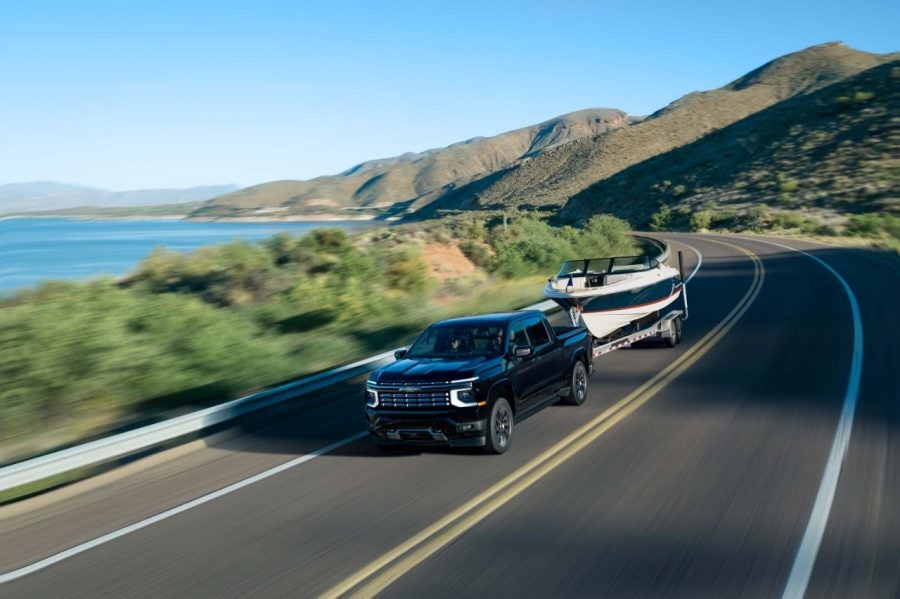
For drivers in areas like Tontitown and Prairie Grove, where daily driving involves a mix of highway and rural roads, the 5.3L EcoTec3 V8’s powertrain offers a versatile balance of strength and efficiency. The engine’s 383 lb-ft of torque supports real towing. A properly equipped 2026 Silverado 1500 with the 5.3L tows up to 11,400 pounds (Double Cab, standard bed, 2WD, Max Trailering Package), and a Tahoe with the 5.3L and the Max Trailering Package tows up to 8,400 pounds. That is enough for campers, boats and work trailers, common needs in Northwest Arkansas communities.
Beyond towing, the engine’s horsepower facilitates smooth acceleration and responsive throttle behavior for everyday driving. Whether merging onto I-49 near Bella Vista or navigating suburban streets in Bentonville, the 5.3L EcoTec3 provides sufficient power to handle traffic conditions with confidence. It also delivers a refined driving experience with less engine noise and vibration compared to older V8 engines, contributing to driver comfort during longer commutes or weekend family outings.
How the EcoTec3 Compares to Other Engine Options
Within the 2026 Silverado 1500 lineup, the 5.3L EcoTec3 V8 sits between the 2.7L TurboMax turbo four-cylinder (310 horsepower, 430 lb-ft) and the 6.2L EcoTec3 V8 (420 horsepower, 460 lb-ft). The 2.7L is a strong choice for lighter loads and tops out at 9,500 pounds of towing, properly equipped. The 5.3L gives you V8 power and a higher tow rating, and it is standard on the LTZ and High Country. The 6.2L adds 65 more horsepower and is available on select 2026 Silverado 4x4 trims. The 3.0L Duramax turbo-diesel (305 horsepower, 495 lb-ft) is the pick if you put many highway miles on a trailer.
Fuel Economy Insights for the 5.3L EcoTec3 V8 in Real-World Driving
Understanding fuel economy performance is a top concern for many drivers in Bentonville and nearby areas like Prairie Grove and Berryville, especially given fluctuating fuel prices and the mix of city and rural driving typical of northwest Arkansas. The Chevrolet 5.3L EcoTec3 V8 engine, renowned for balancing power and efficiency, offers compelling real-world fuel economy that suits a variety of driving needs—from daily commuting to light towing and weekend adventures.
At its core, the 5.3L EcoTec3 V8 integrates advanced technologies designed to optimize fuel consumption without sacrificing the robust performance Chevrolet trucks are known for. Active Fuel Management (AFM), direct fuel injection, and continuously variable valve timing are key features that contribute to its efficiency. AFM improves economy by selectively deactivating half of the engine’s cylinders during light-load conditions such as highway cruising or steady city driving. This dynamic switching between eight and four cylinders helps reduce fuel use while maintaining smooth operation.
Real-world fuel economy numbers for the 5.3L EcoTec3 V8 vary depending on vehicle configuration, driving habits, and terrain typical of local areas such as Tontitown or Pea Ridge. The EPA rates a 2026 Silverado 1500 with the 5.3L V8 and two-wheel drive at 16 mpg in the city, 20 mpg on the highway and 17 mpg combined, and a 2026 Tahoe with the 5.3L and rear-wheel drive at 15 city, 20 highway and 17 combined (fueleconomy.gov). Those figures come with the ability to tow up to 11,400 pounds in the Silverado when it is properly equipped. Real-world results can differ based on payload, weather, and driving style.
For instance, drivers frequently navigating hilly or mixed terrain near Berryville may experience slightly lower mpg compared to those commuting mostly on flatter suburban roads in Bentonville or Rogers. Similarly, heavy towing or hauling reduces fuel economy, as the engine works harder to move the additional weight. Conversely, conservative acceleration, steady speeds, and minimizing idling can help drivers maximize fuel efficiency with the 5.3L EcoTec3.
In practical terms, this engine performs exceptionally well for most families and tradespeople in the northwest Arkansas region who need a balance of power and fuel savings. Its fuel efficiency is particularly advantageous for those making daily trips between communities like Springdale and Bella Vista, where traffic conditions and stop-and-go driving are common. The engine’s AFM system activates seamlessly to reduce consumption during steady highway stretches, a frequent scenario for drivers commuting to jobsites or recreational areas around Pea Ridge.
The 5.3L EcoTec3 V8’s fuel economy also benefits from the synergy with Chevrolet’s 10-speed automatic transmission, which optimizes gear ratios to keep engine speeds low during cruising. This transmission pairing enhances responsiveness while supporting better mileage, especially on long drives common for Bentonville residents traveling to destinations like Fayetteville or Springdale.
Moreover, this engine’s design includes direct injection, which precisely controls fuel delivery to each cylinder, improving combustion efficiency and reducing waste. This technology is a significant step forward compared to older V8 designs, contributing to the engine’s ability to meet modern emissions standards without compromising power output.
While the 5.3L EcoTec3 V8 is naturally aspirated and not turbocharged, its fuel economy remains competitive due to these engineering advancements. It offers a practical alternative for drivers who value traditional V8 sound and feel but want to avoid the higher fuel costs often associated with larger or turbocharged engines.
Owners in Bentonville and surrounding communities often report fuel economy that aligns closely with EPA estimates when following recommended maintenance practices, such as regular oil changes, tire pressure checks, and air filter replacements. Neglecting these can negatively impact fuel efficiency, so maintaining your vehicle’s health is essential to getting the most out of the 5.3L EcoTec3 in terms of fuel savings.
Given the mix of suburban streets and rural roads common around 2700 Se Moberly Ln, Bentonville, AR 72712, this engine’s fuel economy suits a broad range of drivers. Whether you’re hauling tools and equipment for work near Prairie Grove or taking family trips to schedule service appointments to keep your vehicle running efficiently, the 5.3L EcoTec3 V8 is designed to meet your needs.
Fuel Requirements and Efficiency: Does the 5.3L EcoTec3 Need Premium Gas?
When considering the Chevrolet 5.3L EcoTec3 V8 engine, one of the most common questions from drivers in Bentonville and nearby areas like Pea Ridge and Prairie Grove revolves around its fuel requirements—specifically, whether this engine demands premium gasoline or if regular unleaded fuel suffices. Understanding the fuel needs of this engine is essential for ensuring optimal performance, maintaining engine health, and managing fuel costs effectively.
The 5.3L EcoTec3 V8 is designed with modern combustion technology to provide a balance of power and efficiency without the need for premium fuel in most cases. General Motors engineers optimized this engine to run efficiently on regular unleaded gasoline with an octane rating of 87 or higher. This means drivers can confidently use standard fuel, which is more readily available and less expensive than premium options, without sacrificing performance or risking engine damage.
That said, the EcoTec3 engine employs features like direct fuel injection, Active Fuel Management (AFM), and variable valve timing, which enhance combustion precision and fuel economy. These technologies allow the engine to adjust its operation dynamically based on driving conditions, maintaining efficiency whether cruising on highways around Rogers, AR, or navigating rural roads near Tontitown. Because of this adaptability, the engine can optimize power delivery and reduce fuel consumption without requiring higher-octane fuel.
Chevrolet’s guidance is regular unleaded, and that includes towing heavy trailers over steep grades near Bella Vista or hauling frequent loads in demanding conditions. Premium gasoline is not required, so there is no need to pay more per gallon for a truck used hard.
The EPA combined rating is 17 mpg for both the 2026 Silverado 1500 (2WD) and the 2026 Tahoe (RWD) with the 5.3L, so the mileage is the same whether you fill up on regular in Bentonville or Berryville. Because the engine runs on regular, the fuel cost stays predictable.
Additionally, using regular fuel aligns with Chevrolet’s engineering intent for the EcoTec3 engine, supporting long-term reliability and engine cleanliness. The engine’s design includes robust knock sensors and engine control units that fine-tune ignition timing to prevent damaging pre-ignition or knocking, even on lower-octane fuel. This means that regular fuel is not only sufficient but recommended for most drivers seeking dependable daily use without extra fuel expenses.
For owners concerned about fuel quality or performance, it's advisable to stick with reputable fuel stations that provide clean, well-maintained pumps, especially in rural areas around Prairie Grove or Pea Ridge, where fuel quality can vary. Using fuel additives or higher-octane fuel without necessity does not significantly extend engine life or improve performance and can lead to unnecessary spending.
In summary, the Chevrolet 5.3L EcoTec3 V8 engine is engineered to deliver strong power and efficient fuel use on regular unleaded gasoline. Premium fuel is not required for typical daily driving or moderate towing tasks common in Bentonville and surrounding communities. For those who engage in heavy towing or high-performance driving, premium gasoline may offer slight advantages but is not essential. Drivers are encouraged to prioritize consistent maintenance and quality fuel sources, and to consult their vehicle’s owner manual for manufacturer-specific guidance to protect their investment and maximize efficiency. For expert care, visit our Service and Parts Department or Schedule Service Appointment to keep your EcoTec3 engine running smoothly.
Reliability and Maintenance of the 5.3L EcoTec3 V8: Is It a Good Engine?
Is the 5.3L EcoTec3 a good engine? For most drivers, yes. It has powered the Silverado, Tahoe, Suburban, Sierra and Yukon since 2014, and a new Chevrolet with it carries GM’s 5-year, 60,000-mile powertrain limited warranty. It combines modern technology with dependable performance, and understanding its reliability profile and typical maintenance needs helps owners keep it that way. The one item worth knowing about is the lifters in the cylinder-deactivation system, covered below.
Proven Durability with Modern Refinements
The EcoTec3 V8 builds on Chevrolet’s long-standing 5.3L V8 legacy, introducing advanced features like direct fuel injection, Active Fuel Management (AFM), and continuously variable valve timing. These enhancements contribute to improved performance and efficiency while maintaining the sturdy construction that Chevrolet engines are known for. For drivers in rural areas like Prairie Grove or outdoor enthusiasts near Pea Ridge, these improvements translate into an engine that can handle both daily commuting and rugged workloads reliably.
Many owners report that, with proper maintenance, the 5.3L EcoTec3 can exceed 200,000 miles without major issues. This durability is supported by a strong block and head design and an efficient cooling system that prevent overheating during demanding tasks such as towing or hauling.
Active Fuel Management: Benefits and Considerations
One of the most significant features of the EcoTec3 V8 is its Active Fuel Management system, which deactivates cylinders during light-load conditions to save fuel. While AFM contributes to better gas mileage and reduced emissions, it also introduces some complexity to the engine’s operation that owners should be aware of.
The item to watch on engines with cylinder deactivation is lifter noise, or “lifter tick.” This occurs when the lifters responsible for valve operation experience wear or irregular oil flow, causing a tapping sound during engine operation. It doesn’t usually mean immediate engine failure, but it can lead to more wear if left unaddressed. Regular oil changes with the manufacturer’s recommended grade and quality of oil help minimize lifter problems, especially for drivers in stop-and-go traffic in suburban areas like Tontitown or Bella Vista. If you hear a tapping sound, schedule a service visit and we will look at it, including whether your warranty covers it.
Oil and Lubrication System Maintenance
Maintaining clean, high-quality engine oil is vital for the 5.3L EcoTec3’s longevity. The direct injection system and AFM components depend heavily on proper lubrication. Contaminants in oil or extended intervals between oil changes can accelerate wear on lifters, camshafts, and other critical parts.
Chevrolet recommends dexos-approved synthetic motor oil, 0W-20 on 2019 and newer trucks, which provides superior protection against heat, oxidation, and sludge buildup. For drivers in Bentonville and nearby Rogers, where seasonal temperature swings can be pronounced, adhering to these oil guidelines helps ensure smooth engine performance and reduces the risk of premature component failure. For expert maintenance, consider scheduling a Service Appointment.
Fuel System and Injection Concerns
Direct fuel injection technology offers efficiency gains but requires clean fuel and careful maintenance to avoid common issues. Over time, carbon buildup on intake valves is a potential concern, especially for vehicles that mostly operate in low-speed or urban driving conditions where fuel combustion isn’t as complete.
Owners may notice reduced engine responsiveness or rough idling if carbon deposits accumulate. Professional fuel system cleaning or walnut blasting of intake valves during routine service can help maintain optimal combustion and prevent performance degradation. This is particularly relevant for drivers who spend time commuting between Bella Vista, Bentonville, or Pea Ridge, where varied driving conditions can impact fuel system cleanliness.
Cooling System and Thermal Management
The EcoTec3 V8 features an advanced cooling system designed to manage heat efficiently during both light and heavy engine loads. However, as with any engine, cooling system maintenance is critical to prevent overheating, which can cause gasket failures or warped components.
Routine inspection of coolant levels, hoses, and radiator condition is important, especially for owners who use their trucks for towing or heavy-duty chores in warmer months or the hilly terrain around Prairie Grove. Chevrolet’s recommended coolant type and scheduled flush intervals help maintain system integrity and prevent corrosion or clogging.
Timing Chain and Valve Train Durability
Unlike older engines that used timing belts, the EcoTec3 V8 uses a timing chain designed for extended service life. This reduces the likelihood of sudden timing failures, a common concern with belt-driven systems. However, timing chain tensioners and guides can wear over time, potentially leading to chain slack and noise.
Signs of timing chain wear include rattling noises at startup or under acceleration. Early detection during scheduled maintenance visits can prevent more costly repairs. Drivers near Bentonville who rely on their trucks for both work and family needs should be attentive to any unusual engine sounds and arrange prompt service to keep their EcoTec3 V8 running smoothly.
Valve Cover and Gasket Leaks
Over time, valve cover gaskets on the 5.3L EcoTec3 V8 may develop leaks, which can cause oil seepage around the engine. While this isn’t an immediate threat to engine function, leaking oil can attract dirt and debris, potentially impacting electrical connections and components in the engine bay.
Routine inspections during oil changes or scheduled maintenance can identify leaks early. Repairing valve cover gasket leaks promptly helps maintain engine cleanliness and prevents unnecessary wear on surrounding parts.
Recommended Maintenance Schedule for the Chevrolet 5.3L EcoTec3 V8
Owning a Chevrolet equipped with the 5.3L EcoTec3 V8 engine means benefiting from a powertrain designed for durability, performance, and efficiency. To ensure your engine operates at peak condition—whether you’re navigating the rolling hills near Berryville, AR, or hauling equipment around Prairie Grove—it’s essential to follow a carefully planned maintenance schedule. Regular maintenance not only preserves engine reliability but also maximizes fuel economy and extends the overall lifespan of your vehicle.
Understanding Routine Oil Changes and Fluid Checks
One of the most vital maintenance tasks for the 5.3L EcoTec3 V8 is timely oil and oil filter changes. Chevrolet recommends dexos-approved full-synthetic oil, and the grade in your owner’s manual is the one to use: 0W-20 on 2019 and newer trucks. The GM Engine Oil Life System sets the interval, capped at 7,500 miles, and the oil is changed at least once a year. Frequent short trips in colder weather in Tontitown, AR, or heavy towing near Pea Ridge use the oil up faster, and the monitor accounts for that. Regular oil changes help maintain lubrication, reduce internal wear and prevent sludge buildup, which is critical for the cylinder-deactivation system to operate smoothly.
Alongside oil, checking other vital fluids is equally important. Transmission fluid, coolant, and brake fluid should be inspected periodically, with replacements aligned with manufacturer guidance. Proper fluid maintenance ensures the engine runs cool, shifts smoothly, and maintains braking effectiveness, especially when towing or driving in rugged terrain around Bentonville.
Air Filter and Cabin Filter Replacements
To keep the 5.3L EcoTec3 V8 breathing clean air and maintaining its efficient combustion, have the engine air filter inspected at every service and replaced when it is dirty or when your owner’s manual calls for it. Dusty or gravel-road driving near Rogers or Bella Vista may need replacement sooner. A clogged air filter can reduce engine performance and fuel economy by restricting airflow.
Cabin air filters should be replaced on the schedule in your owner’s manual, and sooner if airflow drops or the cabin smells musty. This is especially important for families who prioritize clean air during daily commutes or weekend trips around Farmington, AR.
Spark Plugs and Ignition System Maintenance
The 5.3L EcoTec3 V8 uses iridium-tipped spark plugs known for longevity and reliable ignition. Spark plugs are replaced at roughly 100,000 miles, and your owner’s manual gives the exact interval for your engine. Regular inspection of ignition coils and related components during routine service visits can help prevent misfires and maintain smooth engine operation. Well-maintained ignition components contribute to consistent power delivery and optimal fuel efficiency, particularly during stop-and-go traffic in suburban areas like Little Flock.
Fuel System and Emission Controls
Maintaining the fuel system is critical for engines that feature direct injection and cylinder deactivation. Carbon can build up on the intake valves over time. There is no fixed cleaning mileage, so rough idle or hesitation is the cue to have a technician take a look.
Owners should also pay attention to the operation of emission control components such as the catalytic converter and oxygen sensors. These parts help the engine meet environmental standards and maintain optimal combustion efficiency. Prompt replacement upon fault detection prevents performance drops and costly repairs.
Cooling System and Belts Inspection
The cooling system is a key area to monitor, especially for drivers towing trailers or operating in the warmer climates of Northwest Arkansas. Coolant level and condition should be checked regularly, with flushes at the interval in your owner’s manual. Radiator, hose and thermostat inspections during service appointments help avoid overheating issues.
Serpentine belts and accessory drive components should be inspected for wear at service visits. Timely replacement prevents unexpected failures that could lead to breakdowns on your way to destinations like downtown Bentonville or beyond.
Cylinder Deactivation System Checks
The cylinder-deactivation system in the 5.3L EcoTec3 V8 depends on clean oil at the right level, so keep up with oil changes and check the oil level between them. The EcoTec3 uses hydraulic lifters, so there is no valve lash adjustment to schedule. Have any tapping or ticking noise checked so the system keeps deactivating cylinders smoothly, preserving fuel savings and engine longevity.
If any unusual engine noises or vibrations arise, scheduling a diagnostic evaluation promptly can prevent a small problem from becoming an expensive one.
Choosing the Right 5.3L Engine for Your Needs: Practical Advice for Bentonville Drivers
Selecting the appropriate 5.3L V8 engine for your vehicle is a crucial decision, especially for drivers in Bentonville and the surrounding areas who rely on their trucks for everything from daily commuting to weekend outdoor activities. Both the traditional 5.3L Vortec and the modern 5.3L EcoTec3 engines offer strong performance and reliability, but understanding their differences and how they align with your specific driving requirements can ensure you get the best fit for your lifestyle and work demands.
For Bentonville residents who frequently navigate suburban roads and rural terrain, the 5.3L EcoTec3 V8 is typically the more versatile and efficient choice. This engine combines updated technology such as direct fuel injection, variable valve timing, and Active Fuel Management, which allows the engine to deactivate cylinders during light-load conditions to save fuel. These features are particularly beneficial for those who commute longer distances or require a balance between power and fuel economy. The EcoTec3’s 355 horsepower and 383 lb-ft of torque provide ample capability for towing recreational gear or hauling materials for home projects around the town and nearby areas like Pea Ridge or Prairie Grove.
However, if your driving involves more straightforward tasks, such as regular local trips or light hauling in quieter neighborhoods like Tontitown, the earlier 5.3L Vortec V8 might still meet your needs efficiently. Known for its durability and simpler mechanical design, the Vortec engine is easier to service and maintain, which can be advantageous for those who prioritize long-term reliability and lower maintenance costs. It delivers solid horsepower and torque but lacks some of the EcoTec3’s fuel-saving innovations, making it a practical choice if fuel efficiency is less of a concern.
When it comes to towing, both engines perform well, but the EcoTec3’s advanced technologies provide smoother power delivery and better thermal management, which translates to more confidence when pulling trailers or boats to nearby lakes or outdoor recreation spots. If you routinely tow loads near or above 7,000 pounds or plan to use your truck for heavy work around construction sites or farms in the Bentonville region, the EcoTec3’s Max Trailering Package compatibility is an important factor to consider, offering enhanced cooling systems and trailer stability features.
Fuel considerations also play a role in your selection. The 5.3L EcoTec3 runs efficiently on regular unleaded gasoline, which is widely available in Bentonville and surrounding communities, helping you keep operating costs manageable. Although the Vortec engine also uses regular fuel, the EcoTec3’s modern combustion technology generally results in better overall fuel economy, especially during mixed urban and highway driving scenarios common in Northwest Arkansas.
Maintenance and service accessibility are equally important. Scheduling routine upkeep at a trusted local dealership ensures your engine stays in peak condition. At George Nunnally Chevrolet, our certified technicians specialize in the full range of Chevrolet engines, including the 5.3L EcoTec3 and Vortec variants. With our service offerings located conveniently at 2700 Se Moberly Ln, Bentonville, AR 72712, and a transparent maintenance schedule, we help you keep your vehicle ready for anything Bentonville roads and outdoor adventures throw your way. You can also Schedule Service Appointment with us easily online.
Finally, consider your personal preferences and driving habits. If you’re focused on current technology, improved fuel efficiency and maximizing towing capability, the EcoTec3 V8 is the better fit. If you are shopping for a Silverado 1500 with the 5.3L, the 2026 model year is the one that has it, because the 2027 Silverado 1500 moves to a 5.7L V8; the Tahoe and Suburban keep the 5.3L for 2027. Browse our new Silverado 1500 inventory or new Tahoe inventory, call George Nunnally Chevrolet at (479) 319-2494, or contact us and we will match the engine to how you drive.