





Blog / Bentonville Chevrolet Dealer

Electric Vehicle Service and EV Repair Mechanic in Bentonville and Rogers

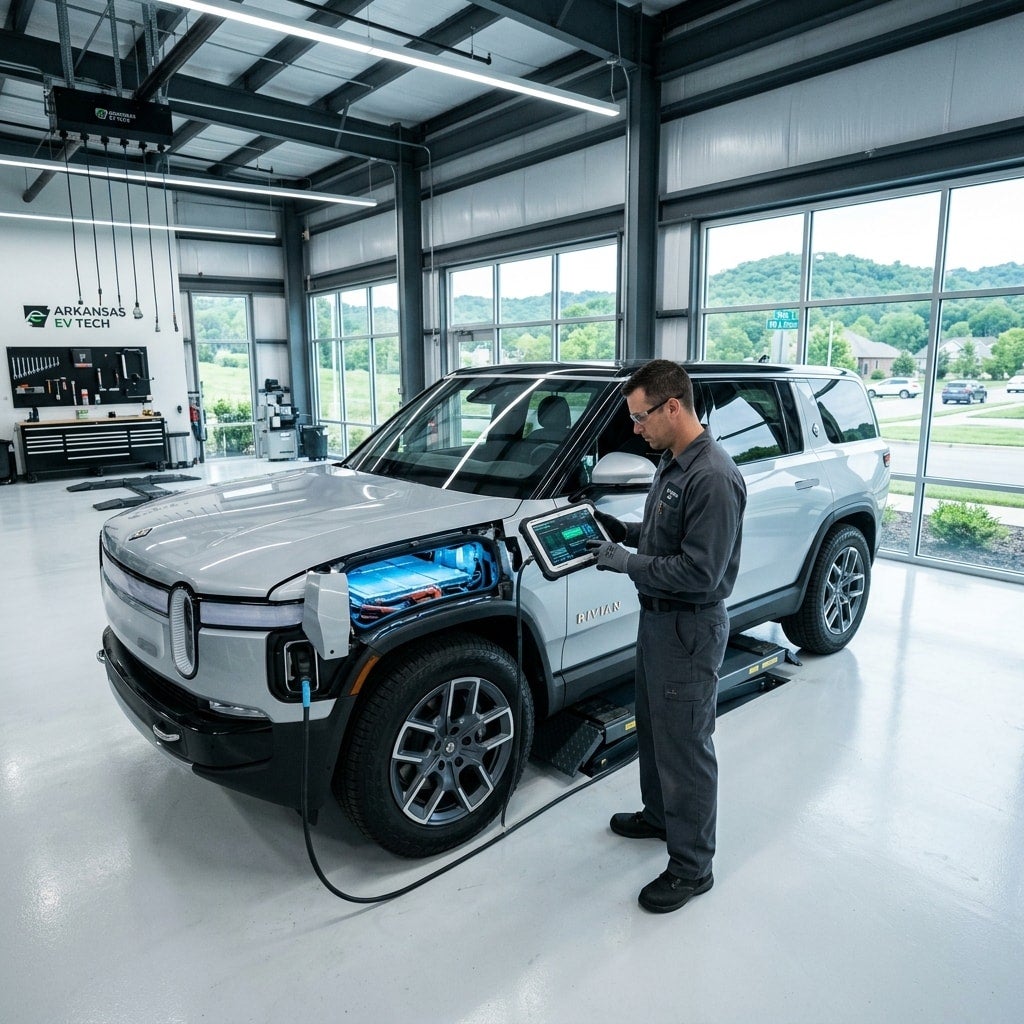
electric vehicle EV SUV mechanic performing repair service in northwest arkansas

Expert Electric Vehicle Service and High-Voltage Care in Bentonville

Maintaining a modern electric vehicle requires a shift in how we think about automotive care. While you no longer need to worry about traditional engine components, the high-voltage battery and electric drive unit demand specialized attention from technicians who understand these complex systems. At George Nunnally Chevrolet we have invested in the diagnostic tools and safety equipment necessary to handle everything from routine software updates to intricate electrical repairs. Our team is trained to navigate the specific architecture of Chevrolet EVs, ensuring that your vehicle remains as efficient as the day you drove it home.

When local drivers visit our service and parts department, they find a team that prioritizes transparency and technical precision. We understand that transitioning to an electric lifestyle comes with new questions about long-term reliability. Whether you are noticing a change in your charging speed or simply need a professional to look over your high-voltage cables and connectors, we provide the expert oversight required to keep your car on the road. For those who prefer to plan ahead, you can easily book a maintenance visit online to secure a time that fits your busy schedule.

Safety remains our primary concern, especially when dealing with the heavy-duty braking systems found on electric models. Because EVs utilize regenerative braking to feed energy back into the battery, the physical brake pads often last longer than those on gas vehicles, but they still require periodic inspection to prevent seizing or uneven wear. We offer specialized brake system evaluations to ensure your stopping power is never compromised. If your vehicle still utilizes an internal combustion engine for hybrid power, we also provide professional oil change services to keep that side of your powertrain healthy. If you need help finding us, our location at 2700 Se Moberly Ln is easy to reach for anyone in the area. For immediate questions, feel free to give us a quick call at (479) 319-2494.

Table of Contents

Comprehensive EV Maintenance and Certified Repair Capabilities at Nunnally

A common misconception suggests that electric vehicles are "maintenance-free." While it is true that you can say goodbye to spark plugs and timing belts, your EV still relies on several critical mechanical systems that require regular upkeep. Tire management is perhaps the most vital area of focus. Because electric cars are typically heavier due to their battery packs and deliver instant torque to the wheels, they can wear through rubber faster than traditional cars. We perform regular rotations and alignments to help you get the maximum life out of your tires, which is essential for maintaining your driving range.

Our service center is equipped to handle the full spectrum of Chevrolet electric models, including the 2026 Chevrolet Bolt EV and the 2026 Chevrolet Bolt EUV. We utilize genuine OEM components for every repair, which is a critical distinction when dealing with high-voltage electronics. Using parts designed specifically for your vehicle's VIN ensures that all safety protocols and performance standards remain intact. If you are a DIY enthusiast looking for cabin air filters or wiper blades specifically designed for your model, you can request genuine Chevy parts directly through our website.

Beyond the mechanical components, software plays a massive role in how your electric vehicle performs. We use specialized GM diagnostic computers to check for "Over-the-Air" update completions and to calibrate the battery management system. This ensures your range estimates stay accurate and your thermal management system operates at peak efficiency. For those looking to join the electric revolution with a pre-owned model, we often have one-owner vehicles with verified histories that have been through our rigorous multi-point inspection process. This level of scrutiny allows us to catch potential issues before they become expensive repairs, providing peace of mind for every mile of your commute.

Understanding EV Thermal Management: Battery Coolant Flush Intervals and Procedures

The battery in an electric vehicle is sensitive to temperature extremes, which is why Chevrolet engineers designed a sophisticated liquid cooling system to keep the cells within an ideal operating window. This system is what allows for consistent DC fast-charging speeds and protects the battery's longevity during the humid summers we see in Bentonville. Over time, the coolant can degrade or become contaminated, which reduces its ability to transfer heat effectively. We recommend a comprehensive battery cooling system flush every 150,000 miles or every five years, whichever comes first, to ensure your thermal management remains optimal.

During this procedure, our technicians drain the old fluid, pressure-test the lines for leaks, and refill the system with specialized non-conductive coolant. This isn't the same fluid you would find in a traditional radiator; it is specifically formulated for high-voltage environments. Neglecting this service can lead to decreased charging efficiency or, in extreme cases, a reduction in the total power the battery can deliver. For owners of the latest Chevy Bolt models, staying on top of this interval is one of the best ways to protect your investment over the long haul.

We also pay close attention to the cooling fans and heat exchangers located at the front of the vehicle. These components can often collect road debris or leaves, which blocks airflow and forces the cooling system to work harder. As part of our multi-point inspection, we clear these areas and verify that the coolant pumps are cycling correctly. This proactive approach to thermal management is a hallmark of our service philosophy, ensuring that your EV can handle everything from stop-and-go traffic to long highway stretches without breaking a sweat.

Battery Capacity Protection and Long-Term Warranty Coverage for Chevrolet EVs

A primary concern for many first-time electric owners is how the battery will hold up over a decade of use. Chevrolet provides a robust 8-year / 100,000-mile battery and electric component warranty to address this directly. This coverage typically protects you if the battery capacity falls below 70% to 75% of its original rating during the warranty period. At George Nunnally Chevrolet we can perform a "State of Health" test on your battery pack to give you a clear percentage of its current capacity, which is a great tool for tracking performance as your vehicle ages.

While we specialize in high-voltage care, we also support the full lineup of Chevrolet's diverse fleet. We know many of our EV owners also keep a heavy-duty truck or a large SUV in the garage for weekend adventures or work. Our technicians are equally skilled at maintaining the 13,300 lbs towing capacity of the new Chevrolet Silverado 1500 or the massive torque of the Silverado 2500HD and Silverado 3500HD models. Whether you drive a Silverado 3500 DRW for maximum payload or a new Chevrolet Corvette for pure performance, we provide the same level of certified expertise.

Our service department also handles the specialized needs of family-oriented vehicles. We see many parents choosing the new Chevrolet Blazer EV for its modern tech, while others prefer the traditional power of a new Chevrolet Suburban or the new Chevrolet Tahoe. From the compact Chevrolet Trax and Chevrolet Equinox to the mid-size Chevrolet Traverse and Chevrolet Blazer, every model benefits from our Nunnally Buyer's Advantage Program. This includes three years of complimentary maintenance, covering oil changes and tire rotations for our gas models, ensuring that whether you drive a new Chevrolet Colorado or a track-ready Corvette ZR1, your vehicle is always in top shape. Even for those with a standard Colorado or a Corvette Stingray, our commitment to reliability remains the same across the board.

Common Questions About Maintaining Your Electric Vehicle in Northwest Arkansas

Q: Does my electric vehicle need an "oil change" for the electric motor?
Electric motors do not require engine oil like a gas vehicle, so you will never need a traditional oil change for the drive unit. However, the reduction gear or transmission in an EV does contain a specialized lubricant that may need to be inspected or replaced at very high mileage intervals. Our technicians check these fluid levels during your multi-point inspections to ensure everything remains sealed and lubricated.

Q: Why do my tires seem to wear out faster on an EV than on my old gas car?
Electric vehicles produce 100% of their torque instantly, which puts more stress on the tire tread during acceleration. Additionally, the heavy battery packs mean the tires are supporting more weight constantly. We recommend tire rotations every 7,500 miles to help distribute this wear evenly and extend the life of your rubber.

Q: Can I use a standard 12-volt battery charger if my EV won't start?
Most electric vehicles still use a traditional 12-volt lead-acid battery to power the lights, infotainment, and computer systems. If this small battery dies, the car won't "turn on" even if the big high-voltage battery is full. You can often jump-start or charge this 12-volt battery just like a normal car, but you should always consult your owner's manual for the specific terminal locations to avoid damaging the sensitive electronics.

Q: Will using DC fast chargers all the time damage my battery?
While modern Chevrolet EVs are designed to handle fast charging, frequent use of high-speed chargers can create more heat, which may slightly accelerate battery degradation over many years. For the best long-term health, we recommend using Level 2 home charging for your daily needs and saving the DC fast chargers for road trips or emergencies.

Q: Does the regenerative braking system ever need maintenance?
The regenerative system itself is largely electronic and requires little physical maintenance, but because it does so much of the work, your mechanical brake rotors can sometimes develop surface rust from disuse. We inspect the calipers and rotors during service to ensure they move freely and haven't become "sticky" due to the lack of frequent friction.

A Seamless Service Experience with Modern Amenities and Professional Support

Getting your vehicle serviced should not disrupt your entire day. Our facility is designed with the modern driver in mind, offering a comfortable waiting area equipped with Wi-Fi so you can stay productive while we work. For those who need to get back to the office or home, we provide local shuttle services and can often coordinate loaner vehicles for more extensive warranty repairs. We also have on-site charging stations available, ensuring that when you pick up your EV, it has plenty of range for the drive back to Rogers or Springdale.

Our commitment to the community extends beyond the service bay. We take pride in being a reliable resource for Northwest Arkansas, offering a straightforward and friendly approach to automotive care. We know that the technology in a 2026 Chevrolet Bolt EV can feel intimidating, which is why our service advisors take the time to explain every repair in plain language. We want you to feel confident in the safety and reliability of your vehicle, whether you are commuting to the Walmart Headquarters or heading out for a weekend at Crystal Bridges.

If you have questions about your specific maintenance schedule or a light on your dashboard, we are here to help. You can easily find our service center just off Moberly Lane, where our certified experts are ready to assist. For a quick status update on your vehicle or to ask a technical question, feel free to give us a call at (479) 319-2494. We look forward to helping you get the most out of your electric vehicle for years to come.
© 2026 George Nunnally Chevrolet. All rights reserved.

Posted in:

Related Posts

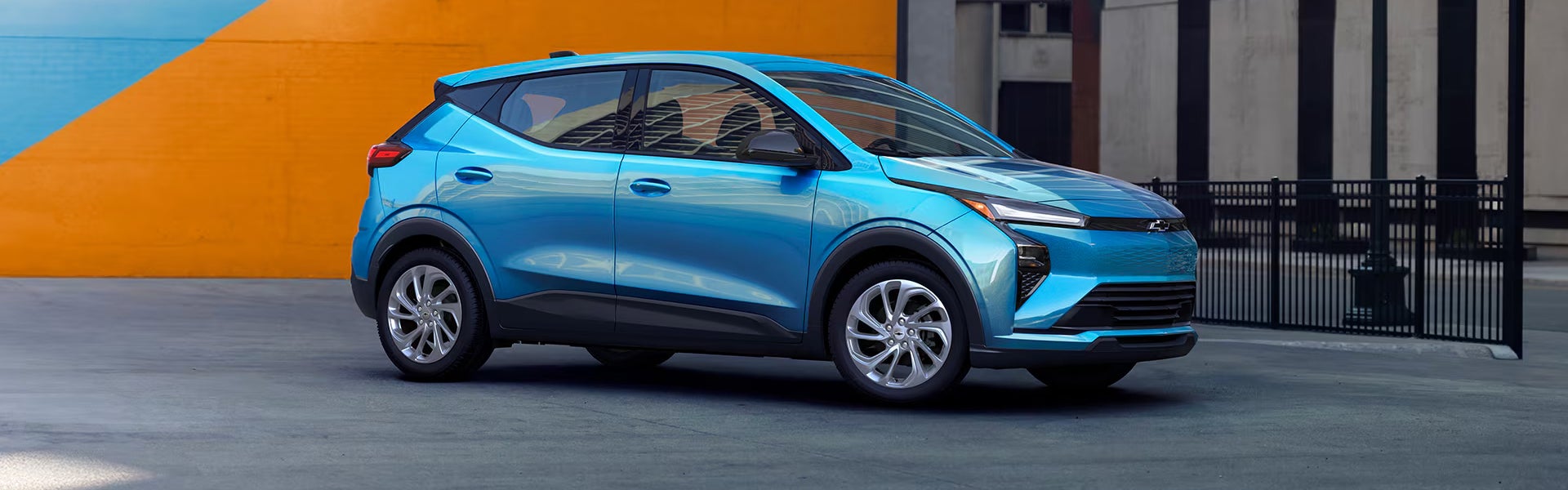
2027 Chevrolet bolt EV For Sale NWA Arkansas dealership

2027 Chevy Bolt: Northwest Arkansas Buyer's Guide

2027 Chevy Bolt For Sale in Northwest Arkansas | Nunnally EV Buying Guide By the George Nunnally Chevrolet team · Published October 4, 2026 THE SHORT VERSION The 2027 Chevrolet Bolt is a front-wheel-drive electric hatchback starting at $28,995 (including destination), with a launch LT at $29,990. It is EPA-rated at up to 262 miles of range on a 65 kWh LFP battery, and returns 120 MPGe combined. It is the first Chevrolet EV with a standard NACS port, so it plugs straight into Tesla Superchargers. A 150 kW DC fast charger takes it from 10 to 80 percent in about 26 minutes. Two trims: the LT and the sport-styled RS (around $32,995). You can see current inventory and set up a test drive at George Nunnally Chevrolet in Bentonville. See the 2027 Bolt lineup in stock. If you are shopping for a 2027 Chevrolet Bolt in Northwest Arkansas, here is the direct answer: it starts at $28,995 with destination, goes up to 262 miles on a charge, and it is in the buying stage now at George Nunnally Chevrolet. The Bolt is back for 2027 as an affordable EV built for exactly the kind of driving people do here, short commutes up and down the interstate with the occasional longer run to the airport or the lake. This guide walks through what it costs, how far it really goes, which trim to pick, and what it is like to own one around here. For the full technical detail on any section, we link straight to the research pages our team put together. In this guide What does a 2027 Bolt cost here? How far does it go, and how do you charge it? LT or RS: which Bolt should you buy? Is it cheap to own? Bolt or Equinox EV? Common questions What does a 2027 Bolt cost here? The 2027 Bolt LT starts at $28,995 including the $1,395 destination charge, and the launch build came in at $29,990. The sport-styled RS runs about $32,995. That makes it one of the least expensive new EVs you can buy, and pricing is the same whether you are driving in from Rogers or down the road. For the full breakdown of what separates the two trims, our Bolt trims comparison lays it out side by side, and you can check what is on the ground right now on the 2027 Bolt overview page. If you want to work out a monthly number before you visit, the payment calculator and pre-approval form get you most of the way there from home. How far does it go, and how do you charge it? The Bolt is EPA-rated at up to 262 miles on a full charge, drawing from a 65 kWh lithium-iron-phosphate battery. For a local commuter, that is comfortably more than a week of typical driving between charges. Winter here tends to arrive as ice and glaze rather than deep snow, and cold weather trims any EV's range, so the standard heat-pump climate system that helps protect range in the cold is a useful piece of equipment locally. Charging is where the 2027 car pulls ahead of the old Bolt. It is the first Chevrolet EV with a standard NACS port, which means it plugs directly into Tesla Superchargers along the I-49 corridor and up toward XNA without an adapter. On a 150 kW DC fast charger it goes from 10 to 80 percent in roughly 26 minutes, and the 11.5 kW onboard charger handles overnight top-ups at home. Our range and charging guide maps this against real local trips. LT or RS: which Bolt should you buy? Both trims share the same 210-horsepower front motor, the same 262-mile range, the same 65 kWh battery, and 17-inch wheels, so no one is buying range or capability by moving up. The LT is the value pick and carries the 11.3-inch touchscreen with Google built-in that runs Maps and Assistant natively. The RS is new for 2027 and adds sport styling with gloss-black roof rails and wheels and a unique grille badge for buyers who want the car to look the part. If you want every spec in one place, the specs and dimensions page has it, and the technology and safety rundown covers the screen, the driver aids, and available Super Cruise hands-free driving. Is it cheap to own? An EV skips the oil changes, and the EPA pegs the Bolt's annual energy cost at about $650, which is where a lot of the monthly math works out in your favor. Chevrolet backs the high-voltage battery for 8 years or 100,000 miles, on top of the standard 3-year/36,000-mile basic and 5-year/60,000-mile powertrain coverage. Service around here means tire rotations, cabin filters, and brake fluid rather than a combustion maintenance schedule. Our maintenance and ownership guide spells out what an electric Bolt actually needs, and when it is time, our service team handles it. Bolt or Equinox EV? The honest answer for most first-time EV shoppers is the Bolt: it is thousands less, it charges the same way, and 262 miles covers local life. If you need more room, more range, or available all-wheel drive and the budget stretches, the larger Chevrolet Equinox EV is the step up, and it stays in the same family and the same service department. We put the two head to head in the Bolt vs Equinox EV comparison. Ready to drive one? See what is in stock and pick a time that works for you. See Bolt Inventory Schedule a Test Drive Which Bolt fits which buyer? If you are a commuter or a first-time EV buyer who charges at home, the LT is all the car you need and the easiest monthly payment. If you want the look to match the tech and you are cross-shopping style, the RS earns its premium. If you regularly haul a family plus cargo or want all-wheel drive, step up to the Equinox EV instead. Everything you need to decide sits in one place on the 2027 Bolt research hub. Local note: most of our Bolt shoppers are trading a gas commuter for something cheaper to run on the daily grind between Bentonville and the office parks around Pinnacle Hills. If that is you, a quick trade-in estimate plus a home charging plan is usually the whole conversation, and we can knock both out in one visit. Common questions How much is a 2027 Chevy Bolt near Bentonville? The 2027 Bolt LT starts at $28,995 including destination, with a launch build at $29,990, and the RS runs about $32,995. Local pricing is the same across the area. How many miles does the 2027 Bolt go on a charge? It is EPA-rated at up to 262 miles of range from its 65 kWh LFP battery, and returns 120 MPGe combined. Can the 2027 Bolt use Tesla Superchargers? Yes. It is the first Chevrolet EV with a standard NACS port, so it connects to Tesla Superchargers directly, and a 150 kW DC fast charger takes it from 10 to 80 percent in about 26 minutes. What is the difference between the Bolt LT and RS? Both share the 210-horsepower motor, 262-mile range, and 17-inch wheels. The RS adds sport styling with gloss-black roof rails and wheels and a unique grille badge at about $32,995. How long is the 2027 Bolt battery warranty? Chevrolet covers the high-voltage battery for 8 years or 100,000 miles, alongside a 3-year/36,000-mile basic and 5-year/60,000-mile powertrain warranty. You can browse answers to more on the Bolt FAQ page. When you are ready, the fastest path is to see every 2027 Bolt in stock, line up financing, and reach out to set a test drive. George Nunnally Chevrolet is at 2700 SE Moberly Ln in Bentonville, one I-49 exit from most of the region, so the drive and the paperwork happen in a single visit. George Nunnally Chevrolet · 2700 SE Moberly Ln, Bentonville, AR 72712 · (479) 319-2494 EPA-estimated range and MPGe figures will vary with driving, temperature, and charging habits. Pricing is starting MSRP and excludes tax, title, license, and dealer fees; the dealer sets the final price.

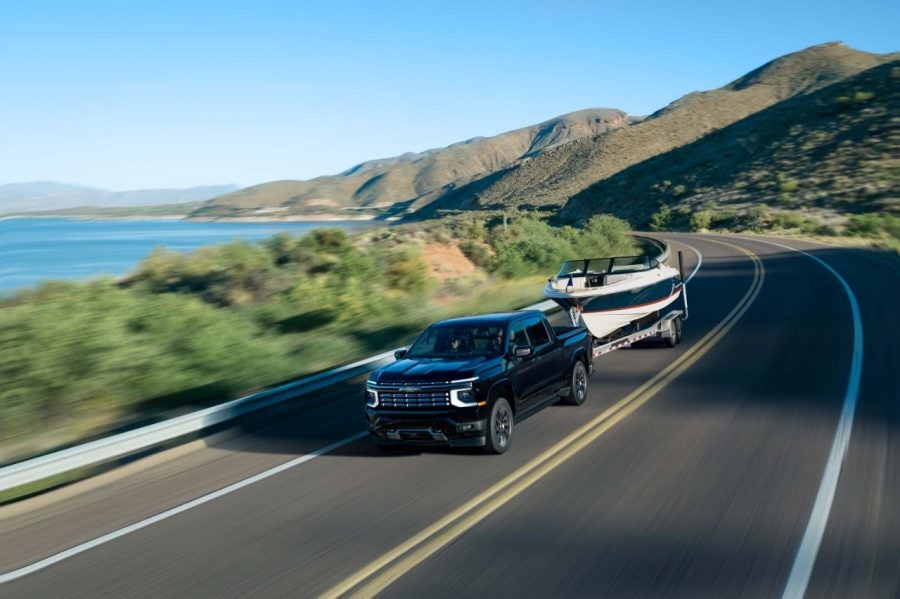
MY27_Chevrolet_Silverado_High-Country_Towing

Order a 2027 Silverado 1500 or Buy a 2026?

Order a 2027 Silverado 1500 or Buy a 2026? Vehicle shown with available equipment. Image supplied by the manufacturer. The Short Version The all-new 2027 Silverado 1500 arrives at the end of 2026; you can reserve a build now. 2026 Silverados are on the ground in Bentonville today, often with incentives. Buy from stock if you need a truck now; reserve a 2027 if you want the redesign. Bring your loaded trailer weight and we will spec the right truck around it. There is a short window every few years when a truck buyer in Northwest Arkansas has two good options at once, and we are heading into it. The all-new 2027 Silverado 1500 is a ground-up redesign arriving at the end of 2026 and you can reserve one now, while the 2026 Silverados are still on the lot at George Nunnally Chevrolet in Bentonville with their own incentives. Whether you reserve the new one or buy off the ground comes down to how much you want the redesign versus how soon you need the truck. Here is how we talk it through with people who come in from Rogers, Springdale and Fayetteville. Buy from stock if you need a truck now Most people who need a truck need it for two or three specific things. If your list is "crew cab, four-wheel drive, tows a boat to Beaver Lake, seats the family," we can almost certainly hand you keys to a 2026 Silverado 1500 that does all of it this week. Buying from stock is faster, it usually carries an incentive, and you get to sit in the exact truck before you sign. If that is you, the 2026 Silverado 1500 guide is the place to start. Reserve a 2027 if the redesign is what you want Reserving makes sense when the new truck's changes are the reason you are buying. For 2027 that is a real list: two brand-new small-block V8s, a 5.7L and a 6.6L that Chevrolet calls the most powerful naturally-aspirated V8 in the half-ton class; a fully digital cockpit with a 16.3-inch screen; and available Super Cruise that keeps working while you tow. If a specific new engine or the redesigned interior is what you are after, reserve the build rather than waiting for the right one to land. The 2027 Silverado 1500 overview lays out the whole lineup, and the trim guide walks the seven trims from Work Truck to ZR2 and High Country. What actually changed for 2027 Enough that a 2026 spec sheet is not a 2027 spec sheet. The Silverado is all-new for 2027 — new styling, a new digital interior, a revised seven-trim lineup that renames the LT simply Silverado, and the two new V8s replacing the old 5.3L and 6.2L. Pricing, EPA fuel economy and final tow ratings are published by Chevrolet closer to the on-sale date, and we post each confirmed number the day it lands. The 2027 specs page tracks what is official as it firms up. None of that makes a 2026 a worse truck — it is still the one we can hand you keys to this week. The towing question worth settling up front If towing is why you are buying, get it right before you order. On a half-ton, the tow rating is set by engine, cab, bed and axle together, not by the badge on the tailgate, so two trucks that look alike can be rated differently. The 2027's official ratings publish at launch, and the Duramax diesel and new 6.6L V8 are the tow-focused engines. If you already know what your loaded boat or camper weighs, bring us that number and we will build the spec backwards from it. Our towing guide covers the Max Trailering package and the segment-exclusive Super Cruise hands-free trailering. The winter question nobody asks until January If you buy in the autumn, your truck's first season is an Ozark winter, and that is worth ten minutes of planning. I-49 gets treated through the freeze-thaw stretches and a truck parked outside collects that brine spray. The practical habit is washing the undercarriage through the salt season rather than waiting for spring. It is also worth setting up the service schedule early, especially if you tow — towing brings oil and driveline service forward. Our service and maintenance page covers what the truck needs and when. How to decide in one visit Come into George Nunnally Chevrolet at 2700 SE Moberly Ln in Bentonville, just off I-49. We will put you in a 2026 Silverado so the current truck is not an abstraction, walk you through what the 2027 redesign adds, and either write up a truck from stock or start your 2027 reservation. Either way you leave knowing which truck is yours. Call (479) 319-2494 or contact us to set it up. Still comparing the current truck? The 2027 Silverado 1500 FAQs answer the questions that come up most.

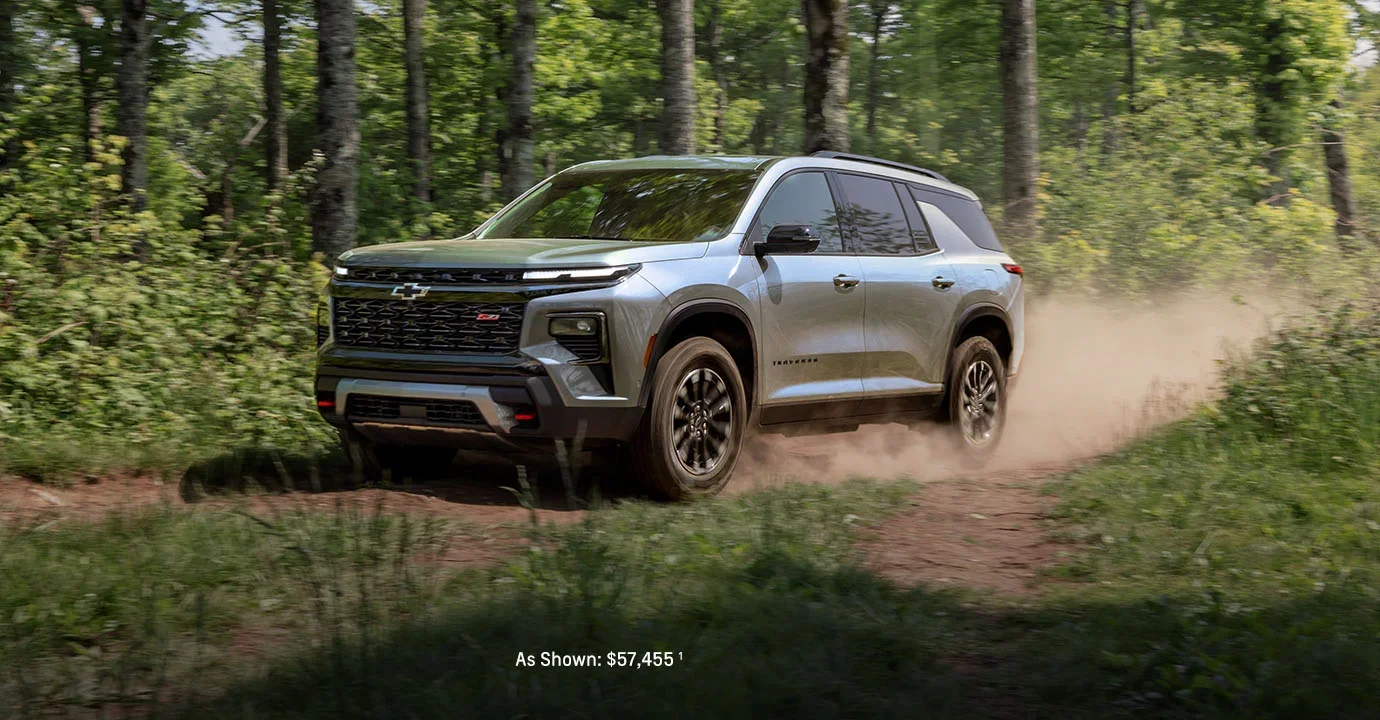
2026 Chevrolet Traverse at George Nunnally Chevrolet

Towing a Camper With a 2026 Traverse in NWA

Quick answer: the 2026 Traverse as a tow vehicle The 2026 Chevrolet Traverse is rated at 5,000 pounds properly equipped, and the trailering equipment is standard on every trim rather than an option you hunt for. The 2.5L turbocharged four-cylinder makes 328 horsepower and 326 lb-ft on regular 87-octane unleaded, which is what makes that rating comfortable rather than theoretical. It still carries the family: seven seats standard, eight on the LT with the available second-row bench, and 22.9 cubic feet of cargo behind the third row. EPA estimates are 20 city / 26 highway / 22 combined in front-drive and 20 / 24 / 21 with all-wheel drive. The Traverse starts at $40,800 before a $1,995 destination charge. George Nunnally Chevrolet stocks them in Bentonville. Call (479) 319-2494. A 5,000-pound rating puts a lot of NWA weekends in reach of a 2026 Chevrolet Traverse: a small travel trailer, a teardrop or hybrid camper, a pair of side-by-sides on a utility trailer, or a boat. What it does not do is answer the second question, which is whether the same vehicle still works as the family car on Monday. Here is what the rating actually covers here, and what to check before you hitch up. The Traverse research hub has the full set of pages. See Every 2026 Traverse in Stock How much can a Traverse actually pull? 5,000 pounds, properly equipped. That figure holds across the lineup because the trailering equipment is standard on every trim, so it is not a number that depends on which box you ticked at order time. The engine is what makes it usable. The 2.5L turbocharged four makes 328 horsepower and 326 lb-ft, and torque is the part that matters on a hill with a trailer behind you. The specifications page has the full numbers, and the model overview is the plain-language version of the whole car. What a 5,000-pound rating covers in NWA More than most families need. A single-axle travel trailer, a teardrop or a hybrid pop-up sits well inside it, as does a ski boat on a single-axle trailer, and either one gets to Beaver Lake or a campsite at Hobbs State Park without drama. Devil's Den is the harder run, because the I-49 grades south of Fayetteville are the real test of any tow vehicle in this region. The honest planning number is not the trailer's dry weight, it is the loaded weight with water, gear and bikes on the back. Build in the margin and a Traverse handles a Northwest Arkansas camping season comfortably. If your trailer is a dual-axle bunkhouse and the loaded number is climbing past the rating, the Traverse versus Tahoe comparison is the right next read, because that is the step up this market usually makes. Do you need to option anything? For the tow rating itself, no. Trailering equipment is standard across the range, which is unusual in this class and worth knowing before you start pricing packages on a rival. What is worth optioning is what makes the miles easier. Super Cruise, the hands-free driver assistance system, is standard on the High Country and RS and available on the LT and Z71 through the Enhanced Driving Package, and a long haul down the interstate is exactly where you notice it. The trim levels page shows what each rung includes. What towing means for people and gear This is where a three-row earns its place over a truck. The Traverse seats seven as standard and eight on the LT with the available second-row bench, and it holds 22.9 cubic feet behind the third row, 56.6 behind the second and 98 cubic feet with both rows folded. That is a full family plus a week of camping kit, before the trailer is even attached. Weight still has to be watched: GVWR is 6,173 pounds and an LT front-drive weighs 4,504 pounds at the curb, which leaves roughly 1,669 pounds for people, cargo and trailer tongue weight combined. That is the number that quietly decides how much you can pack. The cargo and seating page breaks the space down row by row. Which Traverse suits a towing family in NWA? The LT is the volume answer and the only trim that seats eight, opening at $40,800 before the $1,995 destination charge. The Z71 adds all-wheel drive as standard, 18-inch all-terrain wheels and 7.8 inches of ground clearance against the standard 6.8, which is the trim for gravel campground approaches. The RS and High Country are the equipment-led rungs and bring Super Cruise as standard. Cross-shopping? The Traverse versus GMC Acadia comparison covers the closest relative, and the Traverse versus Equinox page is the one to read if you are still deciding whether you need a third row at all. Browse Traverse LT and Z71 Stock Schedule a Test Drive Hitching up in NWA Bring the trailer and we will weigh the real question with you. We are at 2700 SE Moberly Ln, a couple of minutes off I-49, and the run south from here is the same road your camper will see, so a test drive tells you more than a spec sheet does. The 39-foot turning circle is the other thing to try in our lot, because campground loops are tighter than interstates. Ownership questions are worth asking on the day: the maintenance schedule covers service intervals, and towing does change how often some of them come around. When you are ready, value your trade or get pre-approved. 2026 Traverse towing questions How much can a 2026 Chevrolet Traverse tow? 5,000 pounds, properly equipped, and the trailering equipment is standard on every trim. What engine does it use? A 2.5L turbocharged four-cylinder rated 328 horsepower and 326 lb-ft, running on regular 87-octane unleaded. Does towing change with all-wheel drive? The rating is 5,000 pounds properly equipped across the lineup. All-wheel drive is standard on the Z71 and available elsewhere, and it changes EPA estimates to 20 city / 24 highway / 21 combined against 20 / 26 / 22 in front-drive. How many people does it seat? Seven as standard, and eight on the LT with the available second-row bench. The Z71, RS and High Country seat seven. How much cargo is there with a full house? 22.9 cubic feet behind the third row, 56.6 behind the second, and 98 cubic feet with both rear rows folded. Which trim has the most ground clearance? The Z71, at 7.8 inches against the 6.8 inches standard elsewhere, and it comes with all-wheel drive and 18-inch all-terrain wheels. Is Super Cruise available? Yes. It is standard on the High Country and RS, and available on the LT and Z71 through the Enhanced Driving Package. How big is the Traverse to park and store? 204.5 inches long on a 121.0-inch wheelbase, 79.6 inches wide without mirrors and 69.6 inches tall, with a 39.0-foot turning circle. Where do I get a question answered that is not here? The Traverse FAQ page covers the common ones, or call (479) 319-2494 with your trailer's loaded weight and we will talk it through. Pricing is starting MSRP and excludes tax, title, license and dealer fees; the destination freight charge is stated separately and the dealer sets the final price. Trailering figures are maximums for a properly equipped vehicle and vary by configuration and equipment. Fuel-economy figures are EPA estimates and will vary with driving. George Nunnally Chevrolet · 2700 SE Moberly Ln, Bentonville, AR 72712 · (479) 319-2494