





Chevy vs Chevy
Chevrolet Tahoe vs Traverse Northwest Arkansas
Two three-row Chevrolet SUVs, two very different jobs. The 2026 Tahoe is a body-on-frame full-size hauler; the 2026 Traverse is a midsize crossover built for easier daily driving. Here is an honest, side-by-side look to help Northwest Arkansas families pick the right one. George Nunnally Chevrolet sells and services both.
Traverse from $40,800
Tahoe from $60,700
Tahoe tows 8,400 lb
Traverse 22 mpg vs Tahoe ~16
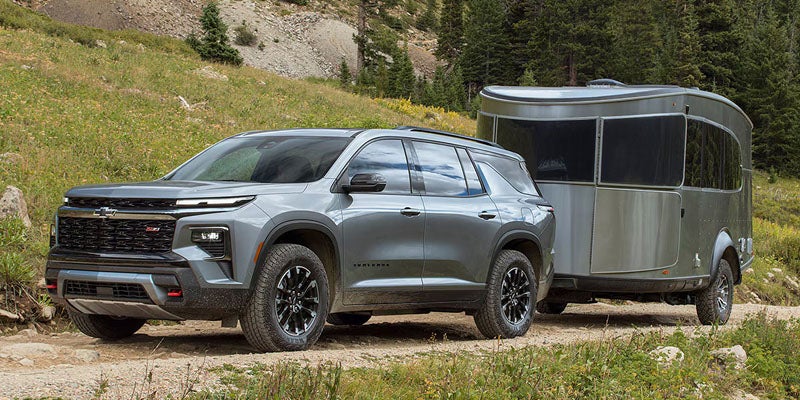
The 2026 Chevrolet Tahoe and 2026 Chevrolet Traverse are both three-row Chevy SUVs, but they sit a full size class apart and solve different problems. The Tahoe is a body-on-frame full-size SUV that tows up to 8,400 pounds and swallows 122.7 cubic feet of cargo; the Traverse is a unibody midsize crossover that starts about $20,000 less, returns far better fuel economy, and is much easier to live with in a daily-driver, school-run sense.
Because George Nunnally Chevrolet sells and services both, this page stays neutral: the goal is to route you to the one that fits your towing, passenger and budget needs, not to talk you out of either. Test-drive both back-to-back at our showroom and the difference is obvious within a block.
Traverse Overview
2026 Chevrolet Traverse Overview
The Traverse is Chevy's midsize three-row crossover. Every trim runs a single 2.5L turbocharged four-cylinder making 328 horsepower and 326 lb-ft, paired with an 8-speed automatic; front-wheel drive is standard and all-wheel drive is available. It seats seven with second-row captain's chairs, or eight on the LT with the no-cost bench, and offers a class-leading 98 cubic feet of max cargo for the midsize segment. Starting around $40,800, it is the value, efficiency and easy-parking choice, with a car-like ride that suits Northwest Arkansas commuting. Full numbers live on our Traverse specs page.
Tahoe Overview
2026 Chevrolet Tahoe Overview
The Tahoe is Chevy's full-size, body-on-frame SUV, built on truck underpinnings. It starts with a 5.3L V8 (355 horsepower, 383 lb-ft) and offers an available 6.2L V8 (420 horsepower, 460 lb-ft) and an available 3.0L Duramax turbo-diesel inline-six (305 horsepower, 495 lb-ft), all with a 10-speed automatic; rear-wheel drive is standard and four-wheel drive is available (standard on the Z71). It seats up to eight, with a nine-passenger front-bench layout available on the LS, tows up to 8,400 pounds, and opens to 122.7 cubic feet of cargo. Starting around $60,700, it is the towing, space and capability choice, with the higher price and thirstier appetite that come with a full-size truck-based SUV.
Powertrain
Powertrain Comparison
| Spec | Traverse | Tahoe |
|---|---|---|
| Engine(s) | 2.5L turbo-4, 328 hp | 5.3L V8 (355 hp); avail 6.2L V8 (420 hp); avail 3.0L diesel (305 hp) |
| Transmission | 8-speed automatic | 10-speed automatic |
| Drivetrain | FWD std, AWD available | RWD std, 4WD available (std on Z71) |
| Max towing | 5,000 lb properly equipped | Up to 8,400 lb (5.3L V8) |
| EPA fuel economy | 22 mpg combined (FWD) | ~16 mpg combined (V8); diesel up to 28 hwy |
The split is clean. The Traverse trades outright muscle for efficiency: its turbo-4 is plenty for family duty and it sips fuel by comparison. The Tahoe answers with real V8 torque and roughly 3,400 more pounds of towing, which is the gap between pulling a small utility trailer and pulling a full boat or camper. If your towing tops out around 5,000 pounds, the Traverse covers it; past that, the Tahoe is the tool for the job, and our Traverse specs page details its trailering package.
Interior & Tech
Interior and Technology Comparison
| Spec | Traverse | Tahoe |
|---|---|---|
| Seating | 7 (eight on LT bench) | Up to eight (nine on the LS) |
| Cargo behind 3rd row | 22.9 cu ft | 25.5 cu ft |
| Max cargo | 98 cu ft (class-leading midsize) | 122.7 cu ft |
| Touchscreen / cluster | 17.7" / 11" | 17.7" / 11" |
| Hands-free driving | Super Cruise (std HC/RS, avail LT/Z71) | Super Cruise (available, Premier/High Country) |
Both share Chevy's current cabin tech, including the 17.7-inch touchscreen with Google built-in, an 11-inch driver display and available Super Cruise hands-free driving. The Tahoe's advantage is sheer volume: more space behind the third row and a cavernous 122.7 cubic feet with the rows folded, plus the ability to seat a ninth passenger. The Traverse counters with a class-leading-for-midsize 98 cubic feet that handles most family loads while staying easier to load in a normal garage. Our Traverse cargo & interior page breaks down what fits where.
Pricing & Value
Pricing and Value
The Traverse starts around $40,800 and the Tahoe around $60,700 (both excluding destination), so the Tahoe asks roughly $20,000 more to get in the door, and its top High Country reaches $80,400. You are paying for size, towing and a V8, not for nicer family-SUV basics, since both come well-equipped with Chevy Safety Assist and the same core tech. Between higher purchase price and roughly 6 mpg lower fuel economy on the V8, the Tahoe also costs meaningfully more to run. If your needs fit inside the Traverse, it is the clear value; if you genuinely need what the Tahoe does, the premium buys real capability. (MSRP excludes the destination freight charge, tax, title, license, dealer fees and optional equipment; dealer sets final price.)
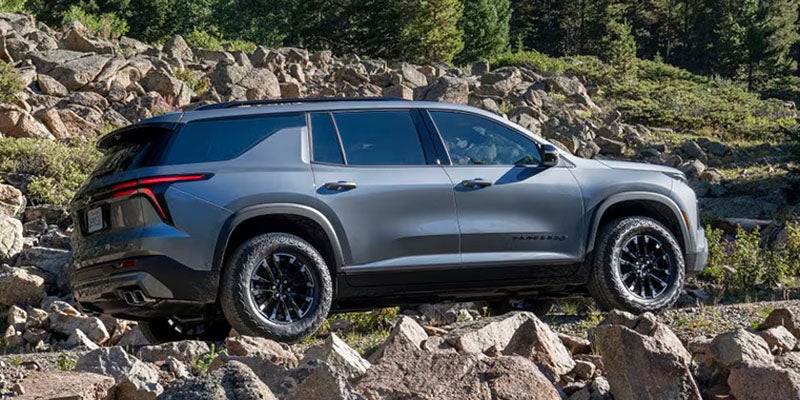
Traverse Strengths
Where the Traverse Fits Better
- Price. About $20,000 less to start, which is a different monthly payment entirely.
- Fuel economy. 22 mpg combined versus roughly 16 for the Tahoe's V8 adds up fast over a year of commuting.
- Everyday usability. At 204.5 inches it is about seven inches shorter than the Tahoe, so it parks, garages and maneuvers like a normal family vehicle, with a car-like unibody ride.
- Enough for most families. Three rows, seven or eight seats, and a class-leading-for-midsize 98 cubic feet cover the large majority of school runs, road trips and cargo days.
Tahoe Strengths
Where the Tahoe Fits Better
- Towing. Up to 8,400 pounds versus 5,000, the difference between a small trailer and a real boat or camper.
- Cargo and passengers. 122.7 cubic feet of max cargo and seating for up to eight, with a nine-passenger option on the LS.
- Power and durability. Strong V8 torque, an available turbo-diesel, and body-on-frame, truck-based construction built for heavy, repeated loads.
- Serious capability. Available four-wheel drive and a Z71 off-road trim take it well beyond light-duty crossover territory.
The Decision
Which Should You Choose?
Since we sell both, here is the honest routing by what you actually need:
| If you... | Choose |
|---|---|
| Want the lower price and better fuel economy for daily driving | Traverse |
| Tow a boat, camper or trailer heavier than 5,000 lb | Tahoe |
| Do mostly family hauling and want easy parking and a smoother ride | Traverse |
| Need maximum cargo, a third row sized for adults, or eight-to-nine seats | Tahoe |
| Want truck-grade power, four-wheel drive and body-on-frame toughness | Tahoe |
For most Northwest Arkansas families who are not towing heavy, the Traverse is the sensible, economical pick. If your weekends involve a boat headed to Lake Wedington, a camper bound for the Buffalo National River, or a long drive up the winding roads to Eureka Springs, the Tahoe is the better tool for the job. Still cross-shopping a smaller Chevy? See our Traverse vs Equinox comparison.
Local
Drive Both at George Nunnally Chevrolet
The fastest way to decide is to drive them back-to-back. George Nunnally Chevrolet in Bentonville stocks and services both the Traverse and the Tahoe, so you can compare the ride, the third row, the cargo hold and the parking-lot footprint in one visit. Around here the choice often comes down to whether you tow: a Traverse handles a small utility trailer and a winter commute with ease, while a Tahoe is the one for pulling a loaded boat trailer up to the lake or a camper down a gravel forest road. Browse the Traverse lineup online, get pre-approved in minutes, or ask our team to line up a Tahoe alongside it for your test drive.
Questions
Traverse vs Tahoe FAQs
What is the main difference between the Chevy Tahoe and Traverse?
Size and construction. The Tahoe is a full-size, body-on-frame SUV built on truck underpinnings with V8 power and up to 8,400 pounds of towing. The Traverse is a midsize unibody crossover with a turbo-4, better fuel economy, easier parking and a roughly $20,000 lower starting price.
Does the Tahoe tow more than the Traverse?
Yes, considerably. The Tahoe tows up to 8,400 pounds with its 5.3L V8, while the Traverse maxes out at 5,000 pounds properly equipped. If you tow heavier than 5,000 pounds, the Tahoe is the right choice.
Which is more fuel-efficient, the Traverse or the Tahoe?
The Traverse, by a wide margin: about 22 mpg combined versus roughly 16 mpg for the Tahoe's V8. The Tahoe's available Duramax diesel narrows the gap on the highway, returning up to about 28 mpg there.
How much more does the Tahoe cost than the Traverse?
About $20,000 more to start: the Traverse opens around $40,800 and the Tahoe around $60,700, both excluding destination. Loaded Tahoe trims reach $80,400 on the High Country, and the Tahoe also costs more to fuel.
Which holds more cargo and seats more people?
The Tahoe. It offers 25.5 cubic feet behind the third row and 122.7 cubic feet maximum, and seats up to eight (nine with the LS front bench). The Traverse offers a class-leading-for-midsize 98 cubic feet maximum and seats seven, or eight with the LT bench.
Next Step
Compare them side by side
See the Traverse and the Tahoe in the same lot at George Nunnally Chevrolet in Bentonville. Browse the Traverse lineup or get pre-approved, and ask us to stage a Tahoe next to it for your drive.

May not represent actual vehicle. (Options, colors, trim and body style may vary)
The Manufacturer's Suggested Retail Price excludes tax, title, license, dealer fees and optional equipment. Dealer sets final price.