





Towing & Payload
2026 Chevy Tahoe Towing Capacity AR
Up to 8,400 pounds properly equipped, plus the hitch and tongue-weight setup for the Beaver Lake ramps.
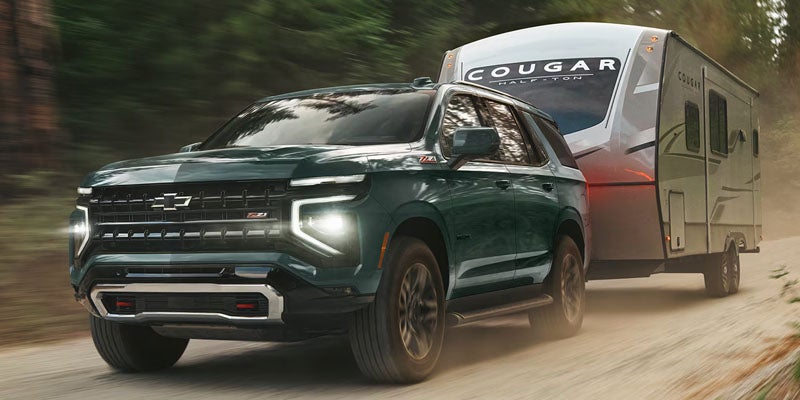
Properly equipped, the 2026 Chevrolet Tahoe tows up to 8,400 pounds with the 5.3L V8, rear-wheel drive, and the Max Trailering Package - enough for most family boats and mid-size campers headed to Beaver Lake. This page walks through how each configuration reaches its rating, how to set the truck up, and how those numbers hold up on a wet ramp.
Maximum Towing Capacity by Configuration
That 8,400-pound headline is a properly-equipped figure, not a promise for every build. It belongs to one combination - the 5.3L V8 with rear-wheel drive and the Max Trailering Package. Move to four-wheel drive, or step up to the available 6.2L V8, and the rating settles near 8,200 pounds; the Duramax diesel is rated the same. Match the engine and drivetrain to the trailer you actually pull.
| Engine and drivetrain | Maximum trailer rating |
|---|---|
| 5.3L V8, rear-wheel drive, Max Trailering Package | up to 8,400 pounds |
| 5.3L V8, four-wheel drive | about 8,200 pounds |
| 6.2L V8, rear-wheel drive | 8,200 pounds |
| 3.0L Duramax diesel, rear-wheel drive | 8,200 pounds |
Every figure above is a properly-equipped rating with a conventional weight-distributing hitch. Four-wheel-drive builds sit roughly 200 pounds under their rear-drive counterparts because the added hardware eats into the margin.
Payload and Weight by Configuration
Towing is only half of the math. Passengers and cargo count against payload, and the trailer's tongue weight lands on the hitch. On a 5.3L V8 rear-drive Tahoe, payload tops out around 1,895 pounds - the 7,600-pound GVWR minus a curb weight near 5,705 pounds. A full third row of passengers plus a loaded cargo area eats into what is left for the hitch, so weigh the people and the gear before you count on the trailer number.
| Rating (5.3L V8, rear-wheel drive) | Figure |
|---|---|
| Maximum payload | up to 1,895 pounds |
| GVWR | 7,600 pounds |
| Curb weight | about 5,705 pounds |
| GCWR | 14,000 pounds |
That 14,000-pound GCWR (gross combined weight rating) is the ceiling for the truck, its passengers, its cargo, and the trailer together. Stay under it and under the payload number, and the tow rating does the rest.
The Max Trailering Package
An available Max Trailering Package (RPO NHT) prepares the Tahoe for its highest rating, adding a Class IV hitch and the trailering hardware that earns the 8,400-pound number on a 5.3L V8. It is the difference between a Tahoe that can pull your boat and one that is rated to. Our team can tell you which package and hitch setup fits your specific trailer before you order or drive off.
Trailering Setup and Technology
A rating on paper only matters if the trailer is set up right. Keep tongue weight at 10 to 15 percent of the loaded trailer, run the factory hitch with the trailering guidance built into the Tahoe, and confirm the numbers on the certification label before you hook up.
| Item | Guidance |
|---|---|
| Tongue weight | 10 to 15 percent of the loaded trailer |
| Hitch | Class IV hitch with trailering guidance |
| Before every tow | Check tire pressures and the certification label |
What the 2026 Tahoe Can Actually Tow to the Lake
In practical terms the 8,400-pound rating covers most single-axle and many tandem-axle boats, a mid-size travel trailer, or a loaded utility trailer behind the family SUV. The Corps-built ramps at Prairie Creek and Rocky Branch drop steeply into deep water east of Rogers, and a wet concrete incline is where the right engine and a well-matched trailer stop being theoretical. Hickory Creek, the closest ramp for Lowell and Springdale drivers, and the other launches reached off AR-12 (Scenic Highway 12) put a real load on the drivetrain on the climb back out. Across Northwest Arkansas that is a boat behind the family SUV nine months a year.
See tow-ready Tahoes in stock, or call (479) 319-2494 to match a setup to your trailer.
2026 Tahoe Towing FAQs
How much can the 2026 Chevy Tahoe tow?
Up to 8,400 pounds with the 5.3L V8, rear-wheel drive, and the Max Trailering Package. Other configurations pull somewhat less, so match the build to your trailer.
What does the Max Trailering Package add?
It prepares the Tahoe for its highest rating and pairs a Class IV hitch with trailering hardware. Our team can match the package to the trailer you plan to pull.
How much tongue weight should I run?
Plan on 10 to 15 percent of the loaded trailer weight, kept within the numbers on the vehicle certification label.
Which Tahoe engine tows the most?
The 5.3L V8 reaches the 8,400-pound maximum when it is properly equipped; the 6.2L V8 is rated at 8,200 pounds.
Can a Tahoe launch a boat at Beaver Lake?
Yes. The rating covers most family boats, and we can help you set up the right engine and hitch for the steep Prairie Creek and Rocky Branch ramps.
Explore the 2026 Tahoe Research Hub
Your Next Step
Shop the in-stock 2026 Tahoe lineup at George Nunnally Chevrolet, or line up financing before you visit.
George Nunnally Chevrolet · 2700 SE Moberly Ln, Bentonville, AR 72712 · (479) 319-2494
Ratings are properly-equipped maximums; your usable capacity depends on passengers, cargo, and hitch setup. Confirm equipment and figures with the dealer before purchase.
Ratings are properly-equipped maximums; your usable capacity depends on passengers, cargo, and hitch setup. Confirm equipment and figures with the dealer before purchase.

May not represent actual vehicle. (Options, colors, trim and body style may vary)
The Manufacturer's Suggested Retail Price excludes tax, title, license, dealer fees and optional equipment. Dealer sets final price.