





2026 Chevrolet Colorado vs Ford Ranger
2026 Chevrolet Colorado vs Ford Ranger NWA AR
The Colorado brings more torque and towing standard on every trim; the Ranger answers with an available six-cylinder and the wild Raptor. Two strong midsize trucks, compared honestly.
The 2026 Chevrolet Colorado and 2026 Ford Ranger are two of the most cross-shopped midsize trucks, and both are genuinely good. The Colorado's advantage shows up before you option anything: 430 lb-ft of torque and a 7,700-lb tow rating come standard on every trim. The Ranger counters with an available six-cylinder and the high-output Raptor. This comparison lays out where each one leads. George Nunnally Chevrolet sells the Colorado, and drivers around Rogers and Bentonville are welcome to drive one.
Quick Take
For buyers who want the most capability standard, the Colorado is the pick: more torque and more towing on every trim without paying to upgrade the engine. Choose the Ranger if you specifically want a six-cylinder engine or the desert-running Raptor.
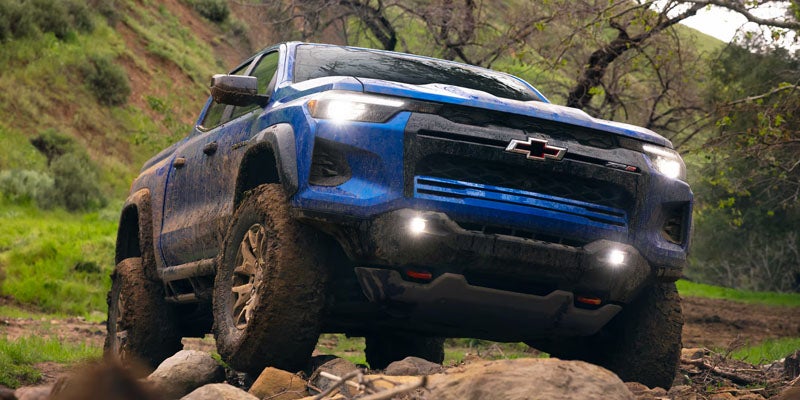
Our Truck
2026 Chevrolet Colorado Overview
The Colorado uses one engine across the lineup: the 2.7L TurboMax turbocharged four-cylinder making 310 horsepower and 430 lb-ft of torque through an 8-speed automatic. It is a crew cab with a 5-foot bed, seats five, and tows up to 7,700 lbs properly equipped. Five trims run from the work-focused WT at $34,495 to the trail-ready ZR2 at $52,595, each with an 11.3-inch touchscreen and Google built-in.
Their Truck
2026 Ford Ranger Overview
The Ranger is a strong, well-rounded truck, also a crew cab with a 5-foot bed. Ford states its standard engine is a 2.3L EcoBoost turbo four-cylinder making 270 horsepower and 310 lb-ft of torque, with an available 2.7L EcoBoost six-cylinder (315 horsepower, 400 lb-ft) on the XLT and Lariat. Four trims run XL, XLT, Lariat, and Raptor, with a maximum tow rating of 7,500 lbs and a class-leading payload of up to 1,805 lbs. The Ranger also offers something the Colorado does not: a six-cylinder engine, topped by the Raptor's high-output setup.
Engines
Powertrain Comparison
| Spec | Chevrolet Colorado | Ford Ranger |
|---|---|---|
| Standard engine | 310 hp / 430 lb-ft | 270 hp / 310 lb-ft |
| Upgrade engine | None (one engine) | 315 hp six-cyl; 405 hp Raptor |
| Max towing | 7,700 lbs | 7,500 lbs |
| Max payload | about 1,850 lbs | up to 1,805 lbs |
| Touchscreen | 11.3-in, Google built-in | 10.1 or 12-in, SYNC |
The pattern: every Colorado out-torques the standard Ranger by 120 lb-ft and starts with more horsepower, and it tows 200 lbs more. To beat the Colorado's torque, a Ranger buyer has to step up to a six-cylinder. The Ranger's answer is at the very top, where the Raptor's engine is the most powerful in the class.
Cabin
Interior and Technology Comparison
Both cabins are modern and well-built. The Colorado gives every trim an 11.3-inch touchscreen with Google built-in, so Maps and Assistant run natively without a phone, plus wireless Apple CarPlay and Android Auto. The Ranger runs Ford's SYNC system on a 10.1-inch or available 12-inch display with a digital gauge cluster and available Bang and Olufsen audio, and it too supports wireless CarPlay and Android Auto. Ford has improved the Ranger's materials for 2026, and its interiors are genuinely nice; the Colorado's edge is the native Google integration.
Value
Pricing and Value
Both trucks start in the mid-$30,000s, so the entry price is close. Where the Colorado makes its value case is standard equipment: at that similar starting point it gives you 430 lb-ft of torque and 310 horsepower, while matching the Ranger means adding the optional six-cylinder. At the top, both climb into the fifties, with the Colorado ZR2 at $52,595 and the Ranger Raptor near $57,070. For a buyer who wants strong standard capability without optioning up, the Colorado delivers more for the money at the volume trims.
Advantages
Where the Colorado Wins
- More standard torque — 430 lb-ft on every trim versus the standard Ranger's 310 lb-ft, a 120 lb-ft advantage before any options.
- More standard horsepower — 310 hp standard against the Ranger's 270 hp base engine.
- Higher max towing — 7,700 lbs versus 7,500, a 200-lb edge, and the Colorado keeps its full rating on more of the lineup.
- Native Google built-in — Maps and Assistant run on the screen without a phone; the Ranger offers wireless CarPlay and Android Auto but not Google built-in.
- Capability without the upcharge — the Colorado's torque and towing are standard, where the Ranger asks you to option the six-cylinder to match on power.
Fair Play
Where the Ford Ranger Wins
- The Ranger Raptor — its high-output engine is the most powerful in the midsize class, paired with Fox racing shocks and a Baja drive mode for high-speed desert running the Colorado has no direct answer for.
- An available six-cylinder — Ford offers six-cylinder engines the Colorado's lineup does not, appealing to buyers who specifically want one.
- Class-leading payload figure — Ford lists up to 1,805 lbs, among the highest headline payloads in the segment, with a bed widened to fit a sheet of plywood flat.
The Verdict
Which Truck Should You Choose?
For most Northwest Arkansas buyers, the Colorado is the stronger everyday value: more torque, more horsepower, and more towing standard on every trim, plus native Google tech, at a comparable starting price. It gives you the capability without asking you to pay up for a bigger engine.
Choose the Ranger if one of its specific strengths is your priority: you want a six-cylinder engine, you want the class's most powerful truck in the Raptor, or its headline payload figure matters to your work. Both are excellent; the right one depends on whether you value strong standard capability or a specific Ford specialty.
Local Roads
Both Trucks on Northwest Arkansas Roads
In real use around here, either truck handles the weekend routine: a boat to the Rocky Branch ramp on Beaver Lake, a scenic run out past War Eagle Mill, gravel roads and a loaded trailer. The Colorado does it with more torque standard, which is the part you feel every time you pull away from a stop with a trailer behind you. For drivers weighing the two near Bentonville, that standard grunt is the everyday difference.
Bentonville, AR
Test Drive the Colorado at George Nunnally Chevrolet
The best way to feel the standard-torque difference is from the driver's seat. George Nunnally Chevrolet in Bentonville stocks the Colorado across trims, so you can drive it and judge for yourself. Browse the current Colorado inventory, get pre-approved, or call (479) 319-2494 to schedule a test drive.
FAQ
2026 Colorado vs Ranger FAQs
Does the Colorado or Ranger tow more?
The Colorado, by a small margin: 7,700 lbs versus the Ranger's 7,500 lbs, both properly equipped. Note the Ford Ranger Raptor tows only 5,510 lbs because of its off-road setup, so it is not the towing choice in Ford's lineup.
Which has more power standard?
The Colorado. Its standard 310 horsepower and 430 lb-ft beat the Ranger's 270-horsepower base engine. The Ranger has to step up to an available six-cylinder to match the Colorado on torque.
Does the Colorado come with a six-cylinder engine?
No. The Colorado uses one turbocharged four-cylinder across the lineup, making 310 horsepower and 430 lb-ft. The Ranger is the one in this pair that offers six-cylinder engines, including the Raptor's high-output version.
Which is better off-road?
It depends on the terrain. The Ranger Raptor is built for high-speed desert running with the class's most powerful engine and Fox shocks; the Colorado ZR2 focuses on rock and all-around trail work with Multimatic dampers and dual lockers. See the Colorado off-road guide for details.
Which one should I buy?
If you want the most capability standard for the money, the Colorado. If you specifically want a six-cylinder engine or the desert-ready Raptor, the Ranger. Both are excellent midsize trucks.
Feel the standard torque
Drive the Colorado at George Nunnally Chevrolet in Bentonville.
Explore the Colorado Research Hub

May not represent actual vehicle. (Options, colors, trim and body style may vary)
The Manufacturer's Suggested Retail Price excludes tax, title, license, dealer fees and optional equipment. Dealer sets final price.