





2027 Chevrolet Suburban
2027 Suburban Specs NWA AR
Measure the fit. Understand the configuration.
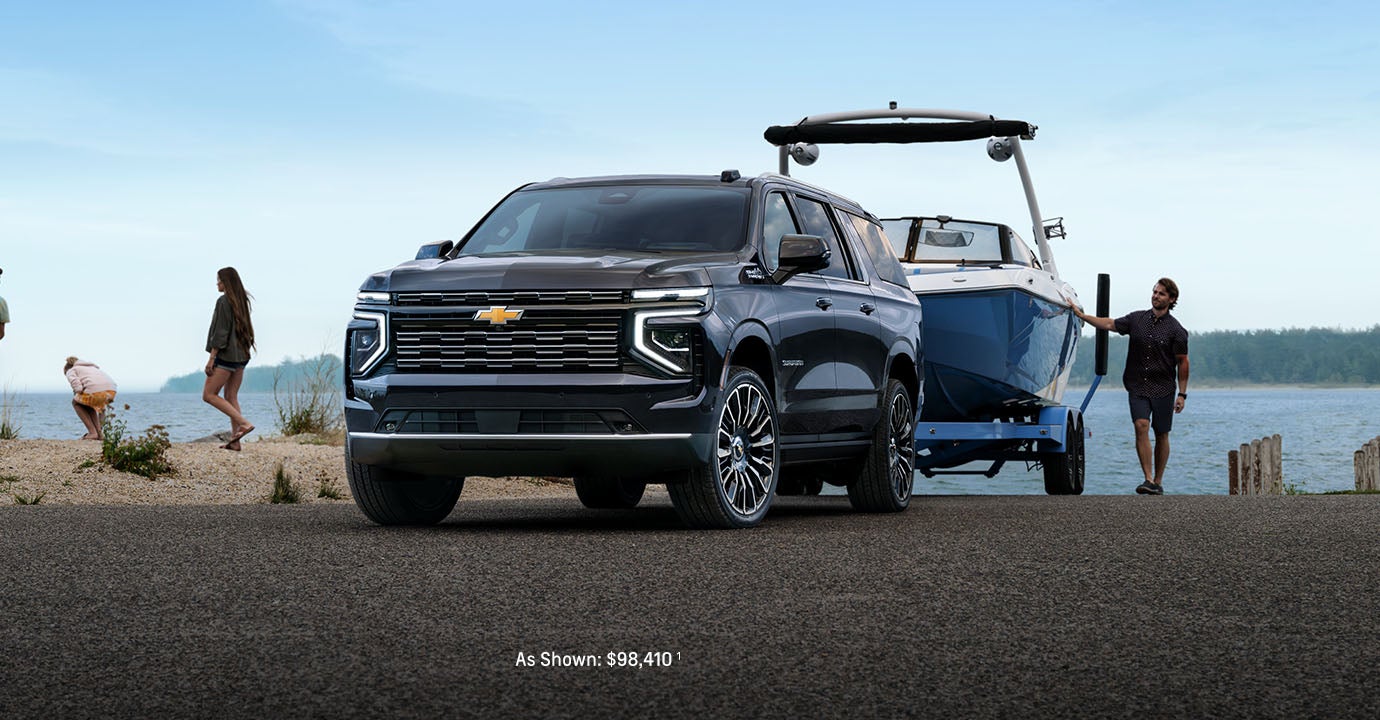
2026 Suburban shown as representative imagery. Equipment varies by vehicle.
The 2027 Suburban’s measurements are most useful when you match them to a real constraint: garage depth, passenger space or the luggage that must fit behind an occupied third row. Use the model-wide dimensions below for planning and the vehicle’s own labels for weight limits.
If you are comparing SUVs near Springdale, measure your parking space before the visit. A published body width and a mirror-inclusive width answer different questions; keep the mirrors in mind when checking a garage opening.
At a Glance
- Suburban length is 226.3 inches.
- Wheelbase is 134.1 inches.
- Cargo volume is 41.5 cubic feet behind the third row.
- Each engine is paired with a 10-speed automatic transmission.
Engine and Drivetrain Specifications
| Engine | Power | Torque | Availability |
|---|---|---|---|
| 5.3L EcoTec3 V8 | 355 hp | 383 lb-ft | Standard: LS, LT, RST, Z71, Premier |
| 6.2L EcoTec3 V8 | 420 hp | 460 lb-ft | Standard: High Country; available: RST, Z71, Premier |
| 3.0L Duramax turbo-diesel | 305 hp | 495 lb-ft | Available: LT, RST, Z71, Premier, High Country |
LS, LT, RST and Premier are offered in 2WD and 4WD configurations; Z71 and the listed High Country base configuration use 4WD. Engine availability and drivetrain must be checked together when selecting equipment.
The 5.3L V8 uses regular 87-octane gasoline. Chevrolet recommends premium 91-octane gasoline for the 6.2L V8. The Duramax engine uses diesel fuel. Follow the fuel instructions for the vehicle you select.
Exterior Dimensions and Parking
| Measurement | 2027 Suburban | How to use it |
|---|---|---|
| Overall length | 226.3 in | Allow additional room for walking and liftgate access |
| Wheelbase | 134.1 in | Distance between front and rear axle centers |
| Body width without mirrors | 81.0 in | Body measurement only |
| Width including mirrors | 93.6 in | Use this as the more relevant opening-width reference |
| Overall height | 75.6–76.6 in | Varies by configuration; check your actual vehicle |
| Turning circle, Z71 4WD reference | 43.3 ft | Plan maneuvering space rather than just a parking rectangle |
A garage can accommodate the vehicle’s length yet leave too little working room behind it. Measure with storage shelves, a closed garage door and the space you need to walk around the SUV. If your Centerton driveway has a tight turn, a low-speed test matters more than the parking-space length alone.
Interior Dimensions and Seating
| Position | Headroom | Legroom | Shoulder room |
|---|---|---|---|
| Front row, Z71 reference | 42.3 in | 44.5 in | 65.6 in |
| Second row, Z71 reference | 38.9 in | 42.0 in | 64.6 in |
| Third row, Premier reference, rounded | 38 in | 37 in | 63 in |
Eight-passenger seating is standard, with seven- and nine-passenger arrangements available. Actual seating depends on the installed front and second-row seats. Check headroom and access in the vehicle you intend to buy, including its roof equipment.
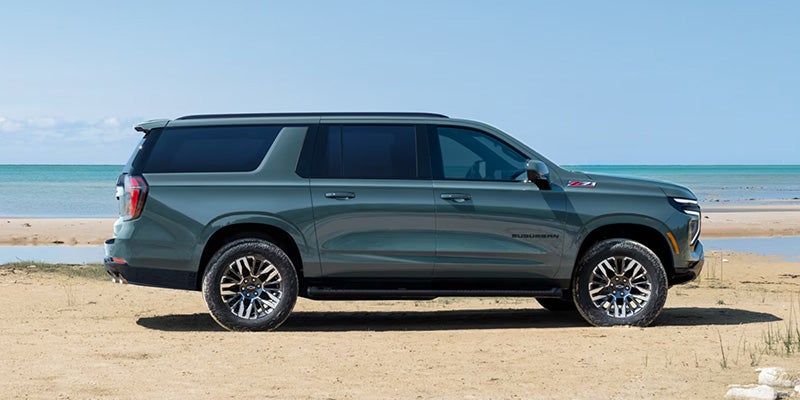
Cargo Capacity by Seat Position
| Seats in use | Cargo volume | Typical planning question |
|---|---|---|
| All three rows | 41.5 cu ft | Do our normal bags fit without losing a passenger seat? |
| First and second rows | 93.8 cu ft | Can we carry the larger load while preserving the middle row? |
| Front row only | 144.5 cu ft maximum | Does the object fit through the opening and between the interior surfaces? |
Cargo volume describes space, not allowable weight. Secure loads and keep them within the vehicle’s payload and axle limits. For tall or rigid objects, measure the object and physically check the loading opening; cubic feet alone cannot settle fit.
Towing, Payload and Weight Labels
Match a trailer to the specific vehicle, not just the engine’s horsepower. Record the engine, drivetrain, trailering package and hitch equipment, then use the vehicle’s trailering information to check the loaded trailer.
The passenger-and-cargo label establishes the allowance for that vehicle. Passengers, accessories, luggage and trailer tongue weight consume it. The certification label also gives gross vehicle and axle weight ratings; those limits apply together.
For a loaded family trip toward Beaver Lake, weigh or realistically account for the people and equipment you actually bring. A brochure’s maximum trailer figure is not the remaining capacity after you fill the cabin. Send our team your trailer details so we can review a specific Suburban with you.
Wheels, Tires and Brakes
| Configuration reference | Specification |
|---|---|
| LS | 18-inch wheels with all-season tires |
| Z71 | 20-inch wheels with all-terrain tires |
| RST / High Country | 24-inch wheels available |
| Z71 4WD tire reference | 275/60R20 |
| Z71 4WD braking reference | Four-wheel disc brakes with ABS |
Tire dimensions and replacement choices should follow the actual tire and wheel combination on your vehicle.
Fuel Economy and Ownership Planning
Compare the window-sticker fuel-economy label for the exact engine and drivetrain you are shopping. Use the same annual mileage and fuel-price assumptions for each vehicle; mixing a gasoline estimate with a diesel fuel price makes a cost comparison misleading.
The Z71 4WD specification reference lists a 28-gallon fuel tank. Tank capacity is not a promised driving range: driving conditions, load and usable fuel affect how far a trip between stops will be.
Key Features and Safety
A 17.7-inch center touchscreen, 11-inch driver display, Adaptive Cruise Control and HD Surround Vision are standard highlights. Available Super Cruise, a Rear Camera Mirror and Head-Up Display depend on trim and equipment.
Use the trim guide to distinguish standard equipment from available features. Driver aids have operating limits and do not replace attentive driving.
Warranty and Service
Chevrolet’s bumper-to-bumper limited warranty is three years or 36,000 miles, whichever comes first. Coverage, exclusions and powertrain terms should be reviewed in the warranty information for your engine and vehicle. Routine maintenance and a limited warranty serve different purposes.
See Chevrolet warranty information and our Suburban maintenance guide to prepare for ownership.
Specifications in Practice
For Fayetteville households carrying passengers in every row, cargo volume behind the third row deserves more attention than maximum cargo volume. For a parking decision, measure mirrors and usable garage space rather than relying on body width. For towing, start with actual labels and a loaded trailer.
The Tahoe comparison puts the two SUVs’ size and cargo figures on the same basis.
Specification FAQs
Does the 144.5-cubic-foot figure apply with passengers in every row?
No. It is the maximum cargo volume with the rear rows folded. With the third row upright, Suburban has 41.5 cubic feet behind it.
Which width should I use for my garage opening?
The 93.6-inch mirror-inclusive width is more useful than the 81.0-inch body width for initial planning. Measure the actual vehicle and opening with enough clearance for careful entry.
Can I calculate payload by subtracting a generic curb weight from GVWR?
Use the passenger-and-cargo label on the actual vehicle. Equipment changes vehicle weight, so a generic subtraction can misstate the allowance you have available.
Explore the Suburban
Next Step
See the Suburban in person
Tell us how you will use it and we will point you at the right configuration on the lot.

May not represent actual vehicle. (Options, colors, trim and body style may vary)
The Manufacturer's Suggested Retail Price excludes tax, title, license, dealer fees and optional equipment. Dealer sets final price.